

If you’ve ever opened your grandmother’s kitchen cabinet, chances are you spotted a little orange box of baking soda tucked next to the flour. For generations, people have used it for everything from deodorizing the fridge to soothing bug bites—and brushing teeth with baking soda has remained a popular home remedy long before whitening strips and charcoal toothpaste appeared on store shelves.
Brushing Teeth with Baking Soda continues to attract people looking for a simple, affordable way to clean and brighten their smile. But is this old-school trick actually good for your mouth, or is it just another kitchen myth that dentists secretly roll their eyes at? In this guide, we’ll explore the science behind brushing teeth with baking soda, its potential benefits, possible risks, and the safest way to use it without damaging your enamel.
What Is Baking Soda, Exactly?
Baking soda — also called sodium bicarbonate — is a mild alkaline compound. In the kitchen, it reacts with acidic ingredients to make baked goods rise. In your mouth, that same chemistry works a little differently. It’s mildly abrasive, which helps physically scrub away surface debris, and it’s alkaline, which means it can help neutralize the acids that cause tooth decay and bad breath.
This is the exact reason so many toothpaste brands — Arm & Hammer being the most famous — have built entire product lines around it. It’s not some fringe internet hack; it’s an ingredient with decades of dental research behind it.
Can You Brush Your Teeth With Baking Soda?
This is probably the first question on your mind, and the short answer is: yes, you can brush your teeth with baking soda, and it’s generally considered safe by the American Dental Association (ADA) when used correctly and in moderation. The ADA considers baking soda safe for enamel and dentin
, which is reassuring if you’ve been hesitant to try it.
That said, “safe” doesn’t mean “no rules apply.” Baking soda is still an abrasive substance, and like anything abrasive, overuse or improper technique can cause problems over time. Think of it less like a daily replacement for your regular toothpaste and more like an occasional addition to your oral care routine — a supporting player, not the star of the show.
Does Baking Soda Whiten Teeth?
Let’s tackle the big one: does baking soda whiten teeth? The honest answer is — sort of, but not the way you might think.
Many people try brushing teeth with baking soda because they’ve heard it can whiten teeth naturally. The truth is that baking soda doesn’t bleach your teeth or change their natural color the way hydrogen peroxide or professional whitening treatments do. Instead, brushing teeth with baking soda works through gentle abrasion, helping scrub away surface stains left behind by coffee, tea, red wine, tobacco, and other everyday culprits. If your teeth look dull because of surface staining, brushing teeth with baking soda can make them appear noticeably brighter and cleaner after just a few uses.
Here’s where it gets interesting. Research published in the Journal of the American Dental Association found that two baking soda dentifrices were more effective at reducing stains and improving the perceived whiteness of teeth compared with a regular silica-based toothpaste. Even more notable, multiple studies have shown that baking soda toothpastes remove stains and whiten teeth better than some non-baking-soda toothpastes that are actually more abrasive.
So while brushing teeth with baking soda won’t give you a Hollywood-white smile overnight, it can effectively lift surface stains and improve your smile’s appearance. For many people, brushing teeth with baking soda offers a simple, affordable way to maintain a cleaner-looking smile while being gentler on enamel than many highly abrasive whitening products. However, it’s best used as part of a balanced oral hygiene routine rather than as a replacement for fluoride toothpaste or professional dental care.
Why Does Baking Soda Work So Well Despite Being “Gentle”?
This is the part most articles skip over, and it’s honestly the most fascinating bit of dental science here. You’d assume a rougher, harder abrasive would clean better — but that’s not how it plays out with baking soda.
Baking soda has a naturally low Relative Dentin Abrasivity (RDA) rating. Studies show toothpastes containing baking soda typically range between an RDA of 35 and 134, comfortably within the 250 RDA safety ceiling set by the ISO. For comparison, some regular whitening toothpastes without baking soda test well above that, closer to the upper safety limit.
Why is baking soda so gentle despite doing such a good job? Its intrinsic hardness is similar to dentin and actually softer than enamel or other common abrasives like calcium carbonate, and it also dissolves easily in saliva, which further lowers its abrasiveness. In plain English: it breaks apart quickly once it’s doing its job, so it doesn’t sit there grinding away at your tooth surface the way harsher abrasives can.
That combination — decent stain removal with low abrasivity — is exactly why brushing teeth with baking soda has stuck around in dental research for so long, instead of being dismissed as an old wives’ tale.
The Real Benefits of Brushing Teeth With Baking Soda
Let’s get into the specifics of why brushing teeth with baking soda has earned a genuine place in dental research, not just kitchen folklore. Here’s what the research and dental community actually credit baking soda with:
- Neutralizes acid in the mouth. Plaque bacteria produce acid after you eat, especially sugary or starchy foods. Because baking soda is alkaline, it helps neutralize that acid, which can slow down early enamel demineralization.
- Removes surface stains. As covered above, it’s genuinely effective at lifting stains from coffee, tea, tobacco, and wine.
- Fights plaque. Research has shown that toothpastes containing baking soda are better at removing plaque than toothpastes without it, even though it’s a milder abrasive.
- Freshens breath. Because it neutralizes odor-causing acids and bacteria (the same way it deodorizes your fridge), it helps combat bad breath.
- Gentle enough for sensitive enamel. Its low RDA rating makes it a comparatively gentle option, especially useful for people who tend to brush too hard.
- Inexpensive and accessible. A box costs a couple of dollars and lasts for months — no fancy whitening kit required.
- Supports gum health. By reducing plaque buildup along the gumline, consistent (not excessive) use may support healthier gums over time.
The Risks and Downsides You Need to Know
Now for the part that doesn’t get nearly enough attention. Brushing teeth with baking soda isn’t risk-free, and skipping this section would be doing you a disservice.
- Enamel wear with overuse. Baking soda is still abrasive. Brushing too hard, too often, or combining it with acidic ingredients like lemon juice can wear down enamel over time — and enamel doesn’t grow back.
- No fluoride protection. Plain baking soda contains zero fluoride, which is the ingredient dentists rely on most to prevent cavities. While baking soda cannot protect teeth from cavities as effectively as fluoride, it is still considered an effective, inexpensive cleanser on its own — but it shouldn’t fully replace fluoride toothpaste.
- Not suitable for braces, crowns, or veneers. The abrasive texture can dull the surface of dental work or get lodged around orthodontic brackets.
- Taste and texture. Let’s be honest — it’s salty, gritty, and takes some getting used to.
- Doesn’t actually bleach teeth. If you’re expecting a dramatic whitening effect like a professional treatment, you’ll likely be disappointed. It’s a stain remover, not a bleaching agent.
- Risk for people with high blood pressure. Swallowing meaningful amounts of baking soda regularly adds sodium to your diet, which isn’t ideal for anyone managing hypertension.
- Can irritate soft tissue. If used too aggressively, the gritty texture may irritate gums, especially for people with sensitive or receding gum lines.
Pros and Cons of Brushing Teeth With Baking Soda
| Pros | Cons |
|---|---|
| Removes surface stains effectively | Doesn’t chemically whiten or bleach teeth |
| Low abrasivity (low RDA) compared to many whitening pastes | Overuse can wear down enamel over time |
| Neutralizes acids that cause decay | Contains no fluoride for cavity protection |
| Reduces plaque buildup | Gritty, salty texture some people dislike |
| Freshens breath naturally | Not ideal for braces, crowns, or veneers |
| Cheap and widely available | Adds sodium intake if swallowed regularly |
| Gentle enough for occasional daily use | Can irritate sensitive or receding gums if used too hard |
How to Brush Teeth With Baking Soda (Step by Step)
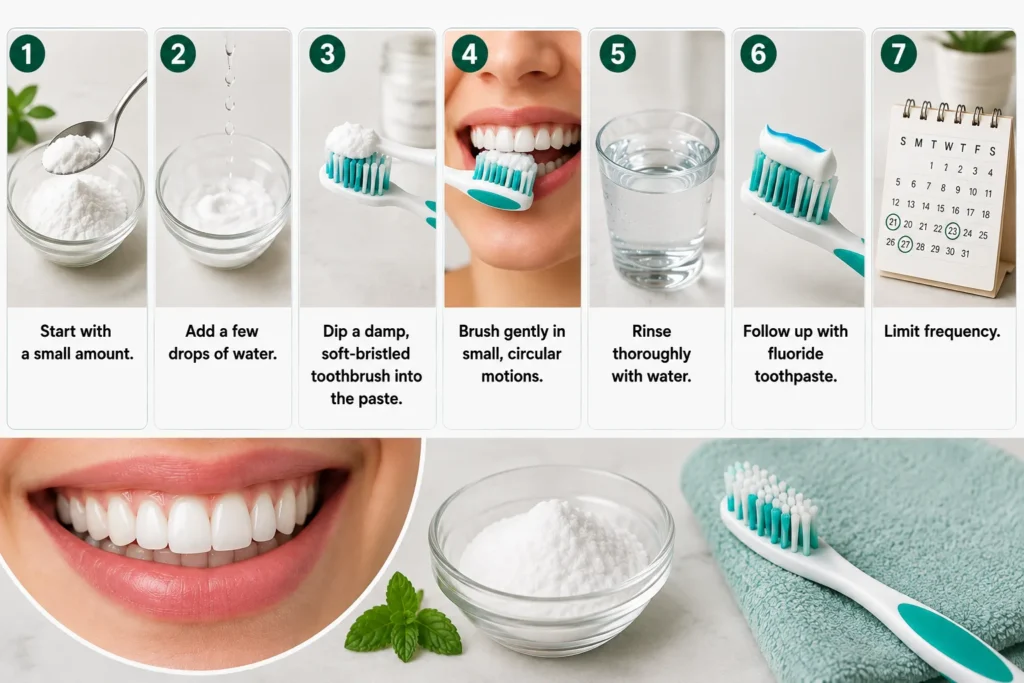
If you’re going to try washing teeth with baking soda, doing it correctly makes all the difference between a helpful habit and an enamel-damaging mistake. Here’s a simple, dentist-friendly method:
- Start with a small amount. Pour about half a teaspoon of baking soda into a small dish.
- Add a few drops of water. Mix until it forms a soft, spreadable paste — not a runny liquid.
- Dip a damp, soft-bristled toothbrush into the paste. A soft brush matters here more than usual, since you’re adding an abrasive ingredient on top of your brushing motion.
- Brush gently in small, circular motions. Avoid scrubbing back and forth aggressively. Spend around one to two minutes total, just like with regular toothpaste.
- Rinse thoroughly with water. Make sure no residue is left behind, since the salty texture can be unpleasant if it lingers.
- Follow up with fluoride toothpaste. This step is often skipped, but it’s important — it restores the cavity-fighting protection that baking soda alone doesn’t provide.
- Limit frequency. Most dentists recommend using this method no more than two to three times per week, not as a twice-daily replacement for regular toothpaste.
A quick tip: some people like mixing baking soda with a small amount of hydrogen peroxide for an extra whitening boost. This can work, but it should be done sparingly — no more than once or twice a week — since hydrogen peroxide adds its own set of sensitivity risks.
Baking Soda vs. Regular Toothpaste vs. Whitening Toothpaste
It helps to see how baking soda actually stacks up against the toothpaste options already sitting in your bathroom cabinet.
| Feature | Baking Soda (Plain) | Regular Fluoride Toothpaste | Whitening Toothpaste |
|---|---|---|---|
| Cavity protection | None (no fluoride) | Strong | Varies, usually contains fluoride |
| Stain removal | Good, gentle abrasion | Moderate | Strong, often uses higher abrasives or peroxide |
| Abrasivity (RDA) | Low (roughly 7–15 for pure baking soda) | Moderate (around 70–100) | Often higher (up to 200+) |
| Cost | Very low | Low to moderate | Moderate to high |
| Taste | Salty, gritty | Minty, standard | Minty, sometimes with added flavoring |
| Best for | Occasional stain touch-ups | Daily cavity prevention | Faster surface whitening results |
| Safe for daily use | Not recommended daily | Yes | Depends on RDA level, check label |
The takeaway here is pretty simple: baking soda isn’t meant to replace your daily toothpaste — it works best as an occasional add-on for stain control, while your regular fluoride toothpaste stays the daily foundation of your oral care routine.
Case Study: How American Users Are Actually Using Baking Soda for Their Teeth
To understand how this trend plays out in real life, it’s worth looking at how it’s used across the United States, where baking soda has quietly become part of a broader “natural oral care” movement.
According to consumer surveys and dental industry data, a noticeable share of U.S. adults — particularly those in the 25 to 45 age range — say they’ve either brushed with plain baking soda at some point or specifically look for toothpaste that lists it as a key ingredient. Brands like Arm & Hammer built an entire market around this preference, and some of their baking-soda-based formulas contain as much as 50% baking soda while still testing at very low RDA levels, such as 44 to 47 — well under the FDA’s recommended maximum of 200 and the ADA’s maximum of 250.
Dental clinics in states like California and Texas have also reported an uptick in patients asking about DIY teeth whitening methods since the pandemic, when at-home beauty routines spiked. Many of these patients specifically mention brushing teeth with baking soda as something they picked up from social media, only to later learn from their dentist that combining it with lemon juice (a popular TikTok trend) was actually damaging their enamel rather than helping it.
The pattern dentists commonly report: patients who use baking soda in moderation, a couple of times a week, alongside their regular fluoride toothpaste, tend to see mild but real improvements in surface stain appearance with no negative side effects. Patients who use it daily, especially combined with acidic additions, are far more likely to report increased tooth sensitivity within a few months. This real-world pattern lines up closely with what clinical research already suggests — moderation is the deciding factor between benefit and harm.
Who Should Avoid Brushing Teeth With Baking Soda?
While it’s safe for most healthy adults in moderation, a few groups should be more cautious:
- People with braces, permanent retainers, crowns, veneers, or dental bonding
- Anyone with diagnosed enamel erosion or thinning enamel
- People with active gum disease or receding gums
- Anyone on a low-sodium diet due to high blood pressure or kidney issues
- Young children, who may swallow the paste instead of spitting it out
- People with open sores, ulcers, or recent oral surgery
If you fall into any of these categories, it’s worth having a quick conversation with your dentist before trying to brush your teeth with baking soda at home.
Expert and Scientific Backing
Brushing Teeth with Baking Soda isn’t just internet folklore. Multiple peer-reviewed studies published in the Journal of the American Dental Association (JADA) have examined baking soda’s role in oral care, covering everything from plaque removal to abrasivity testing and whitening performance. One in vitro study specifically evaluated how brushing teeth with baking soda, combined with electric toothbrushing, affects stain removal and enamel surface roughness, adding to a growing body of clinical evidence supporting its effectiveness when used correctly.
The Centers for Disease Control and Prevention (CDC) and the American Dental Association (ADA) are also frequently referenced by dental researchers when discussing safe toothpaste abrasivity and the essential role of fluoride in cavity prevention. These recommendations are especially important for anyone considering brushing teeth with baking soda as part of their oral hygiene routine, since plain baking soda does not provide fluoride protection against tooth decay.
Frequently Asked Questions (FAQ)
Can you brush your teeth with baking soda every day?
It’s not recommended. Occasional use, around two to three times per week, is the safer approach. Daily use over months or years can gradually wear down enamel due to its abrasive nature.
Does baking soda whiten teeth permanently?
No. It removes surface stains, which can make teeth appear brighter, but it doesn’t change your natural tooth color the way bleaching agents like hydrogen peroxide do. Results are more about maintenance than permanent transformation.
How to brush teeth with baking soda without damaging enamel?
Use a soft-bristled brush, mix a small amount of baking soda with water into a gentle paste, brush lightly for one to two minutes, rinse thoroughly, and limit use to a few times a week rather than daily.
Is washing teeth with baking soda safe for kids?
It’s generally not recommended for young children, mainly because of swallowing risk and the lack of fluoride protection. Pediatric dentists usually recommend fluoride toothpaste made specifically for kids instead.
Can baking soda replace my regular toothpaste?
Not really. Since it lacks fluoride, relying on it as your only toothpaste leaves your teeth without the cavity protection fluoride provides. It works best as an occasional supplement, not a full replacement.
Does mixing baking soda with lemon juice whiten teeth faster?
This is a popular trend, but dentists generally advise against it. Lemon juice is highly acidic and can soften enamel, and scrubbing softened enamel with an abrasive like baking soda can cause lasting damage.
Is baking soda good for bad breath?
Yes, to a good degree. Since it neutralizes acids and helps reduce the bacteria that cause odor, many people notice fresher breath after using it, even short-term.
What’s the difference between baking soda toothpaste and plain baking soda?
Commercial baking soda toothpaste is formulated with controlled abrasivity levels, added fluoride, and flavoring, making it safer for regular use. Plain baking soda from your kitchen has none of these safeguards, which is why moderation matters more when using it directly.
Final Thoughts
So, can you brush your teeth with baking soda? Yes — and when it’s done the right way, it’s a genuinely useful, budget-friendly addition to your oral care routine. It’s not a miracle whitening solution, and it’s definitely not a fluoride replacement, but as an occasional stain-fighting, breath-freshening habit, it holds up surprisingly well under actual scientific scrutiny.
The golden rule here is moderation. Brushing teeth with baking soda a couple of times a week, using a gentle hand and a soft brush, paired with your normal fluoride toothpaste the rest of the time, gives you the benefits without the enamel-wearing downsides. If you’re chasing a brighter smile safely, that balance — not an all-or-nothing approach — is what actually works long term.
If you have specific concerns about enamel wear, sensitivity, or existing dental work, it’s always worth a quick check-in with your dentist before making this a regular part of your routine.
Sources and References
- American Dental Association (ADA) — ada.org
- Journal of the American Dental Association (JADA) — Baking soda dentifrices and oral health
- Journal of the American Dental Association (JADA) — Stain removal and whitening by baking soda dentifrice
- Journal of the American Dental Association (JADA) — Baking soda as an abrasive in toothpastes
- National Center for Biotechnology Information (NCBI/PubMed Central) — Combined use of baking soda and electric toothbrushing for removal of artificial extrinsic stain on enamel surface
- Centers for Disease Control and Prevention (CDC) — cdc.gov/oralhealth
- Healthline — Baking Soda as Toothpaste and for Whitening: Pros, Cons, How-to
This article is for informational purposes only and does not substitute for professional dental advice. Consult your dentist before making significant changes to your oral care routine.