
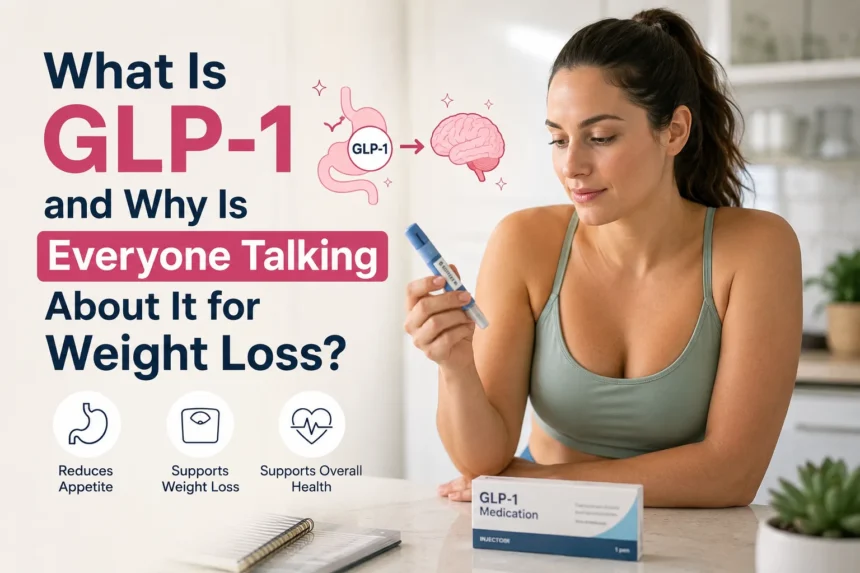
If you’ve scrolled through social media, watched the news, or even eavesdropped on a conversation at the gym lately, you’ve probably heard someone mention GLP-1. Maybe a coworker brought up a weight-loss medication they just started, or a family member asked if those trendy patches actually work. It feels like this three-letter term is suddenly everywhere — and honestly, it kind of is.
But what is GLP-1, really? Is it a drug, a hormone, or a marketing buzzword? And with so many products claiming to “activate” it, how do you separate the treatments that are backed by real science from the ones that are just riding the trend?
This guide about GLP-1 breaks it all down in plain, simple language — no confusing medical jargon, just the facts you actually need. We’ll cover how GLP-1 works in your body, which GLP-1 medication for weight loss tends to perform best in studies, whether GLP-1 patches are worth your money, and what real people in the United States are experiencing with these treatments. We’ll also walk through a pros and cons table, a comparison chart, a short case study, and a FAQ section so you leave this page with real answers, not more confusion.
What Is GLP-1?
Let’s start with the basics. GLP-1 stands for glucagon-like peptide-1. It’s not a drug at all — it’s a hormone that your gut naturally produces every time you eat, especially after meals containing protein, fat, or fiber.
Think of it as your body’s built-in “I’m full” messenger. Once it’s released from cells lining your small intestine, it travels through your bloodstream and talks to several organs at once, including your pancreas, stomach, and brain. This natural hormone plays a starring role in regulating blood sugar, slowing digestion, and signaling satiety.
Here’s the catch: in your body, it breaks down within just a couple of minutes. It’s incredibly short-lived, which is why researchers spent years figuring out how to create a longer-lasting, lab-made version of it. That’s exactly what GLP-1 medications are — synthetic compounds engineered to mimic the natural hormone but stick around in your system far longer, sometimes for an entire week per dose.
So when people talk about “taking GLP-1,” they usually mean a prescription GLP-1 receptor agonist — a medication that copies the hormone’s effects. These drugs were originally developed for type 2 diabetes, and doctors noticed something interesting along the way: patients were losing significant weight as a side effect. That discovery is essentially what kicked off the entire weight-loss movement we’re seeing today.
How Does GLP-1 Work?
Understanding how GLP-1 works helps explain why it’s so different from older weight loss approaches like appetite-suppressant pills or stimulant-based diet products.
Here’s a simplified breakdown of what happens once a dose enters your system:
- It slows down stomach emptying. Food stays in your stomach longer, so you feel full for a longer stretch after eating.
- It talks directly to your brain. Receptors in the hypothalamus — the part of your brain that controls hunger and fullness — get activated, which quiets down food cravings and “food noise.”
- It helps regulate insulin. When your blood sugar rises after a meal, the hormone tells your pancreas to release more insulin, which helps move sugar out of your bloodstream more efficiently.
- It suppresses glucagon. Glucagon is a hormone that raises blood sugar; this mechanism keeps it in check so your blood sugar doesn’t spike unnecessarily.
- It reduces reward-driven eating. Because these same receptors also exist in areas of the brain tied to impulse control and reward, some people report fewer cravings for alcohol, sugary snacks, and highly processed foods.
Put simply, this treatment doesn’t just burn calories — it changes the conversation happening between your gut and your brain. That’s the real reason people describe feeling less obsessed with food after starting a GLP-1 medication for weight loss. It’s not willpower. It’s biology.
Why Is Everyone Talking About GLP-1?
A few things converged to make GLP-1 medications one of the biggest health stories of the decade:
- The results are dramatic compared to older weight loss drugs. Many clinical trial participants lost 15% to 20% of their starting body weight, a number that was almost unheard of with earlier prescription options.
- Celebrities and public figures started talking openly about using it. That normalized the conversation and pulled it into mainstream pop culture.
- The health benefits go beyond the scale. Research increasingly links these medications to improved heart health, better blood pressure, reduced risk of kidney disease, and even changes in cravings for substances like alcohol and nicotine.
- Telehealth and direct-to-consumer platforms made access easier. You no longer need an in-person endocrinologist visit to start treatment in many cases.
- New formulations keep launching. Oral pills, longer-acting injections, and combination therapies are hitting the market at a pace we haven’t seen in weight management in years.
Put all of that together, and you get a genuine cultural moment — not just another fad diet trend, but a real shift in how doctors and patients think about obesity as a chronic, treatable condition rather than a personal failing.
Popular GLP-1 Medications: A Quick Comparison
There isn’t just one GLP-1 medication for weight loss — there’s a growing family of them, each with its own dosing schedule, active ingredient, and approval status. Here’s how the major options generally compare.
| Medication | Active Ingredient | Form | Typical Average Weight Loss* | FDA-Approved For |
|---|---|---|---|---|
| Wegovy | Semaglutide | Weekly injection (also now available as a daily pill) | Around 15–20% of body weight | Chronic weight management |
| Zepbound | Tirzepatide | Weekly injection | Around 18–21% of body weight | Chronic weight management |
| Ozempic | Semaglutide | Weekly injection | Around 12–15% (off-label use) | Type 2 diabetes |
| Mounjaro | Tirzepatide | Weekly injection | Around 15–20% (off-label use) | Type 2 diabetes |
| Saxenda | Liraglutide | Daily injection | Around 5–10% of body weight | Chronic weight management |
| Foundayo | Orforglipron | Daily oral pill | Around 10–12% of body weight | Chronic weight management |
*Weight loss percentages come from clinical trial averages and vary widely by individual, adherence, dosage, and lifestyle factors.
Which GLP-1 Is Best for Weight Loss?
This is probably the single most-asked question in the entire conversation around these medications, and the honest answer is: it depends on your body, your goals, and your doctor’s recommendation.
That said, based on current clinical research, here’s a general breakdown:
- Tirzepatide-based medications (Zepbound, Mounjaro) tend to produce the highest average weight loss in trials because they act on two hormone pathways — GLP-1 and GIP — instead of just one. Many researchers currently consider tirzepatide the most effective option in this drug class.
- Semaglutide-based medications (Wegovy, Ozempic) remain extremely popular, well-studied, and effective, with strong long-term safety data and added cardiovascular benefits.
- Liraglutide (Saxenda) is an older, daily-injection option. It generally produces more modest results but can be a good starting point for people who are needle-averse to higher doses or want a shorter-acting medication.
- Oral GLP-1 medications like the Wegovy pill and orforglipron are newer options for people who prefer to avoid injections altogether, and early data shows they’re closing the effectiveness gap with injectable versions.
Interestingly, recent research from Johns Hopkins found that women tend to lose more weight on GLP-1 medications than men on average — around 11% of starting body weight for women compared to roughly 7% for men — though effectiveness was found to be fairly consistent across different ages, races, and starting weights.
Ultimately, “best” is personal. A doctor will weigh your medical history, insurance coverage, tolerance for side effects, and weight loss goals before recommending a specific GLP-1 medication for weight loss.
Do GLP-1 Patches Work?
Short answer: no — and this is one of the most important things to understand before spending money on one.
These stick-on products (sometimes marketed as “Ozempic patches,” “slimming patches,” or “GLP-1 support patches”) have exploded across social media, especially TikTok. They’re sold as an easy, needle-free, prescription-free alternative to injectable weight-loss drugs. The problem is that these patches don’t actually contain the hormone or any receptor agonist at all.
Here’s why they don’t hold up scientifically:
- The molecule is too large. Real prescription options like semaglutide and tirzepatide are peptides — molecules far too big to pass through the skin barrier, even with a patch designed for transdermal delivery.
- They’re unregulated supplements. Most of these patches are marketed as dietary supplements, not drugs, meaning they skip the FDA approval process entirely and aren’t held to the same manufacturing or safety standards.
- The ingredients aren’t proven for weight loss. Many rely on herbal ingredients such as berberine. While berberine has shown mild effects when taken orally in some studies, there’s no solid research showing it works when absorbed through a patch.
- Any results are likely a placebo effect or water weight. Wearing a patch might make someone more mindful about their eating, which can create the illusion that the product is “working.”
If you’re deciding between a real GLP-1 medication for weight loss and a patch you saw in an influencer’s ad, the science is pretty clear: prescription options tested in clinical trials are the ones actually proven to work. The patches, on the other hand, remain an unproven, unregulated shortcut that experts consistently advise against.
Pros and Cons of GLP-1 Medications
Pros
Cons
GLP-1 vs. Other Weight Loss Approaches
| Approach | How It Works | Average Results | Best For |
|---|---|---|---|
| GLP-1 medication | Mimics gut hormone to reduce appetite and slow digestion | 10–21% body weight loss | People with obesity or weight-related health conditions |
| Diet and exercise alone | Calorie deficit through lifestyle changes | 5–10% body weight loss (varies widely) | People seeking gradual, medication-free change |
| Older prescription diet pills | Stimulant-based appetite suppression | 3–9% body weight loss | People wanting a non-injectable option, though generally less effective |
| Bariatric surgery | Physically reduces stomach size or alters digestion | 20–35% body weight loss | People with severe obesity who haven’t responded to other treatments |
| GLP-1 patches / supplements | Unproven herbal ingredients marketed as GLP-1 boosters | No consistent clinical evidence of meaningful weight loss | Not currently recommended by medical experts |
Case Study: How GLP-1 Is Playing Out Across the USA
To understand the real-world impact of this trend, it helps to look at how these treatments have spread across the United States.
According to recent U.S. health market data, GLP-1 prescriptions have grown at an extraordinary pace over the past few years, driven largely by rising obesity rates, growing insurance coverage for chronic weight management, and the rapid expansion of telehealth prescribing platforms. Millions of Americans are now estimated to have tried one of these medications, with usage climbing across nearly every age group, though it remains most common among adults in their 40s and 50s.
Consider a composite example that reflects a pattern seen repeatedly in U.S. clinical reporting: a 46-year-old woman in the Midwest with type 2 diabetes and a BMI in the obese range starts a weekly GLP-1 injection after her doctor recommends it alongside lifestyle changes. Over the following year, she loses close to 18% of her starting body weight, her blood sugar levels normalize enough that her doctor reduces her diabetes medication, and her blood pressure readings improve. She also mentions to her care team that she no longer feels constantly preoccupied with food — something she says talk therapy and dieting alone never achieved.
Her experience mirrors much of what U.S. researchers are reporting at a larger scale: real, measurable metabolic improvements alongside weight loss, not just a smaller number on the scale. At the same time, U.S. clinicians are increasingly flagging real challenges that mirror her experience, including the need to combine treatment with resistance training to protect muscle mass, the high out-of-pocket cost for patients without strong insurance coverage, and the reality that many people regain weight if they stop without a long-term plan in place.
This is why most U.S. obesity medicine specialists now frame these medications not as a quick fix, but as a long-term chronic disease management tool — similar to how blood pressure or cholesterol medication is used indefinitely rather than as a short course of treatment.
Frequently Asked Questions About GLP-1
What is GLP-1 in simple terms?
GLP-1 is a natural hormone your gut releases after eating. It tells your brain you’re full, slows digestion, and helps manage blood sugar. The medications built around it are lab-made versions designed to copy and extend those same effects.
How does it work for weight loss specifically?
It works by slowing stomach emptying, reducing appetite signals in the brain, and improving how your body manages insulin and blood sugar. Together, these effects lead to eating less without constant hunger.
Which GLP-1 is best for weight loss right now?
Based on current clinical trial data, tirzepatide-based medications (Zepbound, Mounjaro) tend to show the strongest average weight loss results, followed closely by semaglutide-based options (Wegovy, Ozempic). The right choice ultimately depends on individual health factors, so a doctor’s guidance matters.
Do GLP-1 patches work?
No. They don’t contain any actual medication, and there’s no solid scientific evidence they cause meaningful weight loss. The molecule is too large to absorb through the skin, and most patches rely on unproven herbal ingredients instead.
Are GLP-1 medications safe long-term?
Current research suggests they’re generally safe for long-term use under medical supervision, with added benefits for heart and kidney health. As with any medication, side effects and individual risk factors should be discussed with a doctor.
Can you lose weight without changing your diet?
Some weight loss is likely even without major diet changes, since the hormone naturally reduces appetite. However, doctors consistently recommend combining treatment with a protein-rich diet and strength training to preserve muscle mass and improve long-term results.
What happens if you stop taking it?
Many people regain a significant portion of the weight they lost after stopping treatment, which is why most specialists now treat it as a long-term, ongoing therapy rather than a short-term fix.
Is GLP-1 only for people with diabetes?
No. While these medications were originally developed for type 2 diabetes, several versions (like Wegovy and Zepbound) are specifically FDA-approved for chronic weight management in people without diabetes.
Final Thoughts
GLP-1 has gone from an obscure hormone most people had never heard of to one of the biggest names in modern medicine — and for good reason. The science behind how it works is genuinely impressive: it doesn’t just suppress appetite, it recalibrates the entire conversation happening between your gut and your brain around hunger, fullness, and blood sugar.
That said, not everything wearing this label is legitimate. The patches sold online are a clear example of marketing outpacing science, and anyone considering a GLP-1 medication for weight loss deserves to know the difference between an FDA-approved treatment backed by clinical trials and a trendy product with no real evidence behind it.
If you’re thinking about starting treatment, the best next step is a conversation with a licensed healthcare provider who can look at your full medical picture and help you decide which option, if any, makes sense for you.
This article is for informational purposes only and is not a substitute for professional medical advice. Always consult a licensed healthcare provider before starting or stopping any medication.
References and Scientific Sources
- National Institutes of Health (NIH) – Semaglutide and GLP-1 receptor signaling research
- Johns Hopkins Bloomberg School of Public Health – GLP-1 effectiveness across patient demographics
- Forbes Health – GLP-1 statistics, trends, and usage data
- Forbes Health – GLP-1 patches: what experts say
- GoodRx Health – GLP-1 trends and treatment landscape
- American Journal of Managed Care (AJMC) – GLP-1 therapies beyond weight loss
- Endocrine Society – Muscle mass and physical activity in GLP-1 users
- Baptist Health – What are GLP-1 patches?
- TODAY.com – Doctors weigh in on viral GLP-1 patches
- U.S. Food and Drug Administration (FDA) – fda.gov (for official drug approval information)
Medical Disclaimer
This article is for educational and informational purposes only. It does not provide medical advice, diagnosis, or treatment. GLP-1 medications are prescription therapies and may not be appropriate for everyone. Always speak with a qualified healthcare professional before starting, stopping, or changing any medication or weight-management treatment.