
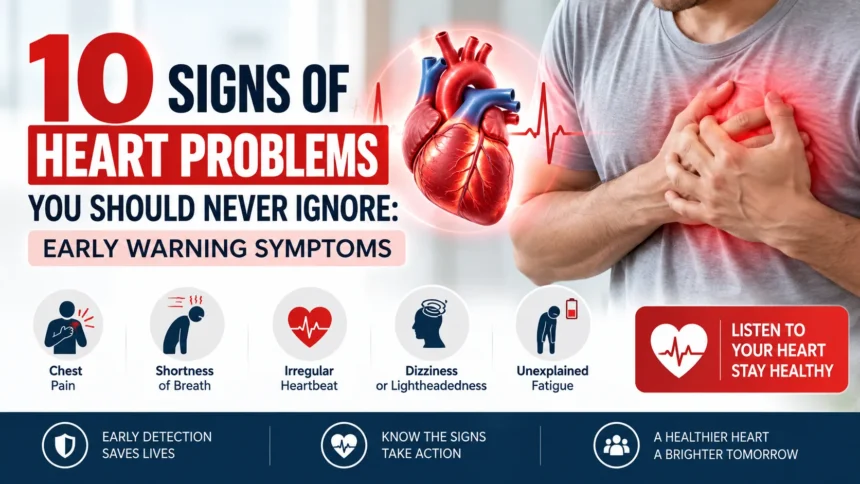
Your heart beats roughly 100,000 times a day, and most of the time, you never think about it. That’s exactly the problem. Because heart disease is often quiet in its early stages, the signs of heart problems can hide behind everyday complaints — tiredness, a little breathlessness, cold fingers, a cough that “just won’t go away.” By the time chest pain shows up, the condition has frequently been building for years.
Heart disease remains the leading cause of death in the United States, responsible for roughly one in every five deaths each year, according to the CDC. Yet a huge share of these deaths are preventable if people recognize the signs of heart problems early and act on them instead of shrugging them off.
This guide walks through 10 of the most important signs of heart problems you should never ignore, and it’s built around the real questions people search for most (cold hands, blue lips, facial swelling, and heart valve issues). It also includes a real-world style case study from the U.S. and a clear, no-nonsense action plan. This article is for education only — it’s not a diagnosis tool, and it doesn’t replace a conversation with your doctor.
Why Paying Attention to the Signs of Heart Problems Matters
Heart disease is often called a “silent” condition because plaque can build up in your arteries for decades before you feel a thing. When symptoms do appear, they’re your body’s way of telling you that blood flow, oxygen delivery, or your heart’s pumping ability is already being affected.
The tricky part is that the early signs of heart problems rarely look dramatic. In fact, most of the signs of heart problems people eventually get diagnosed with started out looking completely unremarkable. They look like:
- Feeling unusually tired after simple chores
- Getting winded walking up the same stairs you’ve climbed for years
- Waking up at night because you can’t breathe lying flat
- Noticing your shoes feel tighter by the end of the day
- Feeling your heart “flutter” or skip for no clear reason
None of these scream “emergency.” That’s exactly why so many people miss the signs of heart problems until a heart attack, stroke, or heart failure diagnosis forces the issue. Doctors often say that if patients had recognized the signs of heart problems sooner, treatment could have started years earlier. Learning to recognize these signals — and knowing which ones need a 911 call versus a doctor’s appointment — can genuinely save your life or the life of someone you love.
The 10 Signs of Heart Problems You Should Never Ignore
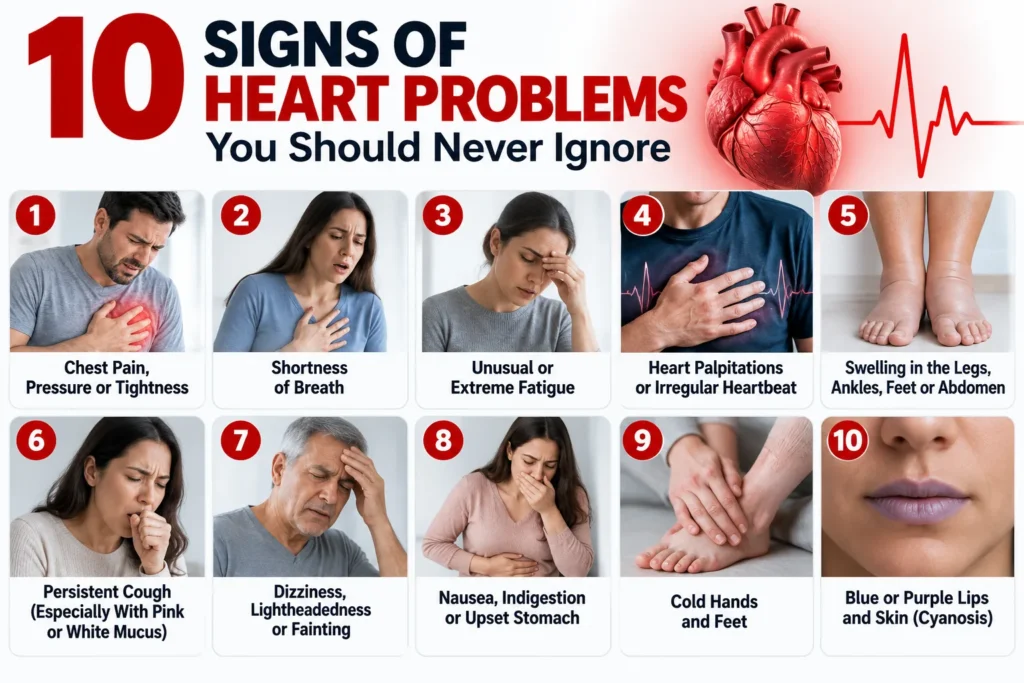
Below are the ten signs of heart problems that doctors, cardiologists, and public health agencies flag most often. Some are dramatic, some are subtle, but all ten deserve your attention.
1. Chest Pain, Pressure, or Tightness (Angina)
This is the most well-known of all signs of heart problems, and for good reason. When people picture the signs of heart problems, chest pain is almost always the first image that comes to mind. According to the American Heart Association, chest discomfort tied to heart trouble often feels like:
- Pressure, squeezing, or a heavy weight sitting on your chest
- Fullness or tightness that lasts more than a few minutes
- Discomfort that fades and then returns
- Pain that spreads to the arms, back, neck, jaw, or stomach
This type of chest discomfort, medically called angina, happens when your heart muscle isn’t getting enough oxygen-rich blood, usually because of narrowed coronary arteries, and it’s one of the signs of heart problems doctors ask about first. Angina that occurs during exertion and eases with rest is still one of the signs of heart problems worth discussing with a cardiologist — it doesn’t have to be a full-blown heart attack to matter.
2. Shortness of Breath
Right after chest pain, breathlessness ranks among the most reported signs of heart problems in adults over 40. Struggling to catch your breath during activities that used to feel easy — climbing stairs, carrying groceries, even talking — is one of the more common signs of heart problems, particularly heart failure and valve disease. Shortness of breath tied to the heart often shows up as:
- Breathlessness during mild exertion
- Trouble breathing while lying flat (you may need extra pillows)
- Waking up gasping for air in the middle of the night
The CDC notes that shortness of breath can appear before chest discomfort even starts, which is why it should never be dismissed as “just being out of shape.”
3. Unusual or Extreme Fatigue
Fatigue is one of the sneakiest signs of heart problems because it’s so easy to explain away. Everyone gets tired. But fatigue as one of the signs of heart problems feels different — it’s a bone-deep exhaustion that doesn’t improve with sleep and shows up after minimal effort, like folding laundry or walking to the mailbox. Cardiologists often point out that extreme fatigue is usually the very first symptom people notice with heart valve disease, sometimes appearing years before other signs of heart problems show up.
4. Heart Palpitations or Irregular Heartbeat
Irregular heartbeats sit high on the list of signs of heart problems that people notice but often ignore. A fluttering, racing, or pounding feeling in your chest — known medically as an arrhythmia — is another of the classic signs of heart problems. You might feel like your heart skipped a beat, is beating too fast at rest, or is thumping irregularly. Occasional palpitations from caffeine or stress are common and usually harmless, but palpitations that:
- Keep coming back
- Last more than a few minutes
- Come with dizziness, chest pain, or shortness of breath
…deserve a proper cardiac work-up, such as an ECG/EKG or a wearable heart monitor, since palpitations are among the signs of heart problems that are easiest to capture on a device.
5. Swelling in the Legs, Ankles, Feet, or Abdomen (Edema)
Swelling is one of the more visible signs of heart problems, and it’s often the symptom that finally gets people into a doctor’s office. When your heart isn’t pumping efficiently, blood can back up in your veins, pushing fluid into surrounding tissue. This is called edema, and it’s one of the more overlooked signs of heart problems, especially heart failure and valve disease. Watch for:
- Socks leaving deep indentation marks
- Shoes suddenly feeling tight
- Puffiness around the ankles that worsens by evening
- A swollen or bloated abdomen
6. Persistent Cough, Especially With Pink or White Mucus
Respiratory-sounding symptoms are among the least expected signs of heart problems, which is why they’re so often missed. A chronic cough is easy to blame on allergies or a lingering cold, but a cough that produces white or pink-tinged, frothy mucus can be one of the more surprising signs of heart problems — specifically, fluid backing up into the lungs from a struggling heart (a condition sometimes called cardiac cough). If a cough lasts for weeks and worsens when you lie down, it’s worth mentioning to your doctor rather than reaching for another round of cough syrup — it may be one of the quieter signs of heart problems hiding behind a “normal” cold.
7. Dizziness, Lightheadedness, or Fainting
Among all the signs of heart problems on this list, fainting is the one cardiologists tend to take most seriously. Feeling dizzy or actually fainting can point to several signs of heart problems, including arrhythmias, valve disease, or a drop in blood pressure caused by the heart not pumping enough blood to the brain. Fainting episodes, in particular, should always be evaluated — they’re one of the symptoms doctors take most seriously because they can precede more dangerous cardiac events.
8. Nausea, Indigestion, or Upset Stomach
This is one of the most under-recognized signs of heart problems, especially in women. Digestive-sounding signs of heart problems are frequently mistaken for food poisoning or acid reflux. Research summarized by the American Heart Association shows that women having a heart attack are more likely than men to report nausea, vomiting, and digestive discomfort rather than classic chest pain. If stomach discomfort shows up alongside sweating, shortness of breath, or arm/jaw pain, treat it as a cardiac symptom until proven otherwise, because these overlapping signs of heart problems are commonly missed in emergency rooms.
9. Cold Hands and Feet
Are cold hands and feet a sign of heart problems? Yes — they can be, though not always. Circulation-related signs of heart problems like this one are easy to blame on weather alone. When your heart isn’t circulating blood efficiently, or when the arteries feeding your limbs narrow (as in peripheral artery disease), your body prioritizes blood flow to vital organs first. Your hands and feet, being less “essential” in that moment, get less blood and turn cold.
Cold extremities become more concerning as one of the signs of heart problems when they appear alongside:
- Numbness or tingling
- Leg cramping while walking that eases with rest (claudication)
- Weak or absent pulses in the feet
- Slow-healing sores or wounds on the feet
- Pale or bluish skin discoloration
Occasional cold hands in winter are normal, and not every cold day means new signs of heart problems. Persistent cold extremities — especially paired with the symptoms above — are worth raising with a doctor, particularly if you also have diabetes, high blood pressure, or a smoking history.
10. Blue or Purple Lips and Skin (Cyanosis)
Are blue lips a sign of heart problems? They can be a serious one. Of all the signs of heart problems covered here, this is the one most likely to signal a true emergency. This bluish or purplish discoloration is called cyanosis, and it happens when your blood isn’t carrying enough oxygen. There are two types, and the distinction matters:
- Peripheral cyanosis: Affects only the hands, feet, fingers, or toes, while the lips stay pink. This is usually linked to poor circulation, cold exposure, or peripheral artery disease, and while it should be checked, it’s often less urgent.
- Central cyanosis: Affects the lips, tongue, and mucous membranes. This is a red-flag version of the signs of heart problems list, often linked to congenital heart defects, heart failure, or severe lung disease, and it needs emergency evaluation — especially if it appears suddenly or comes with chest pain and difficulty breathing.
If lips, tongue, or face suddenly turn blue or grey, call 911 immediately. Don’t wait to see if it passes — this is one of the signs of heart problems where every minute counts.
What Are the First Signs of Heart Valve Problems?
Heart valve issues are among the signs of heart problems that hide in plain sight for the longest. Heart valve disease deserves its own spotlight because it’s frequently missed for years. Your heart has four valves (aortic, mitral, pulmonary, and tricuspid) that keep blood flowing in the right direction. When a valve narrows (stenosis) or leaks (regurgitation), the heart has to work harder, and symptoms creep in slowly.
The earliest signs of heart problems related to the valves typically include:
- Unusual fatigue — often the very first symptom people notice
- Shortness of breath, especially when lying flat or during activity like climbing stairs
- Swelling in the ankles, feet, legs, or abdomen
- Heart palpitations or a fluttering, racing heartbeat
- Dizziness or fainting
- Chest discomfort during exertion
- A heart murmur — an unusual whooshing sound your doctor may detect during a routine check-up, even before you notice any symptoms yourself
Because the heart can compensate for a leaky or narrowed valve for years, symptoms of aortic valve problems in particular can take 10 to 20 years to become noticeable — another reminder that the signs of heart problems don’t always follow a fast timeline. That’s exactly why routine check-ups matter — a stethoscope can catch a murmur long before you feel anything.
Is Facial Swelling a Sign of Heart Problems?
Facial changes are among the less obvious signs of heart problems, which is exactly why people wait too long to mention them. Yes, facial swelling — particularly around the eyes, cheeks, or under the jaw — can be one of the signs of heart problems, though it’s less common than swelling in the legs. It usually points to fluid retention caused by:
- Right-sided heart failure, where blood backs up in the veins leading to the heart
- Advanced valve disease affecting the tricuspid or pulmonary valve
- Fluid overload from kidney strain that often accompanies heart failure
Facial puffiness that appears gradually, especially alongside leg swelling, weight gain, and shortness of breath, is worth a medical evaluation. Sudden facial swelling paired with difficulty breathing, however, could indicate a severe allergic reaction or a cardiac emergency and needs immediate attention — don’t try to self-diagnose which one it is.
Case Study: Recognizing the Signs of Heart Problems in Real Life (USA)
Sometimes, the signs of heart problems are subtle enough to be mistaken for stress, aging, or a busy lifestyle.
The following is a fictional composite case created for educational purposes. It is not a real patient record and should not be interpreted as an actual clinical outcome.
Background: Mark, a 54-year-old warehouse supervisor in Columbus, Ohio, had gradually noticed that everyday activities were becoming more tiring. Walking up the loading-dock ramp left him unusually winded, his ankles occasionally appeared swollen, and he had started sleeping with extra pillows because lying flat was uncomfortable.
Mark also had type 2 diabetes and a history of smoking, which increased his cardiovascular risk. At first, he assumed his symptoms were simply part of getting older.
The turning point: During a routine workplace health screening, a nurse noticed that Mark’s blood pressure was elevated and asked about his recent symptoms. After hearing about his breathlessness, swelling, nighttime discomfort, and occasional heart fluttering, she recommended that he arrange a medical evaluation rather than ignore the changes.
Medical evaluation: Mark’s healthcare team performed several tests, including an electrocardiogram and echocardiogram. The evaluation identified cardiovascular problems that required treatment and follow-up. His doctors also assessed his circulation and other risk factors to create a comprehensive care plan.
Positive outcome: Mark followed his healthcare team’s recommendations, took his prescribed medication, worked on improving his diet and physical activity, and received support to stop smoking. Over the following months, his symptoms became more manageable, and regular follow-up helped his medical team monitor his heart health and adjust his treatment when necessary.
The takeaway: Mark’s experience highlights an important lesson: changes such as unexplained breathlessness, swelling, reduced exercise tolerance, or unusual heart sensations should not automatically be dismissed as normal aging. Recognizing potential signs of heart problems and discussing them with a healthcare professional can lead to earlier evaluation and appropriate treatment.
Early attention does not guarantee a particular outcome, but it gives patients and healthcare professionals an opportunity to identify problems, manage risk factors, and make informed decisions about treatment.
Comparison: Heart Attack vs. Heart Failure vs. Arrhythmia Symptoms
Not all signs of heart problems point to the same condition. Because the signs of heart problems overlap across different cardiac conditions, this comparison can help you understand what you might be dealing with (though only a doctor can confirm a diagnosis):
| Symptom Pattern | Heart Attack | Heart Failure | Arrhythmia |
|---|---|---|---|
| Chest pain | Sudden, intense pressure or squeezing | Occasional, tied to exertion | Sometimes present |
| Onset | Sudden, minutes to hours | Gradual, over weeks or months | Can be sudden or intermittent |
| Shortness of breath | Often sudden | Progressive, worse lying flat | Can occur during episodes |
| Swelling (edema) | Uncommon | Very common (legs, abdomen) | Uncommon |
| Fatigue | Sudden, extreme | Chronic, worsening | Variable |
| Palpitations | Possible | Less prominent | Primary symptom |
| Cold hands/feet | Occasional | Common (poor circulation) | Occasional |
| Emergency level | Call 911 immediately | Urgent doctor visit; ER if severe | Depends on severity/duration |
Central vs. Peripheral Cyanosis at a Glance
| Feature | Central Cyanosis | Peripheral Cyanosis |
|---|---|---|
| Location | Lips, tongue, mucous membranes | Hands, feet, fingers, toes only |
| Skin temperature | Often normal | Usually cold |
| Common cause | Heart failure, congenital heart defects, lung disease | Cold exposure, poor circulation, Raynaud’s, PAD |
| Urgency | Emergency — call 911 | Usually less urgent, but still see a doctor |
| Typical trigger | Low blood oxygen throughout the body | Localized blood flow restriction |
Pros and Cons of Tracking the Signs of Heart Problems at Home
Home monitoring tools (smartwatches, blood pressure cuffs, pulse oximeters) have made it easier for everyday people to watch for the signs of heart problems between doctor visits. More Americans than ever are using these devices to track the signs of heart problems in real time. Here’s a balanced look:
Pros
- Can catch irregular heart rhythms (like AFib) early
- Encourages awareness of baseline heart rate and rhythm
- Data can be shared directly with your cardiologist
- Non-invasive and available 24/7
- Useful for tracking symptom patterns over time (fatigue, swelling, palpitations)
Cons
- Not a substitute for a clinical ECG or echocardiogram
- False alarms can cause unnecessary anxiety
- Devices vary widely in accuracy
- Missed or unclear readings can create false reassurance
- Doesn’t replace regular check-ups or blood pressure/cholesterol screening
The bottom line: home tracking is a helpful add-on for spotting the signs of heart problems early, but it should complement — not replace — professional cardiac care.
Risk Factors That Make These Signs More Concerning
Certain health conditions turn ordinary complaints into genuine signs of heart problems worth watching closely. The signs of heart problems above carry extra weight if you also have any of the following, according to CDC data:
- High blood pressure
- High cholesterol
- Type 2 diabetes or prediabetes
- Smoking or tobacco use
- Obesity or physical inactivity
- A family history of heart disease
- Age over 45 (men) or 55 (women)
- Chronic stress or poor sleep habits
If you’re managing one or more of these risk factors and notice any of the symptoms above, don’t wait for them to worsen before seeking care — risk factors and signs of heart problems tend to compound each other over time.
When to Call 911 Immediately
Some signs of heart problems cross the line from “see a doctor soon” to “call 911 now.” Some signs of heart problems are medical emergencies. Call 911 right away if you or someone nearby experiences:
- Chest pain or pressure lasting more than a few minutes
- Sudden shortness of breath
- Sudden blue or grey lips, tongue, or face
- Fainting or loss of consciousness
- Slurred speech, facial drooping, or arm weakness (signs of a possible stroke)
- Cold sweats with nausea and chest discomfort
Acting fast during a heart attack or cardiac arrest genuinely saves heart muscle and lives. Don’t drive yourself — call emergency services. When it comes to the most severe signs of heart problems, speed matters more than certainty.
Simple, Practical Steps to Protect Your Heart
Prevention is always cheaper and safer than treating advanced signs of heart problems after the fact. These daily habits lower your risk over time:
- Get blood pressure and cholesterol checked at least once a year
- Ask your doctor about screening for diabetes if you’re at risk
- Move your body most days — even brisk walking counts
- Cut back on sodium, processed foods, and added sugar
- Quit smoking and limit alcohol intake
- Manage stress through sleep, movement, or relaxation techniques
- Keep a symptom journal if you notice recurring fatigue, swelling, or palpitations
- Don’t skip annual physicals, even if you “feel fine”
- Bring up any new signs of heart problems at your next appointment, even minor ones
Frequently Asked Questions About Signs of Heart Problems
This FAQ section rounds up the most common questions people ask about the signs of heart problems.
What are signs of heart problems?
The most common signs of heart problems include chest pain or pressure, shortness of breath, extreme fatigue, heart palpitations, swelling in the legs or abdomen, dizziness, a persistent cough, cold hands and feet, and in more serious cases, blue-tinged lips or skin. Symptoms can vary between men and women, with women more likely to report nausea, back pain, and fatigue instead of classic chest pain.
Are cold hands and feet a sign of heart problems?
Yes, they can be, especially when the heart or peripheral arteries aren’t circulating blood efficiently. On their own, cold hands are often just a reaction to weather, but paired with numbness, leg cramping, or slow-healing wounds, they become one of the more telling signs of heart problems, particularly peripheral artery disease.
Are blue lips a sign of heart problems?
Blue or purplish lips (central cyanosis) can indicate serious heart or lung problems, including heart failure or congenital heart defects. This is different from blue fingers or toes from cold exposure, which is usually less urgent. Sudden blue lips with breathing trouble is a 911 emergency.
What are the first signs of heart valve problems?
Unusual fatigue is typically the earliest symptom, followed by shortness of breath (especially lying flat), swelling in the ankles or abdomen, heart palpitations, dizziness, and a heart murmur detected during a check-up. Valve disease can progress silently for years before symptoms become obvious.
Is facial swelling a sign of heart problems?
It can be, particularly with right-sided heart failure or advanced valve disease, where fluid backs up and collects in the face and around the eyes. Gradual facial swelling alongside leg swelling and breathlessness should be evaluated by a doctor; sudden swelling with breathing difficulty needs emergency care.
Can heart problems have no symptoms at all?
Yes, and this is one of the trickiest aspects of the signs of heart problems topic overall. Heart disease is frequently called a “silent” condition because plaque buildup and even some valve issues can progress for years without noticeable symptoms. This is why regular screenings for blood pressure, cholesterol, and blood sugar matter even if you feel healthy.
Do symptoms differ between men and women?
Often, yes — one more reason the signs of heart problems shouldn’t be judged by a single checklist. Men more commonly report classic chest pain, while women are more likely to experience fatigue, nausea, back or jaw pain, and shortness of breath — sometimes without significant chest discomfort at all.
Final Thoughts
Recognizing the signs of heart problems early isn’t about becoming anxious over every twinge or tired afternoon. Learning to spot the signs of heart problems is a skill, and like any skill, it gets easier the more you practice paying attention to your own body — it’s about knowing your body well enough to notice when something is genuinely off, and having the confidence to get it checked instead of waiting it out. Cold hands, a stubborn cough, swollen ankles, or unexplained fatigue may seem minor on their own, but together, they can tell a much bigger story about your cardiovascular health.
If anything in this article sounded familiar, don’t self-diagnose from a blog post — book an appointment, mention every symptom (even the “small” ones), and let a healthcare professional connect the dots. Being able to name your signs of heart problems clearly can help your doctor act faster. Catching the signs of heart problems early is one of the most effective ways to protect the years ahead of you.
This article is for informational purposes only and does not constitute medical advice. Always consult a licensed healthcare provider for diagnosis and treatment of any health condition. If you believe you are experiencing a medical emergency, call 911 immediately.
Sources and Scientific References
- Centers for Disease Control and Prevention (CDC) — About Heart Disease
- Centers for Disease Control and Prevention (CDC) — Heart Disease Facts
- Centers for Disease Control and Prevention (CDC) — About Heart Attack Symptoms, Risk, and Recovery
- American Heart Association — Warning Signs of a Heart Attack
- American Heart Association — Heart Failure Signs and Symptoms
- American Heart Association — Heart Attack, Stroke and Cardiac Arrest Symptoms
- American Heart Association Newsroom — Report Outlines Most Common Symptoms of 6 Cardiovascular Diseases
- National Health Service (NHS, UK) — Blue Skin or Lips (Cyanosis)
- National Health Service (NHS, UK) — Heart Valve Disease
- Palaniappan LP, Allen NB, Almarzooq ZI, et al. 2026 Heart Disease and Stroke Statistics: A Report of US and Global Data From the American Heart Association. Circulation, 2026 — PubMed
Medical Disclaimer: This article is for informational and educational purposes only and does not replace professional medical advice, diagnosis, or treatment. If you experience severe or sudden heart-related symptoms, seek emergency medical care immediately.
For more expert-backed health tips, wellness guides, and supplement insights, be sure to read more articles on: Health Line Guide