


Author: David Mitchell, Certified Nutrition & Wellness Writer
When you first hear the word “diabetes,” the first place your mind goes is to food restriction. You can no longer eat all the foods you love. But eating well with diabetes doesn’t have to feel dull, complicated, or like punishment.
A smart diabetes meal plan is the answer. It helps you figure out what, when, and how much to eat so your blood sugar stays in control, without giving up the foods you actually enjoy.
In this blog, we will discuss why meal planning is important, the basics of diabetic nutrition, and various meal choices that will satisfy different tastes. We want to help you feel healthy and confident about controlling your health without giving up your enjoyment of eating delicious, comforting meals.
Understanding Diabetes and Diabetes Meal Plans
If you have diabetes, you need to do much more than just be physically active. You also need to eat the right kinds of food to help your body. Eating well is essential for keeping blood sugar levels stable and staying healthy. That’s why eating healthy can be difficult, even when it feels necessary, especially if you’re on a strict diet.
It’s totally normal for individuals with diabetes to have trouble keeping to strict food programs. But studies also say that ignoring or merely loosely following your recommended diet might cause major health problems over time. The good news is that even small, consistent changes in eating can greatly improve your mood and diabetes control.
The Role of Meal Plans in Diabetes Management
For those managing diabetes, every meal is an opportunity to maintain control over blood sugar levels. A balanced diabetes meal plan can prevent the rapid spikes and plunges in blood sugar that many people experience. In addition, a diabetes-friendly meal plan often emphasizes:
- Whole Foods: Emphasizing fruits, vegetables, whole grains, lean proteins, and healthy fats.
- Fiber-rich Ingredients: Adding foods rich in soluble and insoluble fiber helps moderate blood sugar absorption.
- Low Glycemic Index Options: Selecting foods that have a low impact on blood sugar levels.
- Portion Control: It is keeping portions in check to avoid overconsumption of carbohydrates and fats.
By adding these dietary components, you can achieve better glycemic control while still enjoying your meals.
A healthy meal plan acts like a simple roadmap, which helps to guide you on what to eat, when to eat, and how much to put on your plate. The CDC (Centers for Disease Control and Prevention) states that a meal plan can help people with diabetes meet their nutritional needs without compromising blood sugar levels. The CDC highlights two useful approaches to make meal planning easier without having to memorize difficult numbers:
- Carb Counting: This strategy records how many carbs you eat at each meal and snack, which helps you manage your insulin and blood sugar levels better.
- The Plate Method: It is a visual guide that simplifies meal planning by eliminating the need for measurements.
These two methods are both about managing portions and the quality of meals, not about forbidding them. They are useful and should fit into your daily life. That’s why the weekly diabetes meal plan below contains simple, ordinary foods and is based on the balanced plate method. This method makes healthy eating feel natural, easy, and stress-free.
Easy Ways to Build a Diabetes-Friendly Meal
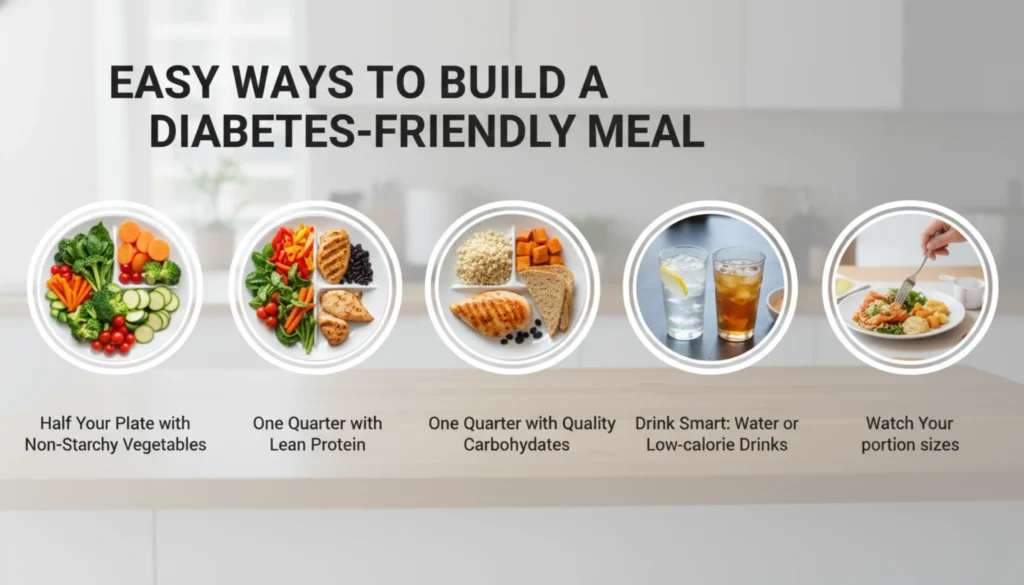
Eating healthy with diabetes does not have to be difficult. A few basic eating habits can help you get through the week while also keeping your blood sugar stable. You can create a balanced, healthy diabetes meal plan without stress. You have to fill:
Half your plate with non-starchy vegetables
Make half of your plate vegetables that don’t raise blood sugar quickly, such as leafy greens, broccoli, green beans, salad, etc. These vegetables give you fiber and nutrients without a big carb load.
One quarter with lean protein
Fill about one-quarter of your plate with protein: options like skinless chicken, fish, tofu, beans, eggs, or low-fat dairy. Protein keeps you full and reduces the rate at which your blood sugar increases after eating carbohydrates.
One quarter with quality carbohydrates
The last quarter of your plate should be filled with high-quality carbohydrates. For example, whole grains, beans/legumes, starchy vegetables, select fruits, or low-fat dairy. Avoid refined grains, sugary meals, and highly processed carbohydrates.
Drink smart: water or low-calorie drinks
Avoid consuming sugary drinks or high-calorie drinks and choose water or other zero-calorie drinks (like unsweetened tea). This helps you stay hydrated without increasing sugar or calories.
Watch your portion sizes
Even healthy foods can add up if the portions are too large. Use simple cues (like the size of your palm, fist, or a 9-inch plate) to estimate portions rather than overeating.
A 7-Day Diabetes Meal Plan
Below, I have provided a weekly meal plan that combines home cooking, quick prep, and easily accessible grocery items. Each day focuses on providing balanced meals that align with the plate-style approach mentioned above. You are welcome to swap similar foods if you dislike something, but keep the basic balance.
Day 1
Breakfast:
- Greek yoghurt with toppings of chopped nuts and some fresh berries
- A small slice of whole-grain toast or a quarter cup of cooked oats
Why this approach works: Yogurt brings protein, berries add fiber and sweetness without added sugar, nuts add healthy fats, and a modest portion of whole grains rounds it out.
Snack:
- A medium apple or pear
- 1 tablespoon peanut butter or almond butter
Lunch:
- Salad bowl: spinach and mixed greens, cherry tomatoes, cucumber, grilled chicken strips, a small scoop of quinoa, and a lemon‑olive oil dressing
- Water or unsweetened iced tea
Dinner:
- Baked salmon or tofu, seasoned with herbs
- Steamed broccoli and carrots
- Half a cup of cooked brown rice or another whole grain
- Side salad if still hungry
Evening snack, optional:
- A few baby carrots or cucumber slices
- A small handful of roasted chickpeas
Day 2
Breakfast:
- Scrambled eggs with chopped bell peppers, onions, and a small amount of shredded cheese
- 1 small corn tortilla or a quarter cup of black beans
Snack:
- 6–8 whole wheat crackers with hummus
Lunch:
- Turkey or veggie wrap: whole‑grain tortilla, lean turkey or mashed chickpeas, lettuce, tomato, avocado, mustard or yogurt sauce
- A small portion of raw vegetables
Dinner:
- Stir-fry with tofu or chicken and mixed non-starchy veggies like snow peas, bok choy, and bell pepper
- 1/2 cup cooked soba noodles or brown rice
- Fresh fruit slices for dessert, such as melon or orange segments
Day 3
Breakfast:
- Smoothie: unsweetened almond milk or low-fat milk, a handful of spinach, half a banana, a tablespoon of flaxseed, and a small scoop of protein powder or Greek yogurt
- A few whole‑grain cereal pieces or seeds on top for texture
Snack:
- Cottage cheese with sliced cucumber or tomato
Lunch:
- For lunch, choose either lentil soup or black bean soup served in a small bowl
- A mixed salad of greens and vinaigrette as a side
- 1 slice of whole-grain bread, if extra carbs are needed
Dinner:
- Grilled chicken breast or tempeh
- Roasted Brussels sprouts and sweet potato cubes (small portion)
- Steamed green beans
Evening snack, optional:
- A few walnuts or almonds
Day 4
Breakfast:
- Oatmeal cooked with water or low-fat milk and with a topping of sliced apple, cinnamon, and a small amount of chia seeds
- Small side of cottage cheese or Greek yogurt if still hungry
Snack:
- 1 small orange or clementine
Lunch:
- Quinoa salad: cooked quinoa, chopped cucumber, cherry tomatoes, parsley, chickpeas, olive oil, lemon juice
- Have shredded chicken for extra protein if you want
Dinner:
- Baked cod or pan‑seared tofu with herbs
- A large salad mixed with green veggies prepared in vinegar and olive oil
- Half a cup of barley or farro
Optional dessert:
- A few squares of dark chocolate, a very small portion
Day 5
Breakfast:
- Whole‑grain toast with mashed avocado, a sprinkle of seeds, and a poached egg
- A side of sliced tomatoes
Snack:
- A small handful of mixed nuts
Lunch:
- Veggie chili with kidney beans and tomatoes
- A small scoop of plain Greek yogurt on top
- A small portion of cornbread or a whole-grain roll, if desired
Dinner:
- Turkey or bean burgers on lettuce wraps or whole-grain buns with tomatoes and onions
- A side of roasted zucchini and squash
- Water or herbal tea
Evening snack, optional:
- Sliced bell pepper with hummus
Day 6
Breakfast:
- Two‑ingredient pancakes: mashed banana + egg, cooked lightly; top with a few berries and a dollop of plain yogurt
- Optional: a small spoonful of nuts or seeds
Snack:
- A hard‑boiled egg
Lunch:
- Tuna or salmon salad made with a touch of plain yogurt or mustard, mixed with celery and onion
- Serve over a bed of greens or in a whole‑grain pita pocket
- Small apple
Dinner:
- Vegetable curry with chickpeas and assorted veggies, cooked in a small amount of coconut milk or light broth
- Half a cup of cooked millet or brown rice
- A side of steamed spinach
Optional dessert:
- Light fruit salad with lime zest
Day 7
Breakfast:
- Cottage cheese with diced peaches or pineapple and a few sliced almonds
- Small slice of whole‑grain toast
Snack:
- Celery sticks with nut butter
Lunch:
- Grilled veggie platter: eggplant, zucchini, mushrooms, and onions drizzled with olive oil
- Add grilled shrimp or tofu cubes
- A side of draft whole grain, such as bulgur salad
Dinner:
- Lean beef roast or portobello mushroom steaks
- Roasted cauliflower and kale
- Small baked potato or a quarter cup of couscous
Evening snack, optional:
- Berries with a sprinkle of cinnamon
How to use this diabetes meal plan and personalize it
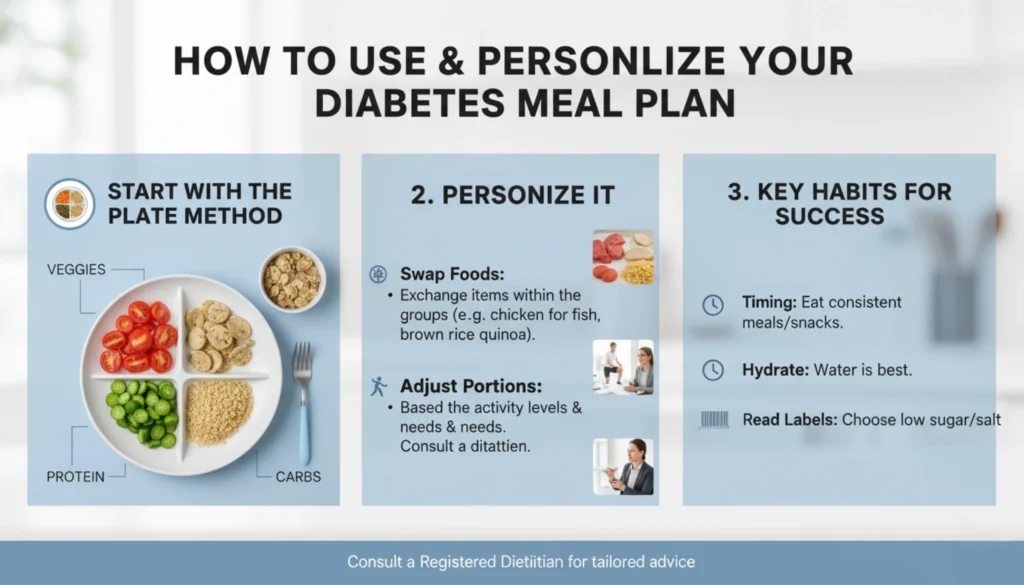
Everyone’s routine is unique, so modifying this weekly plan to your needs is beneficial. These simple recommendations will show you how to change meals, portions, and ingredients so that the plan seems adaptable, affordable, and simple to follow without compromising your blood sugar goals.
- Feel free to repeat or swap meals
If you love Day 2 lunch, you can use it again later in the week. Land on a few go‑to meals you can cook quickly while keeping your plan realistic. The CDC also mentions that keeping regular, balanced meals helps you prevent sudden highs and lows in blood sugar, so repetition can actually be helpful.
- Adjust portions to your hunger, calories, and meds
The plate method gives you the overall balance, but if your doctor or dietitian has given you calorie or carb targets, adjust portions of grains, fruits, or starchy vegetables accordingly. For example, if you eat fewer carbs, cut the grain portion in half and add more veggies or protein.
- Swap proteins or grains based on budget and availability
1. Chicken, beans, eggs, or tofu are often cheaper protein sources.
2. Oats, brown rice, barley, or quinoa can all be used in place of each other. You can choose whichever you get.
3. Frozen vegetables are often more affordable and equally nutritious in comparison to fresh; they can be used without worry.
- Mix in cultural favorites
Use your cultural staples as long as you maintain the basic balance of vegetables, protein, and carbs. It’s about structure, not a single cuisine.
- Keep a small list of quick snacks
If a full snack feels like too much, or if you tend to overeat meals, stick to one or two options that fit easily in your bag, such as nuts, fruit, or a small yogurt. Having one or two consistent picks prevents wandering into high‑sugar snacks when you’re hungry.
When This Plan Might Need Changes
Even the best meal plan is not effective for everyone. Depending on your lifestyle and health requirements, you may need to make some changes. Here are several scenarios in which you might need to change the meal plan.
- If your calorie needs are much higher or lower:
You may need to change the quantity of your portions or add an extra snack made up of protein and vegetables instead of only carbs, depending on your needs.
- If you’re very active or work out often:
You may need a greater amount of carbs before or after working out. Choose healthy carbs, such as banana slices with nut butter or whole-grain crackers with hummus, which are beneficial choices.
- If you have kidney issues, allergies, or other health conditions:
You may need to change the types of protein you eat. You may need to consume fruits or vegetables that are lower in potassium, or you may need to avoid certain foods. It’s always best to speak with your doctor for personalized change.
FAQs
Do I have to give up on desserts?
No, you can occasionally have desserts. But eat it in moderation and balance it with the rest of the meal. For example, you could have a few squares of dark chocolate or a small portion of berries with yogurt. The 7-day diabetes meal plan includes a couple of optional dessert ideas so you don’t feel deprived.
How strict do I need to be with timing?
Regular timing helps, but in real life, it can’t be perfect. Aim to eat roughly every 3–4 hours, with an interval if possible, which tends to keep hunger and blood sugar in control. If you must change the timing of a meal, adjust the next one slightly rather than skipping it entirely.
Can I eat fruits?
Yes, you can. Fruits are quality carbohydrates that can satisfy your cravings for sweets naturally. But eat a moderate amount, like one piece or half of it, so it doesn’t cause problems, and balance it with protein or healthy fat to slow digestion.
What if I’m a vegetarian or vegan?
This 7-day diabetes meal plan uses beans, tofu, lentils, and nuts heavily. You can skip meat entirely and use plant-based proteins in the same portions. Add extra veggies or a small extra scoop of grains if you need more energy or feel hungry.
Is it okay to skip a meal if I’m not hungry?
Eating something light is usually a better option than skipping meals. Your blood sugar levels drop drastically when you skip meals, leaving you feeling tired or hungry later. This situation often results in overeating, so you should eat regularly to keep your body balanced and healthy.
Final thought
A diabetes‑friendly meal plan isn’t about following strict rules or eating boring food; it’s about making food choices easier and more satisfying, day after day, which you can actually enjoy. You can pick the meals and snacks that fit your taste, budget, and schedule, repeat what works, and change what doesn’t. The key to success is balance. The above-given diabetes meal plan demonstrates that achieving balance can be delicious and simple.
You can start with one week, see which meals you love, make changes as needed, and build a long‑term routine that lets you enjoy real food without stressing about diabetes.
✅ Author Bio
David Mitchell is a U.S.-based health and wellness writer with over 10 years of experience covering nutrition, diabetes care, weight management, and preventive health. He specializes in creating easy-to-follow meal plans and lifestyle guides that help readers manage blood sugar naturally and live healthier lives. David regularly collaborates with nutrition experts and follows evidence-based research to ensure accuracy and reliability in every article.