

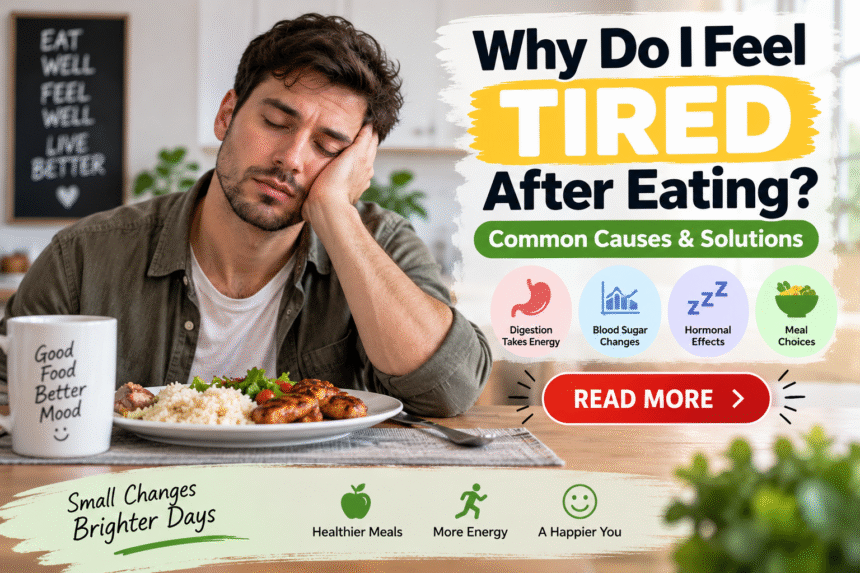
You just finished a meal. You should feel satisfied, maybe even energized. Instead, your eyelids feel like they weigh ten pounds each, your brain turns to fog, and all you want to do is lie down. If you’ve ever caught yourself typing “why do I feel tired after eating” into Google at your desk, on your couch, or in your car after a drive-thru run, you are far from alone.
This heavy, sluggish feeling after a meal has a real name — postprandial somnolence — and it happens to almost everyone at some point. For some people it’s an occasional annoyance after Thanksgiving dinner. For others, it’s a daily 2 p.m. wall that makes it hard to get through a work shift or a college lecture.
Feeling Tired After Eating? Here’s Why
Before we go deep, here’s the short version. You feel tired after eating mainly because of a mix of:
- Blood sugar swings — a fast rise and fall in glucose after carb-heavy meals
- Digestive hormones — your gut releases chemicals that promote relaxation and sleepiness
- The “rest and digest” nervous system — your parasympathetic nervous system kicks in after meals, slowing you down
- Meal size and composition — bigger, heavier, fattier meals demand more from your body
- Natural circadian dips — your body clock has a built-in energy dip in the early afternoon, which overlaps with lunchtime for most people
- Sleep debt and dehydration — poor sleep the night before and mild dehydration make post-meal fatigue much worse
Occasional drowsiness after a big meal is completely normal. But if you find yourself constantly wondering Why do I always feel tired after eating, even after small or healthy meals, it may be worth a closer look — and we’ll cover that too.
What Is Postprandial Somnolence, Really?
“Postprandial” simply means “after a meal,” and “somnolence” means sleepiness. Put them together, and you get the clinical term for that heavy, drowsy feeling that shows up 20 to 90 minutes after eating.
It’s sometimes nicknamed a “food coma” or the “afternoon slump,” and it’s especially common after lunch — which is why so many office workers feel like their productivity falls off a cliff between 1 p.m. and 3 p.m.
For a long time, people assumed the cause was simple: blood rushes to your stomach to help digestion, leaving less blood (and oxygen) for your brain. It’s a tidy explanation, but modern research shows it’s mostly a myth. Your brain gets plenty of blood flow after a meal. The real answer is more interesting — it involves your hormones, your nervous system, and even specific brain cells that control wakefulness.
The Science Behind Why I Feel Tired After I Eat

1. Blood Sugar Spikes and Crashes
This is the biggest piece of the puzzle. When you eat, especially foods high in refined carbohydrates or added sugar, your blood glucose rises quickly. Your pancreas responds by releasing insulin to move that sugar out of your bloodstream and into your cells.
The problem is that a sharp spike is often followed by an equally sharp drop. That crash — sometimes called reactive hypoglycemia — can leave you feeling shaky, foggy, and drained. This is one of the most common reasons people ask why do I feel so tired after I eat a big pasta lunch or a bowl of sugary cereal.
2. Orexin Neurons Get “Switched Off”
Here’s a fascinating detail from sleep science: your brain has a cluster of cells in the hypothalamus called orexin neurons, and their job is to keep you alert and awake. Research has found that rising blood glucose after a meal can suppress the activity of these orexin neurons. In simple terms, eating literally turns down your brain’s “stay awake” signal for a while, which helps explain why a carb-heavy lunch can make you sleepier than an equally large protein-based one.
3. Hormones: Serotonin, Melatonin, and Tryptophan
Certain foods — particularly protein-rich ones like turkey, chicken, eggs, and dairy — contain an amino acid called tryptophan. Tryptophan helps your body produce serotonin, a mood-regulating chemical, which can then be converted into melatonin, the hormone that helps you fall asleep at night. Eating a meal that combines protein and carbohydrates can boost tryptophan uptake into the brain, which is part of why a big turkey dinner tends to leave people drowsy on the couch.
4. The Parasympathetic Nervous System Takes Over
Your body runs on two main “modes”: the sympathetic nervous system (fight-or-flight, alert, active) and the parasympathetic nervous system (rest-and-digest, calm, restorative). After you eat, your body naturally shifts toward the parasympathetic side to help digestion. Your heart rate slows slightly, your muscles relax, and your overall alertness dips. This is a completely normal, healthy response — it’s just not very convenient when you have a 2 p.m. meeting.
5. Meal Size and Digestive Workload
Digesting food takes real metabolic work. A large, calorie-dense meal — think holiday dinners, all-you-can-eat buffets, or a triple-decker burger with fries — forces your digestive system to work overtime. That extra workload, combined with the hormonal shifts above, amplifies the sleepy feeling.
6. Your Circadian Rhythm
Even without eating anything, most people experience a natural dip in alertness in the early-to-mid afternoon, roughly 6 to 8 hours after waking. Lunch usually lands right in the middle of this window, so the meal and the body clock’s natural slump combine to make you feel extra tired — a big reason why the “afternoon slump” feels so universal.
Common Causes at a Glance (Bullet Breakdown)
If you’re still asking why do I feel tired after eating, here’s a consolidated list of the most common everyday triggers:
- High-glycemic foods — white bread, pastries, soda, and candy spike blood sugar fast
- Overeating — eating past the point of fullness overloads digestion
- High-fat meals — fried and greasy foods take longer to digest and prolong the “rest and digest” state
- Low fiber intake — meals without fiber digest quickly and cause sharper glucose swings
- Dehydration — even mild fluid loss can impair concentration and energy
- Poor sleep the night before — sleep debt makes any post-meal dip feel more intense
- Sedentary habits after eating — sitting still (especially slouched at a desk) worsens sluggishness compared to light movement
- Alcohol with meals — alcohol is a central nervous system depressant and intensifies drowsiness
- Caffeine crash timing — if a coffee wears off around the same time you eat lunch, the two crashes stack together
When It’s More Than Just a Normal Food Coma
Occasional grogginess after a heavy meal is nothing to worry about. But if you’re constantly asking why do I always feel tired after eating— even after small, balanced meals — it could point to an underlying condition, including:
- Insulin resistance or prediabetes/Type 2 diabetes — impaired glucose regulation causes stronger post-meal energy crashes
- Anemia — low iron reduces oxygen delivery throughout the body, worsening fatigue
- Hypothyroidism — an underactive thyroid slows metabolism and drains energy
- Sleep apnea — poor-quality overnight sleep compounds daytime drowsiness, especially after meals
- Food intolerances — gluten or lactose intolerance, for example, can trigger fatigue, bloating, and brain fog after specific foods
- Reactive hypoglycemia — a sharp blood sugar crash even in people without diabetes
- Chronic dehydration or anemia from heavy menstrual cycles
- Certain medications — some blood pressure or antihistamine medications list fatigue as a side effect
If post-meal fatigue is severe, daily, or paired with symptoms like excessive thirst, unexplained weight loss, frequent urination, or heart palpitations, it’s worth discussing with a doctor rather than self-diagnosing.
Case Study: How Sarah Improved Her Afternoon Energy
To make this practical, consider a realistic example based on common patterns among U.S. office workers.
Sarah, a 34-year-old marketing manager in Chicago, noticed that she often felt tired and unfocused around 1:30 p.m., shortly after lunch. The afternoon slump became frustrating, especially during important meetings, so she decided to understand what might be affecting her energy.
Her Typical Lunch: Sarah usually had a large sandwich on white bread, chips, and a 20-ounce soda. She often ate quickly at her desk while multitasking and sometimes started the day with only coffee.
The Positive Changes: Sarah began tracking her meals and energy levels for two weeks. She noticed that her energy felt lower after meals that were higher in refined carbohydrates and added sugar and lower in fiber. With guidance from a registered dietitian, she made three simple changes:
- Switched to whole-grain bread and added a side salad.
- Replaced soda with water or unsweetened iced tea.
- Added a 10-minute walk after lunch to stay active.
Her Progress: Within three weeks, Sarah noticed a meaningful improvement in her afternoon energy. Instead of experiencing a strong energy crash almost every day, she found that it happened only occasionally, particularly after unusually large meals.
Sarah’s experience shows that small, practical lifestyle changes can make a positive difference in how you feel after lunch. Paying attention to your meals, choosing balanced foods, staying hydrated, and adding a little movement can be simple steps toward maintaining steadier daytime energy.
Comparison: What You Ate vs. How Tired You Feel
| Meal Type | Blood Sugar Effect | Typical Post-Meal Energy |
|---|---|---|
| White bread sandwich + soda | Fast spike, fast crash | Heavy fatigue within 30–60 minutes |
| Fried food / fast food combo | Slow, prolonged digestion | Sluggish for 1–3 hours |
| Grilled chicken salad + whole grains | Gradual, steady rise | Mild dip, quick recovery |
| Small protein + fruit snack | Minimal spike | Little to no fatigue |
| Large holiday-style meal | Sharp spike + heavy digestive load | Strong drowsiness, “food coma” |
Pros and Cons of Common Quick Fixes
When you’re in the middle of a “why do I feel so tired after eating” moment, here’s how the popular remedies stack up.
| Remedy | Pros | Cons |
|---|---|---|
| Short 10–20 min walk | Boosts circulation, aids digestion, improves alertness naturally, no side effects | Not always possible at a desk job or during a meeting |
| Power nap (10–20 min) | Restores alertness quickly, low effort | Can cause grogginess if too long; not workplace-friendly for everyone |
| Coffee or caffeine | Fast, convenient energy boost | Can cause a crash later, disrupts sleep if taken too late |
| Drinking water | Cheap, effective, addresses dehydration-related fatigue | Won’t fully fix blood-sugar-driven fatigue on its own |
| Adjusting meal composition | Long-term fix, prevents the crash instead of just treating it | Requires planning and some trial and error |
| Skipping meals to avoid the crash | Avoids the immediate slump | Often backfires with worse fatigue and overeating later |
How to Stop Feeling Tired After Eating: Practical Solutions

Here are evidence-informed strategies to reduce how often you ask why do I feel tired after eating:
- Balance your plate. Combine fiber, lean protein, and healthy fats to slow digestion and smooth out blood sugar swings.
- Watch portion sizes. Eating until you’re comfortably full — not stuffed — reduces the digestive workload.
- Cut back on refined carbs and added sugar at meals, especially at lunch.
- Stay hydrated throughout the day, not just at mealtime.
- Move after eating. A short walk helps regulate blood sugar and re-energizes your body.
- Prioritize sleep. Getting 7–9 hours of quality sleep reduces how intensely your body reacts to the post-meal dip.
- Time your caffeine wisely so it doesn’t wear off right as your meal crash begins.
- Limit alcohol with meals, since it amplifies drowsiness.
- Get natural light exposure after lunch — sunlight helps regulate your circadian rhythm and can offset the afternoon dip.
- Keep a simple food and energy journal for a week or two to spot your personal patterns, just like in the case study above.
Frequently Asked Questions
Why do I feel tired after eating even small meals?
Even small meals can trigger a drop in alertness if they’re high in refined sugar, if you’re dehydrated, sleep-deprived, or if you have an underlying issue like insulin resistance or a food sensitivity. Portion size matters less than meal composition and overall health status.
Why do I feel tired after I eat lunch specifically, but not breakfast or dinner?
Lunchtime overlaps with your body’s natural circadian dip in early-to-mid afternoon, so the meal-related sleepiness stacks on top of a dip you’d experience anyway. Lunch is also more likely to be rushed, high-carb, and eaten at a desk without movement afterward.
Why do I feel so tired after eating sugar or dessert?
Sugary foods cause a rapid blood glucose spike followed by a fast crash, which is one of the most well-documented triggers of post-meal fatigue.
Why do I always feel tired after eating, no matter what I eat?
If this happens consistently regardless of meal type, it’s worth ruling out underlying conditions such as anemia, thyroid problems, sleep apnea, or blood sugar disorders with a healthcare provider.
Is feeling sleepy after eating a sign of diabetes?
It can be, especially if it’s paired with excessive thirst, frequent urination, or unexplained weight loss — but in most people, it’s simply diet and lifestyle-related. A doctor can run bloodwork to check.
How long should post-meal tiredness last?
Mild drowsiness for 30–60 minutes after a large meal is normal. If it lasts several hours or happens after every single meal, it’s worth investigating further.
Does eating late at night cause more fatigue the next day?
Yes — eating close to bedtime can disrupt sleep quality, which then intensifies daytime fatigue, including post-meal sleepiness.
The Bottom Line
So, why do I feel tired after eating? In most cases, it comes down to a completely normal mix of blood sugar shifts, digestive hormones, your nervous system shifting into “rest and digest” mode, and your body’s natural circadian rhythm. A heavy, high-carb lunch combined with poor sleep and no movement afterward is often the perfect storm for the dreaded 2 p.m. crash.
The good news is that small, consistent changes — balanced meals, hydration, a short walk, and better sleep — can make a noticeable difference within just a few weeks, as seen in the case study above. But if you’re constantly asking yourself why do I feel so tired after I eat regardless of what’s on your plate, don’t ignore it. Persistent, unexplained fatigue deserves a conversation with a healthcare professional to rule out conditions like diabetes, anemia, thyroid disorders, or sleep apnea.
Understanding your body’s patterns — through simple tracking and mindful eating — is the first step toward finally beating the post-meal slump for good. The next time someone asks why do I feel tired after eating, you’ll have a real answer instead of just a shrug.
References & Scientific Sources
- Sleep Foundation — Why Do I Get Sleepy After Eating?
- Cleveland Clinic — Postprandial Somnolence: Why You Feel Tired After Eating
- Mayo Clinic — Blood Sugar and Energy Levels
- National Library of Medicine / PubMed — Postprandial Somnolence and Orexin Neuron Research
- MedlinePlus (U.S. National Library of Medicine) — Fatigue Overview
- American Diabetes Association — Blood Sugar and Fatigue
- Harvard T.H. Chan School of Public Health — The Nutrition Source: Carbohydrates and Blood Sugar
This article is for general educational purposes and is designed to help you better understand common causes of fatigue after eating. If you experience persistent or severe fatigue, speaking with a licensed healthcare provider can help you find the right guidance and support for your individual needs.
For more expert-backed health tips, wellness guides, and supplement insights, be sure to read more articles on: Health Line Guide