

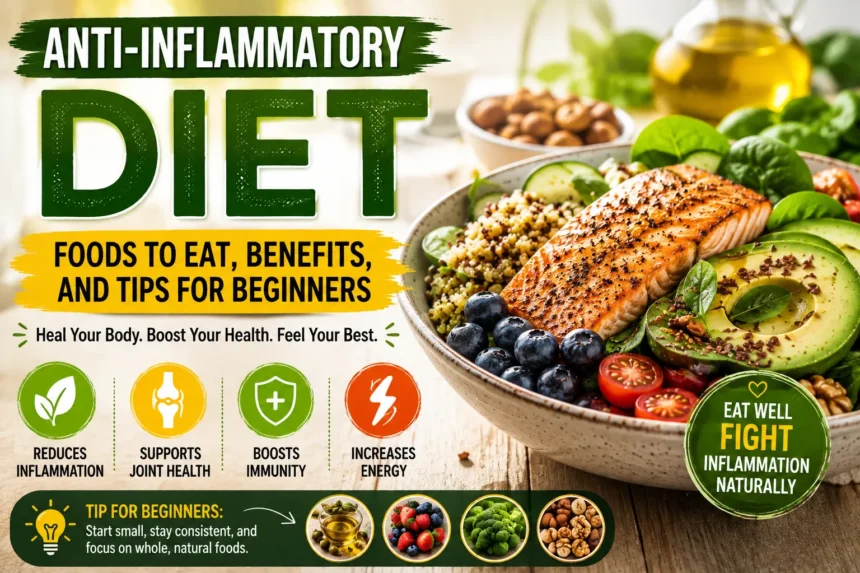
If your joints ache more than they used to, your energy dips by 2 p.m., or your doctor has mentioned “inflammation markers” at your last check-up, you’ve probably heard someone suggest an anti-inflammatory diet. It’s not a fad, and it’s not a strict weight-loss plan either. It’s simply a way of eating that leans on real, whole foods and pulls back on the stuff that quietly stresses your body out.
In this guide, we’ll walk through exactly what an anti-inflammatory diet is, which foods belong on your plate, which ones to limit, a full anti-inflammatory diet food list, the science behind the anti-inflammatory diet, a pros and cons breakdown, a real-world style case study based on U.S. health data, and a beginner-friendly action plan you can start this week. No jargon, no gatekeeping — just practical, human advice on the anti-inflammatory diet.
What Is an Anti-Inflammatory Diet?
An anti-inflammatory diet is an eating pattern built around foods that help calm chronic, low-grade inflammation in the body, while limiting foods that tend to stir it up. Think colorful vegetables, fruit, fatty fish, whole grains, nuts, seeds, olive oil, and herbs and spices, instead of packaged snacks, sugary drinks, and deep-fried food.
It’s worth separating two kinds of inflammation here, because they’re not the same thing:
- Acute inflammation is your body’s normal, healthy response to an injury or infection — think of the redness and swelling around a scraped knee. It’s protective and temporary.
- Chronic inflammation is the low-level, long-term kind that can simmer in the background for years without obvious symptoms, and it’s the type linked to heart disease, type 2 diabetes, arthritis, and even some cancers.
An anti-inflammatory diet isn’t designed to interrupt acute inflammation (your body needs that). An anti-inflammatory diet is aimed squarely at the chronic, silent kind — the type that’s largely shaped by what you eat every day, how much you move, how well you sleep, and how much stress you’re carrying.
According to research compiled by the National Center for Biotechnology Information, nearly 60% of Americans live with at least one chronic condition, and many of the most common ones — heart disease, diabetes, arthritis — have chronic inflammation as a shared underlying thread. That single fact is a big part of why the anti-inflammatory diet has moved from niche wellness circles into mainstream nutrition advice from places like Harvard Health and Johns Hopkins Medicine. It’s also why so many people now search for a simple anti-inflammatory diet food list before their next grocery run.
How Does Food Actually Cause or Reduce Inflammation?
This is the part most articles skip, so let’s slow down for a second.
Your immune system releases inflammatory compounds (cytokines) as a defense mechanism. Certain foods — especially those high in refined sugar, trans fats, and heavily processed ingredients — can trigger the release of these compounds even when there’s no injury or infection to fight. Over months and years, this constant low-level activation wears on your blood vessels, joints, and organs.
On the flip side, foods rich in antioxidants, polyphenols, fiber, and omega-3 fatty acids help neutralize the free radicals that set off this inflammatory chain reaction. That’s essentially how to reduce inflammation in the body through an anti-inflammatory diet: you’re not “curing” anything overnight, you’re shifting the daily balance in your favor, meal by meal.
So when people ask how do you reduce inflammation, the honest answer is: consistently, not instantly. This isn’t a 3-day cleanse. It’s a pattern you build over weeks and months.
Foods Good for Inflammation
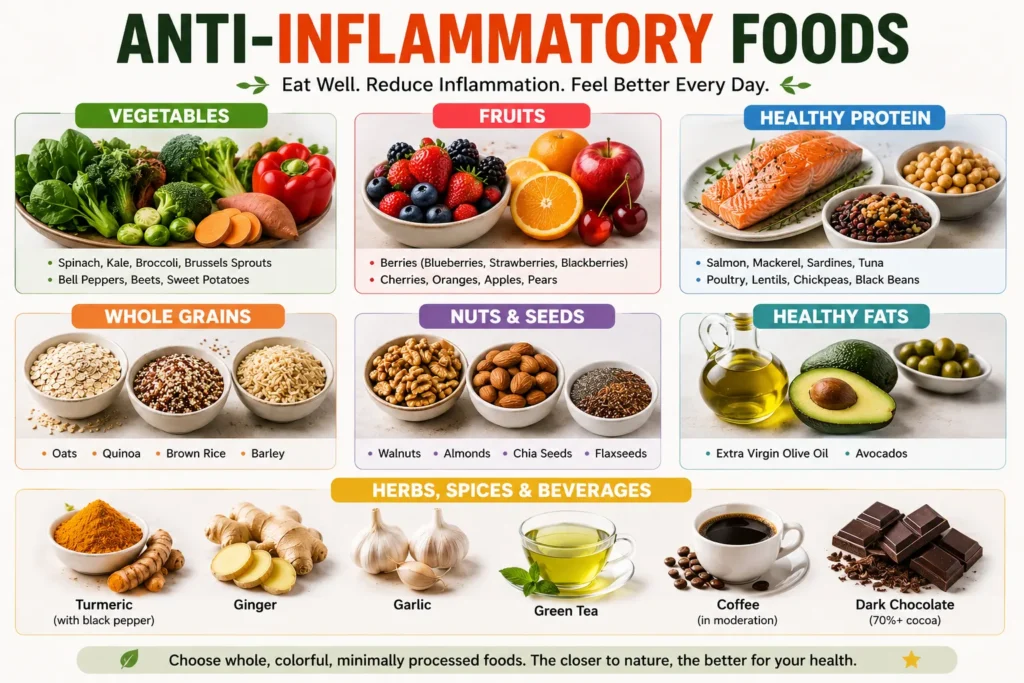
Here’s a practical anti-inflammatory diet food list you can actually shop for. These are the foods good for inflammation that nutrition researchers, including Harvard’s Dr. Frank Hu, consistently point to.
A helpful mental shortcut for building your own anti-inflammatory diet food list: if a food is close to how it grows — colorful, minimally packaged, short ingredient list — it’s usually a solid choice on an anti-inflammatory diet. This is also, unsurprisingly, very close to the Mediterranean diet, which researchers often cite as the most well-studied anti-inflammatory eating pattern in the world.
Food That Causes Inflammation (What to Limit)
Just as important as what you add is what you scale back. Here’s the food that causes inflammation and tends to show up again and again in research:
- Sugary drinks: soda, sweetened teas, energy drinks
- Refined carbohydrates: white bread, white rice, most packaged pastries
- Fried foods: French fries, fried chicken, doughnuts
- Processed and red meats: bacon, sausage, deli meats
- Margarine, shortening, and foods with trans fats
- Ultra-processed snacks: chips, packaged cookies, instant noodles
- Excess alcohol
You don’t have to eliminate these completely and forever — that kind of all-or-nothing thinking is usually what makes diets fail. The goal of an anti-inflammatory diet is a shift in ratio: more real food, less processed food, most days of the week. This is one of the biggest misconceptions about the anti-inflammatory diet — people assume it demands perfection, when really it rewards consistency.
The Science-Backed Benefits of an Anti-Inflammatory Diet
Beyond “feeling better,” there’s a growing body of research behind the anti-inflammatory diet. Some of the most cited anti-inflammatory diet benefits include:
- Lower risk of heart disease — diets rich in vegetables, fish, and olive oil are consistently linked to better cholesterol and blood pressure numbers.
- Better blood sugar control — swapping refined carbs for fiber-rich whole grains slows glucose spikes.
- Reduced joint pain and stiffness — many people with arthritis-type symptoms report relief after cutting processed and fried foods.
- Improved gut health — fiber from vegetables, legumes, and whole grains feeds beneficial gut bacteria, which in turn helps regulate inflammation.
- Better mood and mental clarity — several studies have linked highly processed diets to higher rates of low mood, while whole-food patterns are associated with better mental health outcomes.
- Healthier weight management — not because it’s a “diet” in the restrictive sense, but because whole foods are naturally more filling.
- Lower cancer risk markers — antioxidant-rich foods help protect cells from the kind of damage linked to certain cancers.
None of this means food replaces medical care. But as an everyday foundation, an anti-inflammatory diet gives your body a genuine advantage, and it’s one of the few lifestyle changes that touches nearly every major organ system at once.
How Do You Rid the Body of Inflammation? A Realistic Approach
People often search how to rid the body of inflammation hoping for a single trick — a supplement, a juice cleanse, a magic tea. The truthful answer is less exciting but far more effective: it’s a combination of small, repeatable habits.
- Eat more plants at every meal — aim to fill half your plate with vegetables or fruit.
- Choose whole grains over refined ones.
- Get consistent omega-3s from fish, walnuts, or flaxseed.
- Limit added sugar to under 25 grams a day where possible.
- Stay hydrated — water supports every metabolic process, including inflammation regulation.
- Move your body regularly; even brisk walking lowers inflammatory markers.
- Prioritize 7–9 hours of sleep, since poor sleep is directly tied to higher inflammation.
- Manage stress — chronic stress hormones like cortisol can keep inflammation elevated.
An anti-inflammatory diet is the biggest lever most people can pull, but it works best alongside sleep, movement, and stress management — not in isolation. Combine all four, and you get a far stronger anti-inflammatory effect than diet alone can offer.
Pros and Cons of the Anti-Inflammatory Diet
Pros
- Backed by strong nutrition research (Harvard, Mayo Clinic, Johns Hopkins)
- Flexible; not a strict calorie-counting plan
- May reduce risk of heart disease, diabetes, and joint pain
- Naturally supports gut health through fiber
- Works well alongside most other healthy eating patterns (Mediterranean, DASH)
- No single food is “banned” — it’s about balance
Cons
- No official “rulebook” — guidelines vary slightly by source
- Fresh produce and fish can cost more than processed food
- Meal prep and planning take more time than grabbing packaged food
- Results build gradually, not overnight
- Social situations (parties, travel) can make it harder to stick to
- Some anti-inflammatory claims online are exaggerated or unproven
Anti-Inflammatory Diet vs. Other Popular Eating Plans
A quick comparison helps put things in perspective, since people often confuse these approaches:
| Diet | Main Focus | Similar to Anti-Inflammatory Diet? |
|---|---|---|
| Anti-Inflammatory Diet | Reduce chronic inflammation through whole foods | — |
| Mediterranean Diet | Heart health via olive oil, fish, vegetables | Yes, almost identical in food choices |
| Keto Diet | Very low carb, high fat, for weight loss/blood sugar | Partially overlaps (whole fats) but restricts fruit/whole grains |
| DASH Diet | Lower blood pressure via reduced sodium | Overlaps heavily, less focus on omega-3s |
| Standard Western Diet | Convenience and processed foods | Opposite approach; considered pro-inflammatory |
If you’re already familiar with the Mediterranean diet, you’re most of the way to eating an anti-inflammatory diet already — the two overlap by a huge margin, which is exactly why so many dietitians simply recommend “eat Mediterranean” when someone asks about the anti-inflammatory diet.
Case Study: Chronic Inflammation Trends in the United States
To understand why this matters, it helps to look at U.S. health data rather than just theory.
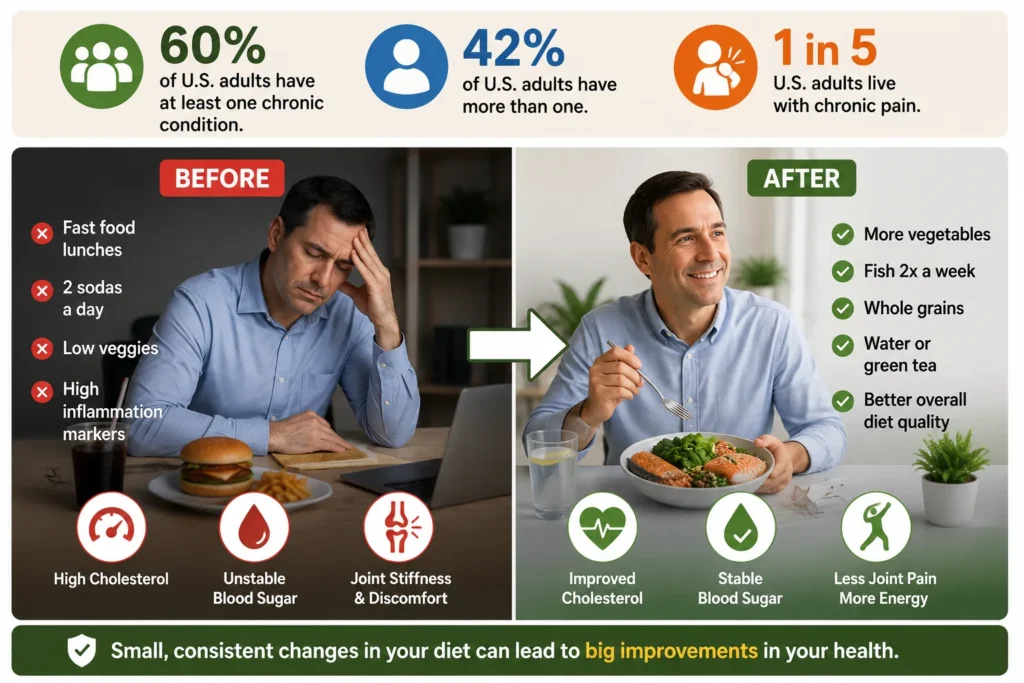
Research compiled through the National Center for Biotechnology Information’s StatPearls resource notes that close to 60% of American adults live with at least one chronic condition, and roughly 42% have more than one. Many of these conditions — heart disease, type 2 diabetes, and inflammatory joint conditions — share chronic inflammation as an underlying driver. Separately, CDC survey data shows that around 1 in 5 U.S. adults report living with chronic pain, a category strongly associated with ongoing inflammatory processes in the body.
Consider a composite, realistic scenario reflecting patterns commonly seen in U.S. clinical and survey data: a 42-year-old office worker in a mid-sized American city relies on fast food for lunch, drinks two sodas a day, and rarely eats vegetables beyond the lettuce on a sandwich. Over several years, this pattern lines up with the same risk factors researchers associate with elevated inflammatory markers — including higher LDL cholesterol, fluctuating blood sugar, and recurring joint stiffness.
When someone in this position gradually shifts toward an anti-inflammatory diet — swapping soda for water or green tea, adding a vegetable to lunch and dinner, choosing fish twice a week, and switching white bread for whole grain — the changes align with outcomes described across multiple U.S. studies: modest improvements in cholesterol, more stable energy throughout the day, and reduced joint discomfort within a few months. This mirrors exactly what Harvard Health and the Cleveland Clinic report as typical outcomes when patients commit to anti-inflammatory eating patterns for 8–12 weeks.
This kind of scenario is common across the U.S., which is part of why so many primary care doctors are now recommending an anti-inflammatory diet as a first-line lifestyle change, alongside movement and better sleep. It’s a low-risk, low-cost intervention compared with many alternatives, which is exactly why the anti-inflammatory diet keeps showing up in clinical nutrition guidance.
Tips for Beginners: How to Start an Anti-Inflammatory Diet
Starting doesn’t mean overhauling your kitchen overnight. Here’s a simple, beginner-friendly path:
- Start with one meal. Pick breakfast or lunch and rebuild it first — oats with berries and walnuts is an easy anti-inflammatory diet swap for sugary cereal.
- Add before you subtract. Instead of banning foods immediately, add a vegetable or fruit to every meal for two weeks.
- Batch-cook a base. Cook a big batch of quinoa, brown rice, or roasted vegetables on Sunday so healthy options are the easy option during the week.
- Swap your cooking oil. Move to extra virgin olive oil for most cooking and dressing.
- Rethink your drinks. Replace one sugary drink a day with water, herbal tea, or green tea.
- Read labels. If a packaged food has a long list of unrecognizable ingredients, it’s probably working against your goal.
- Don’t aim for perfect. An 80/20 approach — mostly whole foods, occasional treats — is far more sustainable than an all-or-nothing mindset.
- Track how you feel, not just what you eat. Energy, digestion, and joint comfort are often the first signs the anti-inflammatory diet is working.
Small, consistent choices compound. Most people notice a difference in energy and digestion within 2–4 weeks of starting an anti-inflammatory diet, and more measurable changes (like blood markers) within 8–12 weeks.
Frequently Asked Questions
What is an inflammatory diet?
An inflammatory diet is essentially the opposite of what we’ve covered here — it’s an eating pattern high in refined sugar, processed meats, fried foods, and trans fats, all of which are linked to higher levels of chronic inflammation in the body. Most Western fast-food style eating patterns fall into this category.
How to start an anti-inflammatory diet?
Start small: add one extra vegetable or fruit to each meal, swap one processed snack for nuts or fruit, switch to olive oil for cooking, and cut back on sugary drinks. You don’t need to change everything at once — gradual, consistent swaps work better long-term than a strict overnight reset.
What do you eat on an anti-inflammatory diet?
You eat mostly whole, minimally processed foods: colorful vegetables and fruits, fatty fish like salmon, whole grains like oats and quinoa, legumes, nuts and seeds, olive oil, and herbs and spices like turmeric and ginger. It’s less about restriction and more about building meals around real food.
What are the anti-inflammatory foods?
The core anti-inflammatory foods include berries, leafy greens, fatty fish (salmon, sardines, mackerel), extra virgin olive oil, nuts (especially walnuts), seeds like flax and chia, whole grains, legumes, turmeric, ginger, garlic, and green tea. Together, these make up the foundation of most anti-inflammatory diet food lists.
Can an anti-inflammatory diet help with arthritis pain?
Many people with arthritis-related joint pain report improvement after consistently following an anti-inflammatory diet for a few months, largely due to reduced intake of processed and fried foods plus increased omega-3s. It’s not a replacement for medical treatment, but it’s often recommended alongside it.
Is the anti-inflammatory diet the same as the Mediterranean diet?
They’re not identical, but they overlap heavily. The Mediterranean diet is one of the most well-researched examples of an anti-inflammatory eating pattern, built around vegetables, olive oil, fish, and whole grains.
How long does it take to see results from an anti-inflammatory diet?
Many people notice better energy and digestion within 2 to 4 weeks. More measurable changes, like improved cholesterol or blood sugar, typically show up after 8 to 12 weeks of consistent eating.
Final Thoughts
An anti-inflammatory diet isn’t about chasing the latest superfood or following rigid rules — it’s about consistently choosing real, whole foods over processed ones, most of the time. Whether your goal is fewer aches, better energy, or long-term protection against chronic disease, the science lines up behind this simple idea: what’s on your plate directly shapes what’s happening inside your body.
Start with one meal, one swap, one week at a time. That’s really all an anti-inflammatory diet is — a series of small, doable choices that add up to something bigger.
This article is for general educational purposes and isn’t a substitute for personalized medical or dietary advice. If you have a diagnosed inflammatory condition, talk to your doctor or a registered dietitian before making major dietary changes.
Sources and Scientific References
- Harvard Health Publishing — Foods that fight inflammation
- Harvard Health Publishing — Anti-inflammatory diet: Foods that help reduce chronic inflammation
- Harvard T.H. Chan School of Public Health, The Nutrition Source — Diet Review: Anti-Inflammatory Diet
- Harvard Health Publishing — Quick-start guide to an anti-inflammation diet
- Johns Hopkins Medicine — Anti-Inflammatory Diet
- National Center for Biotechnology Information (NCBI Bookshelf) — Chronic Inflammation, StatPearls
- Centers for Disease Control and Prevention — Chronic Pain Among Adults, United States, 2019–2021
- NIHCM Foundation — The Growing Burden of Chronic Diseases
Keep this anti-inflammatory diet guide handy as a reference the next time you’re planning meals, and remember: progress beats perfection every time.
For more expert-backed health tips, wellness guides, and supplement insights, be sure to read more articles on: Health Line Guide