

Author Bio
Written by Sarah Mitchell, CPT
Sarah Mitchell is a NASM-certified Personal Trainer and Health & Wellness Writer based in Austin, Texas. With over 8 years of experience helping adults improve fitness through sustainable lifestyle changes, she specializes in weight loss, cardiovascular health, and beginner-friendly exercise programs. Sarah combines evidence-based fitness guidance with real-world practicality, making health and wellness accessible for everyday Americans.
She has contributed to multiple U.S.-based fitness blogs and wellness platforms and regularly collaborates with healthcare professionals to ensure accuracy and relevance in her content.
Walking vs running, which is better and effective in burning more calories and weight loss? This is a very common question that people ask when they think of starting their fitness journey. Though both are effective and have their own risks and benefits.
The main thing lies in how much time you want to lose weight, your hard work, your fitness level, and how long you work out.
In this blog, we will explore which is better and more impactful in enhancing your overall health.
Walking vs Running: Key Differences
Walking and running are both good aerobic exercises that make your heart, lungs, and stamina stronger. According to the American Heart Association, an adult should exercise for at least 150 minutes, including moderate-intensity exercise, like brisk walking, or give 75 minutes to jogging every week. Daily walking is very effective in reducing the risk of heart disease by 31%.
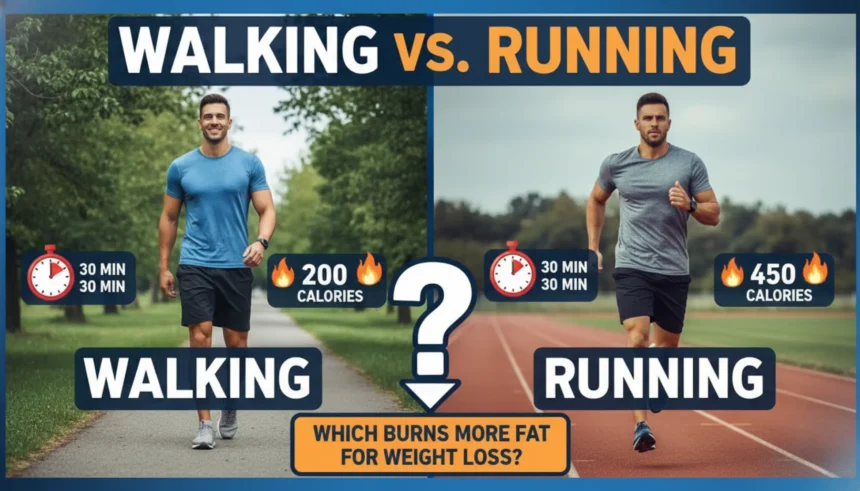
On the other hand, running is a high-impact activity, which burns more calories and puts more stress on the heart as blood circulation increases during running. The American Council on Exercise says that a 160-pound person burns about 15 calories per minute while running and 8-9 calories per minute while walking.
Jogging helps you lose fat, but it also puts more stress on your joints. Both activities use the same muscles and, when done regularly, improve long-term heart and metabolic health.
Walking: Simple, Sustainable, and Effective
Walking is easy, natural, and accessible to people of all ages. Since we are all designed to be walkers, walking is an optimal, low-impact, and safe way to maintain physical fitness. The majority of muscle groups required for stability in the human body are used during walking, including the legs, hips, buttocks, and core. In addition, walking strengthens the heart, increases circulation, and enhances the efficiency of oxygen utilisation in the body.
Is Walking Alone Enough for Weight Loss?
Walking can be a very effective way to reduce weight and belly fat if you do it often and at the right level of intensity. Running burns more calories per minute than walking, but walking over longer or faster periods of time can have huge effects over time.
The number of calories burned while walking depends on:
- Walking speed – Walking faster burns more calories.
- Distance covered – longer walks increase total energy expenditure
- Body weight – heavier individuals burn more calories per session
- Terrain – walking uphill or on an incline increases intensity
- Duration – Longer sessions burn more calories overall
Types Of Walking
Walking may appear to be simple, but there are several ways to do it. Each style has a different effect on the body; some are soft and calming, while others are faster or more vigorous, allowing you to burn more calories and enhance your fitness.
Brisk Walking
Brisk walking is walking at a quick, consistent speed that raises your heart rate to a moderate level. This means that you will burn 30-50%more calories than if you were walking at a slow speed while still producing even less joint stress than running.
Power Walking
Power walking is a higher-paced walking form that incorporates arm drive and high-impact movements. Studies show that power walking burns 25 – 35 %more calories than regular walking, while providing equal benefits to lower body and overall cardiovascular fitness, and with a lower risk of injury than running or jogging.
Incline Walking
Inclined walking, either on a hill or on an inclined treadmill, is more physically challenging for the legs and calves because it creates added resistance with gravity. The increased heart rate and calorie burn from inclined walking compared to level-ground walking are due to the added difficulty of walking uphill.
Medical Review
Medically Reviewed by Dr. Emily Carter, MD
Dr. Emily Carter is a board-certified Family Medicine Physician practicing in San Diego, California, with a clinical focus on preventive care, obesity management, and lifestyle medicine. She received her medical degree from the University of California and has over 12 years of clinical experience treating patients with metabolic and cardiovascular conditions.
Walking and running are both excellent forms of aerobic exercise. For many patients—especially beginners, older adults, or those with joint concerns—brisk walking provides substantial cardiovascular and weight-loss benefits with a lower risk of injury. The best exercise is one that can be performed consistently and safely.
This article has been reviewed to ensure alignment with current U.S. physical activity guidelines and medical best practices.
Running: Higher Intensity, Faster Calorie Burn

Running is often chosen by people who enjoy challenge, speed, and performance-oriented goals. It is a high-impact activity that not only burns more calories in less time but also delivers significant cardiovascular and metabolic benefits.
Key Benefits of Running
- Higher Calorie Burn: Running is more effective in burning calories, on average 30% – 50% more than walking, which is why so many people choose running for losing weight quickly and getting rid of belly fat.
- Improves Cardiovascular Endurance: Running every day increases your heart’s strength and helps your body to pump blood more efficiently.
- Increased Lungs Capacity: Aerobic exercises like running enhance your body’s capacity to take in more oxygen and improve your stamina.
- Strengthens Bones and Joints: Running puts more stress on your bones and joints; it takes time for the bones to get stronger. They are always under pressure and activity, which makes them stronger and denser over time.
- Enhances VO₂ max: VO₂ max reflects how efficiently your body uses oxygen during exercise, and running is one of the most effective ways to improve it, supporting long-term heart and lung health.
How Effective Is Running for Fat Loss?
In terms of calories burned, running compared to walking has a greater benefit for weight loss since running can help individuals lose abdominal fat due to the burning of more calories while exercising.
After running, a runner will still continue to burn calories for several hours after their workout period has finished due to EPOC, the “after-burn” effect.
Because running burns more calories in your body, it allows your lungs and heart to develop and become stronger while increasing the density of your bones and boosting your metabolism overall.
Types of Running
Running is of several types that have their own benefits, intensity levels, and calorie-burning potential that improve your fitness and overall health. Different types of running forms are:
Jogging
Jogging is a form of aerobic exercise that provides a consistent speed and intensity and is performed over an extended period. Jogging typically burns 20-30% more calories than walking; it is beneficial for improving cardiovascular health, increasing endurance, assisting in weight loss, and strengthening the strength of your lower limbs with lower impacts on the joints.
Steady-State Running
Steady-state running means that you will be able to run at a consistent speed over an extended distance or amount of time. Steady-state running is estimated to burn between 30-50% more calories than walking. In addition, it provides the cardiovascular fitness needed to withstand long periods of exertion, build an individual’s ability to sustain longer periods of physical activity.
Sprinting
Sprinting is a type of running that occurs at the highest possible speed for a very short duration of time. For every minute of sprinting, approximately 50-60% more calories are burned compared to jogging. After initiating a sprint, there will be a post-exercise caloric burn, and the body will continue to burn calories long after the end of the sprint; this is referred to as afterburn.
Interval Running (HIIT Running)
HIIT running combines brief bursts of fast running with slower jogging or walking. It can burn up to 30% more calories than regular running, increases metabolism, improves stamina, aids in fat loss, and strengthens your heart and lungs in less time.
Trail Running
Trail running involves jogging on natural surfaces such as hills, dirt trails, or uneven terrain. It activates more muscles, particularly in your legs and core, burns 20-40% more calories than running on flat ground, improves balance, and naturally strengthens your joints and bones.
Treadmill Running
Treadmill running is an indoor activity in which you may adjust your speed and incline. It allows you to exercise precisely, burns more calories when you alter the slope, strengthens your legs, and keeps your heart healthy-all while remaining safe and convenient in all weather.
Experience-Based Section: Real-World Results from Fitness Practice
From years of hands-on experience working with U.S. clients of varying ages and fitness levels, one pattern consistently emerges: sustainability drives results.
Many beginners who attempt running too early often experience:
- Knee or shin pain
- Early burnout
- Missed workouts due to soreness or injury
In contrast, clients who start with daily brisk walking (30–60 minutes) tend to:
- Stay consistent longer
- Experience gradual but steady weight loss
- Improve cardiovascular endurance without injury
Several clients have lost 10–25 pounds within 3–6 months through structured walking programs combined with basic nutrition awareness. As endurance improves, many naturally progress to jogging or interval running—without pressure or setbacks.
This reinforces a key takeaway: Walking is not “less effective”—it is often more effective because people stick with it.
Can Walking Keep You As Fit As Running?

Walking is a great way to boost your fitness and stay active, but it works differently from running. “To burn the same amount of calories as running, you’ll need longer or more intense walking sessions,” Feakes points out.
According to research, brisk walking can burn 30-50% more calories than a leisurely walk, reduce the risk of heart disease by up to 31%, and improve endurance, muscle strength, and overall heart health, making it a safe and effective long-term exercise alternative.
Walking vs Running: Which is better?
1. Heart Health
Walking is a form of moderate intensity activity that works at a gentle level to strengthen, improve circulation, and decrease blood pressure in your heart. According to research conducted about walking, 150 minutes of brisk walking per week can lower the chances of developing heart disease, high cholesterol, and type 2 diabetes.
On the other hand, running is a high-intensity workout, providing more direct challenge to both the cardiovascular system and your lungs compared to walking. Running is also a time-saving exercise; you only need to spend 75 minutes per week to receive similar, or even more, cardiovascular endurance, heart rate regulation, and overall heart function than what you would receive from 150 minutes of walking. However, running provides maximum efficiency for improving your heart health.
2. Injury Risk and Joint Health
Common Walking Injuries
While walking is a form of low-impact physical activity, it can still result in injury. If you increase your distance suddenly or make a drastic change in your walking routine, you can create additional strain on your body and sustain an injury. There are multiple factors that lead to your injury while walking. Here are some reasons:
- Walking with improper posture or stride.
- Increasing the length and/or speed of your walks too quickly.
- Using cheap/poorly constructed/unsupportive shoes that do not adequately absorb impact.
- Overusing muscles and/or joints without an adequate recovery period to allow for healing.
Common Running Injuries
It is normal for runners to get injured because it is a high-impact exercise. Normal injuries that can be caused by running can be
Runner’s Knee, which refers to pain surrounding the knee cap, Achilles Tendonitis affecting the heel and calf muscles, stress fractures are small cracks in your bones, and Shin Splints occur in the shin bone and may sometimes also cause discomfort in your hips, back, or ankle areas.
Key reasons running injuries happen:
- Repeated strain on joints: Each step is absorbed by your knees, ankles, and hips, but if you run too much without varying your distance/pace, you may overburden these joints.
- Not enough or worn-out shoes: Shoes that do not provide arch support and do not cushion against the impact, as well as the age of the shoe, can result in foot pain and shin splints or tendinitis.
- Sudden increase in miles or intensity of workouts: If you go from running shorter distances or working out at lower intensity levels to running long distances or sprinting too soon, you can put your muscles and joints into shock.
- Inadequate recovery time: Muscles and connective tissue must be allowed sufficient recovery time in order to fully repair. If you do not take rest days, you are at greater risk for injury.
3. Weight Loss and Belly Fat Reduction
High-intensity exercise, such as running, provides significant caloric expenditure in a short period of time. You will experience an increased heart rate, improved insulin resistance, and the ability to burn fat long after you stop exercising. For individuals who require faster results but have limited access to workout facilities, running is an excellent choice.
In spite of being more difficult than walking, brisk walking or walking on an incline can aid in the reduction of body fat and promote weight reduction. Brisk walking is less harsh on the body, allowing individuals to perform this activity on a continuous basis. In addition, over time, brisk or inclined walking results in a reduction of abdominal fat and increased cardiovascular fitness and endurance.
4. Mental Health Benefits
Walking
- Slows the mind down, brings the body to a relaxed state
- Allows for smooth, rhythmic movement, thus relieving and easing stress and anxiety
- Increases mood and gives a clear mind without making one feel tired
Running
- Provides a powerful “feel good” rush due to endorphins
- Improves mental toughness, self-confidence, and motivation
- Helps to relieve the mental stress accumulated during the day and helps to focus after exercising
5. Endurance and Muscle Strength
Walking gradually develops muscular endurance by working on the muscles in the calves, thighs, glutes, and hip flexors, as well as by engaging the core to maintain balance and proper posture, which aids in developing overall strength while minimizing stress on the joints. This low-impact and steady type of exercise will allow for greater muscle efficiency and help prevent muscle fatigue due to working your muscles over time.
- Strengthens your leg and hip muscles.
- Improves the body’s natural posture and balance.
- Increases stamina with a reduced risk of harm.
- Easy and simple to keep up for long-term health.
Running, on the other hand, puts greater force on the body with each step, which helps the legs and glutes get stronger and more powerful. The frequent impact also puts stress on the bones, which makes them denser and stronger overall.
- Makes your leg muscles stronger and more powerful
- Impact strengthens bones
- Increases speed, strength, and functional fitness
- Best for people who want to see more intense results
How Do Walking and Running Affect Fitness as You Age?
Staying active, as with increasing age, is very important, because with increasing our metabolism rate slows down, affecting digestion and other bodily activities. So as you age, even bone density starts going down, making your joint health more vulnerable.
So, as more than running, walking will be more beneficial as it will keep your joint health, improve your body posture, and overall balance.
On the other side, running is also very effective in strengthening your heart, bones, and muscles, but as age increases, it needs to be done more carefully, with proper pacing, recovery, and attention to the body’s limits to avoid unnecessary strain.
Benefits and Risks of Walking
Advantages of Walking
- Low-impact activity that doesn’t hurt joints or connective tissues
- Good for people of all ages and fitness levels, even those who are just starting out or are older.
- When done regularly, it helps with weight management and heart health.
- Makes circulation, posture, and endurance in the lower body better.
- Lowers stress and anxiety and helps the mind relax.
- Long-term care is easy with little equipment.
Risks of Walking
- Burns fewer calories per minute than running. Without increasing the intensity or length of time, progress may be slower for weight loss.
- If the distance is extended too quickly, there is a risk of injuries from overuse.
- Wearing bad shoes might make your feet or shins hurt.
Benefits and Risks of Running
Advantages of Running
- Provides fast calorie burn with fewer minutes on the treadmill; therefore, it can produce greater weight loss faster than traditional running.
- Builds better aerobic and pulmonary system capacity (heart/lung strength) more rapidly than traditional running.
- Developing higher VO₂ max and greater cardiovascular endurance.
- Strengthen bones and muscles because the repeated impact from running puts healthy stress on them over time.
- Improves mental resilience, confidence, mental focus, etc.
Risks of Running
- Higher risk of injury due to repetitive impacts on joints.
- It can put extra strain on the knees, hips, ankles, and lower back if done with poor form or posture.
- Requires appropriate shoes, recovery time, and a gradual increase in intensity of exercise.
Which Is Better for Beginners?
If you are completely new and want to begin your fitness journey, thei it would be best if you start with walking. This helps you to ease your fitness routine, set your base level of endurance or stamina, and reduce the risk of injuries that can be caused by overexertion. Additionally, walking helps you set your exercise pace based on your health. You can take it slowly or move at a faster pace.
When your body gets adjusted to it and becomes stronger through continuous walking over longer distances, and at a quicker speed than you originally used to, it prepares your body. At that point, you can start adding short intervals of running into your routine.
Running will increase both the intensity and stamina of your workouts while keeping them enjoyable and putting less stress on your knees and ankles.
References (Critical – U.S. Based & Evidence-Backed)
- American Heart Association
Physical Activity Guidelines for Adults
https://www.heart.org - American Council on Exercise
Calories Burned in Physical Activities
https://www.acefitness.org - Centers for Disease Control and Prevention (CDC)
Benefits of Physical Activity
https://www.cdc.gov - Harvard Health Publishing (Harvard Medical School)
Walking vs. Running: Which Is Better for Your Health?
https://www.health.harvard.edu - Journal of Obesity
Long-term effects of walking and running on weight management
https://www.ncbi.nlm.nih.gov
FAQs
1. Is running 10,000 steps the same as walking?
Covering 10,000 steps by walking or by running is very different from each other. A person who runs burns many more calories than someone who walks; however, when compared to the same number of steps taken by both runners and walkers, walking will take a long time (more than double) to complete, thus burning far fewer calories.
2. Is it better to walk for 30 minutes or run for 10?
Running for 10 minutes burns more calories in less time and boosts cardiovascular fitness faster, but it has a higher impact on your joints. Walking for 30 minutes burns fewer calories per minute but is gentler, easier to sustain, and still improves heart health and endurance.
3. Is running bad for the knees?
Running is a high-intensity workout that can strain your joints, but if you do it right, with excellent form, moderate improvement, and enough time to recover, it can safely make you stronger, more fit, and more resistant to injury.
4. Can one lose weight by only walking?
Studies have shown that people who walk for at least 30 to 60 minutes a day at a moderate pace can burn an average of 150 to 300 calories daily. Walking at a moderate pace has been proven to help reduce abdominal fat as well as improve overall health.
5. What does the 80% rule mean in running?
The 80% rule for runners indicates that runners should run at easy paces 80% of their total weekly distance and the remaining 20% at a higher activity level (i.e., faster) to allow adequate time for recovery and ultimately improve overall aerobic ability and running performance.
6. Is it okay to walk every day?
Daily walking is very beneficial as it helps in boosting energy, improving mood, and also allows you to keep your weight in check. Even 20-30 minutes of walking every day makes your body more active and improves your internal health.
Conclusion
Walking vs running is hard to say which is better in burning more calories, as it totally depends on what works best for you.
The best thing to do is to keep yourself physically more active, and you can do this by combining both forms of exercise.