


Women’s urinary health is an important part of overall well-being, but it is not always easy to discuss. Occasional urine leakage, sudden urges to urinate, and frequent bathroom visits can affect sleep, confidence, exercise, travel, and everyday comfort. These concerns may become more noticeable with age, after pregnancy, or during hormonal changes.
FemiCore is a dietary supplement marketed for women who want to support bladder balance and urinary wellness as part of their daily routine. Its listed ingredients include cranberry extract, bearberry, Mimosa pudica, berberine, and several Lactobacillus probiotic strains.
But what does the formula contain? What does scientific research say about its ingredients? And should women consider adding it to their wellness routine?
In this FemiCore supplement review, we examine the listed ingredients, potential benefits, available evidence, advantages and disadvantages, buying considerations, and important safety precautions. The aim is to help readers make a more informed decision without exaggerated promises.
Quick verdict: FemiCore may interest women looking for a supplement featuring botanical ingredients and probiotics. However, the evidence for individual ingredients does not establish that the complete formula improves bladder control, treats urinary infections, or relieves urinary symptoms. Its value depends on the verified formula, product quality, price, safety, and the user’s specific needs.

What Is FemiCore?
FemiCore is marketed as a natural urinary wellness supplement designed to support women’s bladder function, urinary balance, and everyday comfort. Its promotional description highlights women experiencing occasional leakage, frequent urges, or minor urinary discomfort.
The formula combines plant-derived ingredients with probiotic bacteria. These ingredients have different proposed roles: cranberry has been researched for recurrent urinary tract infection prevention, probiotics are studied for their effects on the body’s microbial communities, and certain botanicals have a history of traditional use.
However, a product’s intended purpose should not be confused with a proven medical outcome. Occasional leakage, urgency, and discomfort can have different causes, and no supplement should be assumed to address all of them.
For example, urinary leakage may be associated with pelvic floor weakness, overactive bladder, pregnancy, childbirth, menopause, or other medical conditions. Burning during urination may indicate an infection that needs prompt assessment.
For these reasons, FemiCore is best evaluated as a dietary supplement rather than a substitute for diagnosis or established treatment.
Who Might Be Interested in FemiCore?
The product may appeal to adult women who:
- Want to learn about botanical and probiotic ingredients for urinary wellness.
- Are comparing supplements marketed for bladder support.
- Prefer to review a product’s ingredients and limitations before buying.
- Want to discuss a supplement with a qualified healthcare professional.
Women with recurring urinary infections, persistent leakage, pain, or unexplained changes in urination should seek appropriate medical advice rather than relying on a supplement alone.
FemiCore Ingredients: What’s in the Formula?
The supplied ingredient list contains nine named ingredients: five botanicals or botanical-derived ingredients and four Lactobacillus species. The precise quantities and the strains used in the finished product have not been confirmed.

This matters because ingredient identity, dose, formulation, and product quality can all influence safety and potential effectiveness.
1. Mimosa Pudica
Mimosa pudica is a tropical plant known for its sensitive leaves, which fold when touched. It has a history of traditional use in herbal preparations.
In FemiCore, it is described as a botanical component intended to complement urinary wellness and everyday comfort.
What does the evidence say?
There is insufficient high-quality human clinical evidence to conclude that Mimosa pudica improves bladder control, reduces urinary urgency, or prevents urinary tract infections. Traditional use and laboratory findings do not automatically demonstrate a benefit in people.
What should buyers know?
The product label should specify the botanical ingredient and its amount. Women who take prescription medicines, have existing medical conditions, or are pregnant or breastfeeding should ask a healthcare professional before using herbal supplements.
2. Bearberry
Bearberry, also known as Arctostaphylos uva-ursi, is a plant whose leaves have traditionally been used in preparations associated with urinary tract complaints.
Bearberry contains compounds such as arbutin, which can be converted into hydroquinone-related substances in the body. Its traditional use does not establish that a supplement containing bearberry safely or effectively treats urinary problems.
Potential role: Bearberry is included in the supplied FemiCore formula as a botanical intended to complement urinary wellness.
Evidence and safety: There is not enough evidence to conclude that bearberry in this particular supplement improves bladder function or prevents infections. Herbal preparations can have safety limitations, and bearberry products are not appropriate for everyone. The extract type, dose, duration of use, and potential interactions need consideration.
Do not use bearberry as a substitute for medical assessment or antibiotics when these are needed for a urinary tract infection.
3. Cranberry Extract
Cranberry extract is one of the better-studied ingredients on the supplied list when it comes to urinary tract health.
Cranberries contain compounds called proanthocyanidins (PACs). Research suggests that certain cranberry products may help reduce the risk of recurrent symptomatic urinary tract infections in some groups, including women with a history of recurrent UTIs.
The evidence is not a guarantee that every cranberry product will work equally well. Products differ in composition, processing, and PAC content.
According to the U.S. National Center for Complementary and Integrative Health (NCCIH), cranberry products may help prevent some recurrent infections, but they are not a treatment for an existing UTI.
What this means for FemiCore: Cranberry extract gives the formula a relevant ingredient for women researching urinary wellness. However, without a verified extract amount and PAC content, it is not possible to determine whether the product provides the quantities used in particular studies.
4. Granular Berberine
Berberine is a plant-derived compound found in several botanical sources. It has been studied for different metabolic and biological effects, but evidence for one potential use cannot automatically be applied to another.
In the supplied FemiCore ingredient list, granular berberine is described as supporting microbial balance and general wellness.
Is berberine proven to improve bladder health?
The available information does not establish that the amount or form of berberine in FemiCore improves urinary symptoms or prevents infections. More research would be needed to establish a specific benefit for the finished product.
Safety considerations: Berberine may cause digestive side effects and can interact with medicines. It is particularly important to seek professional advice if you use prescription drugs, take medicines that affect blood sugar, or are pregnant or breastfeeding. Berberine is not recommended during pregnancy or breastfeeding, or for infants.
Do not assume that a compound is safe simply because it comes from a plant.
5. Lactobacillus Crispatus
Lactobacillus crispatus is a bacterial species found in certain human microbial communities, including the vaginal microbiome. Specific strains have been studied for their potential role in maintaining a healthy microbial environment and reducing recurrent UTIs.
However, probiotic effects are often strain-specific. Evidence for one strain, dose, or delivery method cannot automatically be applied to every product containing the same species.
The supplied FemiCore list does not identify a strain code or quantity for this ingredient.
What to consider: Look for the full strain designation, viable count, and storage requirements on the label. Without this information, its specific contribution to urinary wellness cannot be assessed.
6. Lactobacillus Acidophilus
Lactobacillus acidophilus is commonly used in probiotic products and has been studied for its role in microbial balance and digestive health.
It is included in the supplied FemiCore formula as part of the probiotic blend.
Although some probiotic strains may have useful effects in specific circumstances, there is not enough evidence to claim that L. acidophilus in this product prevents urinary tract infections or improves bladder control.
A useful question for potential buyers is whether the manufacturer identifies the exact strain, the amount per serving, and the number of viable organisms guaranteed through the end of the product’s shelf life.
7. Lactobacillus Plantarum
Lactobacillus plantarum is another bacterial species used in probiotic supplements and fermented foods.
Researchers have investigated different strains of this species for their effects on the gastrointestinal tract and the wider microbial environment. Nevertheless, research involving digestive health does not automatically prove a urinary health benefit.
For FemiCore, the supplied ingredient description presents this species as part of a broader microbial wellness blend. Its individual contribution to bladder or urinary outcomes remains unverified.
8. Lactobacillus Gasseri
Lactobacillus gasseri is found in some human microbial communities and has been investigated in probiotic research.
Its potential effects depend on the particular strain, dosage, population studied, and intended outcome. The name of a bacterial species alone is not enough to determine whether a probiotic product is effective.
In the FemiCore formula, L. gasseri is listed as a component intended to complement microbial balance. Product-specific clinical evidence would be needed to support stronger claims.
9. Lactobacillus Casei
Lactobacillus casei is a bacterial species associated with some fermented foods and probiotic preparations.
It is included in the supplied FemiCore list as part of the multi-strain probiotic blend.
As with the other listed probiotics, it is important to distinguish general probiotic research from evidence for a particular urinary health outcome. The supplied product information does not establish that this ingredient, at the dose provided, improves bladder control or prevents infections.
FemiCore Ingredient Summary
| Ingredient | Main research context | Important limitation |
|---|---|---|
| Mimosa pudica | Traditional botanical use | Urinary benefits in humans are unproven |
| Bearberry | Traditional urinary use | Safety, dose, and duration require consideration |
| Cranberry extract | Recurrent UTI prevention | Not a treatment for an active infection |
| Berberine | Various biological and metabolic effects | Product-specific urinary benefits are unproven |
| L. crispatus | Microbiome and selected UTI-prevention research | Effects depend on the strain and formulation |
| L. acidophilus | Probiotic and microbial research | Product-specific urinary benefits are unproven |
| L. plantarum | Probiotic research | Urinary effects cannot be assumed |
| L. gasseri | Probiotic and microbiome research | Exact strain and dose are important |
| L. casei | Probiotic and fermented-food research | Product-specific urinary benefits are unproven |
FemiCore Benefits: What Can Women Realistically Expect?
The advertised FemiCore supplement benefits focus on bladder balance, urinary wellness, microbial balance, and everyday comfort. These are reasonable areas to investigate, but the strength of the evidence varies.
1. Support for General Urinary Wellness
The combination of cranberry extract and other listed ingredients may appeal to people looking for a supplement formulated around urinary wellness.
However, the complete formula has not been shown here to improve urinary health in a clinical trial. It is more accurate to describe this as the product’s intended purpose than as an established outcome.
2. Interest in Recurrent UTI Prevention
Cranberry products have evidence supporting a reduction in recurrent symptomatic UTIs in some populations. A 2023 Cochrane review found that cranberry products probably reduced the risk of symptomatic, culture-confirmed UTIs among women with recurrent infections.
That finding does not mean FemiCore provides the same benefit. The study results cannot be directly transferred to a product without verifying its formulation, dose, and clinical performance.
Women with recurring infections should discuss prevention options with their healthcare provider.
3. A Multi-Strain Probiotic Blend
FemiCore lists five Lactobacillus species in total when counting the full supplied ingredient list: L. crispatus, L. acidophilus, L. plantarum, L. gasseri, and L. casei.
The combination may be a reason some consumers consider the product. Yet more strains do not automatically mean better results. The specific strains, viable amounts, and quality of the research matter more than the number of names on the label.
4. A Convenient Daily Routine
Some consumers prefer a supplement that combines several ingredients in one product rather than purchasing separate botanical and probiotic preparations.
Convenience can be a practical advantage, provided the formula is suitable for the person taking it and the manufacturer supplies clear, reliable information about dosage and quality.
5. A Starting Point for an Informed Wellness Discussion
Reviewing a product’s ingredients can help women prepare questions for a pharmacist, doctor, or other qualified healthcare professional.
For instance, a woman experiencing occasional leakage may benefit more from pelvic floor assessment and targeted exercises than from a supplement. Another woman with recurring UTIs may need a prevention plan based on her medical history.
The most useful approach is to match the intervention to the underlying concern rather than expecting a single formula to address every urinary symptom.
Does FemiCore Help With Bladder Control or Urinary Leakage?
This is an important distinction for anyone considering a bladder support supplement.
Urinary leakage is not always caused by a urinary tract infection. Stress incontinence can occur when coughing, sneezing, laughing, or exercising puts pressure on the bladder. Urge incontinence involves a sudden, difficult-to-control need to urinate. Some people experience both.
These conditions can require different approaches, including pelvic floor muscle training, bladder training, lifestyle changes, medication, or further medical evaluation.
The supplied ingredient list does not establish that FemiCore improves stress incontinence, urge incontinence, or pelvic floor strength. It would be misleading to promise that the supplement stops leakage or restores bladder control.
Women experiencing persistent or worsening leakage should speak with a healthcare professional to identify possible causes and suitable treatments.
What Do FemiCore Customer Reviews Tell Us?
Customer feedback can help shoppers understand practical matters such as packaging, ease of use, delivery, customer service, and whether a product meets expectations.
However, no verified collection of FemiCore customer reviews was provided for this article. We therefore cannot confirm an overall customer rating, a typical improvement timeline, or the percentage of users who report positive results.
When reviewing FemiCore customer reviews, look for the following:
- Specific experiences: Does the reviewer explain what they used the product for and for how long?
- Clear context: Does the review distinguish everyday wellness from treatment of a diagnosed condition?
- Balanced feedback: Are limitations and unwanted effects discussed alongside positive experiences?
- Verified purchases: Is there a credible way to establish that the reviewer purchased the product?
- Independent sources: Are comments available outside the seller’s own website?
- Realistic claims: Does the reviewer avoid promises of guaranteed results or instant relief?
Be cautious of anonymous testimonials that promise a complete solution to bladder problems. Individual experiences cannot establish that a supplement is effective, and customer reviews do not replace clinical research.
For a trustworthy health review, any testimonial should be genuine, appropriately disclosed, and used with permission. Hypothetical examples should never be presented as real customer experiences.
FemiCore Pros and Cons
The following table evaluates the product based on the supplied ingredient information and the evidence currently available for this review. It is not a verified consumer-rating summary.
Pros
- Combines botanical ingredients and probiotics
- Includes cranberry extract, which has research on recurrent UTIs
- Provides several probiotic species in one formula
- May appeal to consumers seeking a convenient supplement
- Encourages interest in women’s urinary wellness
- Can be assessed against clear label and quality criteria
Cons
- Finished formula’s clinical effectiveness is unverified
- Cranberry does not treat an existing UTI
- Exact probiotic strains and viable counts are not confirmed
- Exact ingredient amounts have not been verified
- May not address the underlying cause of leakage or urgency
- Price, independent testing, and refund terms need verification
FemiCore vs. Other Bladder Support Options
Choosing between FemiCore and other options starts with understanding the problem you want to address.
There is no single best solution for all urinary symptoms. A supplement intended for general wellness should not be treated as equivalent to an established intervention for a diagnosed condition.
| Option | Main purpose | Evidence and limitations |
|---|---|---|
| FemiCore | Marketed for urinary wellness and bladder support | Finished-product benefits have not been established here |
| Cranberry products | May help reduce recurrent UTIs in some populations | Evidence varies by formulation; not a treatment for an active infection |
| Targeted probiotic products | Support specific microbial outcomes | Benefits depend on strain, dose, and clinical evidence |
| Pelvic floor muscle training | Can help some types of urinary leakage | Requires appropriate technique and consistent practice |
| Bladder training | May help some people manage urgency and frequency | Not suitable as a replacement for assessment when symptoms suggest infection |
| Medical evaluation and treatment | Identifies and treats underlying causes | Appropriate care depends on symptoms and diagnosis |
This comparison is based on the general purposes and evidence for these options, not a head-to-head clinical trial involving FemiCore.
For women whose main concern is leakage during exercise or coughing, pelvic floor assessment may be more relevant than a urinary wellness supplement. For women with recurring infections, a clinician can discuss evidence-based prevention strategies and whether cranberry products or other approaches are appropriate.
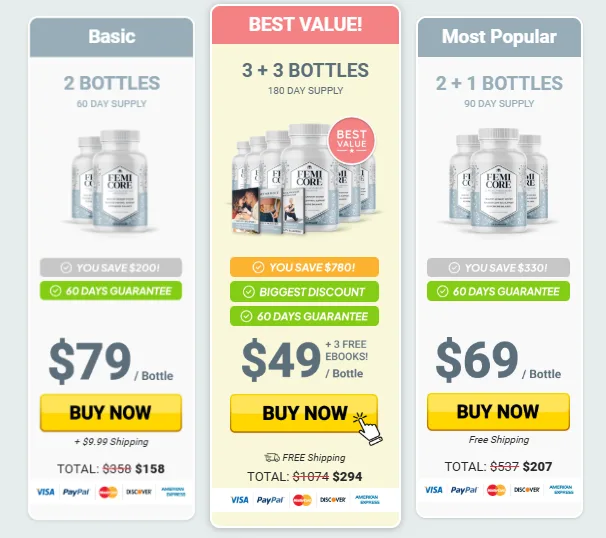
FemiCore Price: Packages, Discounts & Where to Buy
Explore FemiCore prices, available packages, special discounts, and buying options. Learn what to check before ordering and how to choose the right package for your urinary wellness routine.
U.S. Case Study: How a Consumer Could Evaluate FemiCore
The following is a hypothetical educational scenario, not a real customer testimonial or verified report of FemiCore results.
Consider a 47-year-old woman living in Ohio who wants to take a proactive approach to her bladder and urinary wellness. After occasionally experiencing urine leakage while coughing or exercising, she begins researching products designed to support women’s urinary health. FemiCore catches her attention because its listed formula includes botanical ingredients and probiotic strains.
Step 1: She explores the formula.
She appreciates that FemiCore combines ingredients such as cranberry extract, bearberry, berberine, and several Lactobacillus species. She reviews the available ingredient information and looks for clear details about ingredient amounts, probiotic strains, quality testing, and safety.
Step 2: She takes a thoughtful approach to wellness.
Rather than relying on a supplement alone, she discusses her symptoms with a healthcare professional. She learns that bladder wellness can involve several factors, including pelvic floor function, hydration habits, and urinary tract health. She also checks with a pharmacist to determine whether FemiCore is appropriate alongside her existing medications.
Step 3: She evaluates FemiCore realistically.
She sees FemiCore as a potential option to investigate for her daily wellness routine, provided its ingredients, safety information, and available evidence meet her needs. She understands that individual results can vary and that the product has not been established as a treatment for urinary leakage.
What Makes FemiCore Worth Considering?
FemiCore may appeal to women researching bladder-support supplements because it combines botanical ingredients and probiotics. Its potential suitability depends on the complete formula, ingredient doses, product quality, and individual health needs.
Overall takeaway: FemiCore is worth researching for women interested in urinary wellness, but base your decision on transparent product information and realistic expectations rather than advertising claims alone. Women experiencing persistent leakage or urinary symptoms should seek appropriate medical advice.
How to Check the FemiCore Official Website Before Buying
If you are researching where to buy FemiCore, start by confirming the seller and carefully reviewing the product information.
You can visit the FemiCore website to explore product details, review the available packages, and check current pricing and ordering options. Before purchasing, review the ingredient list, shipping information, payment terms, and return policy to make an informed buying decision.
Find the Right Package and Order with Confidence
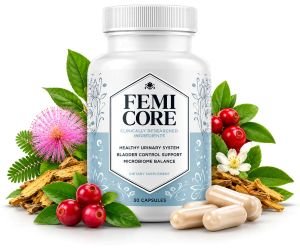
Visit the FemiCore website to check prices, packages, and current offers before ordering.
- Supports urinary wellness
- Botanical and probiotic blend
- Daily wellness support
- Promotes microbial balance
Dietary supplements are regulated differently from prescription medicines. In the United States, the FDA does not approve dietary supplements for safety and effectiveness before they are marketed in the same way it approves drugs. A seller’s claim that a product is “FDA approved” should therefore be examined carefully.
Do not assume that an “official website” label, a countdown timer, a large discount, or a money-back guarantee proves product quality or clinical effectiveness.
FemiCore Safety: Who Should Be Careful?
Natural ingredients can still cause side effects or interact with medicines. Before using FemiCore, review the full label with a healthcare professional, especially if you have a medical condition or take prescription medication.
Extra caution is appropriate for:
- Women who are pregnant, trying to conceive, or breastfeeding.
- People who take prescription medicines, particularly those that may interact with berberine.
- People who have kidney or other significant medical conditions.
- Anyone with a history of allergic reactions to supplement ingredients.
- People with weakened immune systems or other circumstances that may affect probiotic safety.
The exact risks cannot be fully assessed without the ingredient quantities, product directions, and complete label.
When Should You Seek Medical Care?
Do not rely on a supplement if you have symptoms that could indicate a urinary tract infection or another medical condition.
Common UTI symptoms include burning or pain during urination, needing to urinate more often or urgently, cloudy urine, and lower abdominal discomfort.
Seek prompt medical advice if you have blood in your urine, fever or chills, pain in your back or side beneath the ribs, vomiting, or symptoms that worsen quickly. These can indicate a more serious infection. Pregnant women and people with diabetes, weakened immunity, or recurrent infections should seek appropriate medical advice promptly.
The NHS guide to urinary tract infections provides a useful overview of symptoms and when to seek care. Although it is a U.K. resource, the warning signs are relevant to readers elsewhere.
Practical Ways to Support Urinary Wellness
Alongside professional advice, several everyday habits may support urinary health.
- Stay adequately hydrated. Drink enough water to meet your needs, unless your healthcare professional has recommended fluid restriction.
- Avoid delaying urination for long periods. Responding to normal bladder signals may be helpful for some people.
- Discuss pelvic floor exercises. These may help certain types of urinary leakage when performed correctly.
- Review possible bladder irritants. Caffeine and alcohol can worsen urgency or frequency for some people.
- Manage constipation. Constipation can contribute to pelvic pressure and urinary symptoms.
- Keep track of symptoms. A simple bladder diary can record fluid intake, bathroom visits, leakage episodes, and potential triggers.
- Seek assessment for recurring symptoms. Repeated infections, persistent urgency, pain, or leakage deserve a proper evaluation.
These measures are not a substitute for treatment when a medical condition is present. Their usefulness depends on the cause of the symptoms and the individual’s circumstances.
Frequently Asked Questions About FemiCore
1. What is FemiCore used for?
FemiCore is marketed as a dietary supplement for women’s bladder balance and urinary wellness. Its supplied ingredient list includes cranberry extract, botanicals, berberine, and Lactobacillus species. The complete formula’s effectiveness for urinary symptoms has not been established in the information reviewed here.
2. What are the main FemiCore benefits?
The advertised benefits focus on urinary wellness, bladder support, microbial balance, and everyday comfort. However, these are intended uses rather than proven outcomes. Stronger claims would require reliable evidence for the finished product.
3. What are the FemiCore ingredients?
The supplied list includes Mimosa pudica, bearberry, cranberry extract, granular berberine, Lactobacillus crispatus, L. acidophilus, L. plantarum, L. gasseri, and L. casei. The precise amounts and probiotic strain identifiers have not been verified.
4. Can FemiCore treat a urinary tract infection?
There is no verified evidence presented here that FemiCore treats an active UTI. Cranberry products are not recommended as treatment for an existing infection. If you have symptoms such as burning, pain, fever, or blood in the urine, seek appropriate medical care.
5. Can FemiCore help with frequent urination?
The finished formula has not been shown here to reduce urinary frequency. Frequent urination can have several causes, including urinary infections, overactive bladder, medication effects, and other medical conditions. Persistent or new symptoms should be evaluated.
6. Does FemiCore stop urine leakage?
There is insufficient evidence to conclude that FemiCore stops urinary leakage or strengthens pelvic floor muscles. The appropriate treatment depends on the type and cause of leakage. Pelvic floor muscle training may help some women, and a healthcare professional can advise on suitable options.
7. Are FemiCore customer reviews reliable?
Customer reviews can provide information about purchasing and personal experiences, but they cannot prove that a supplement is effective. Look for authentic, clearly attributed reviews and be cautious of guaranteed-result claims. A verified independent review dataset was not available for this article.
8. Where can I buy FemiCore?
Check the product’s verified manufacturer or authorized seller before ordering. The domain supplied in the product material is https://femi-cores.com/.Compare the price, serving count, ingredient label, shipping charges, and refund terms before buying.
9. Is FemiCore safe for daily use?
Safety depends on the exact formulation, serving size, individual health circumstances, and possible medication interactions. The available ingredient list is not enough to establish that daily use is safe for everyone. Follow the verified product label and consult a healthcare professional if you have questions.
10. How long does FemiCore take to work?
A reliable timeframe has not been established for the complete formula. Claims that it works within a specific number of days should be supported by credible clinical evidence. Do not delay medical care while waiting for a supplement to work.
11. Is FemiCore a replacement for medical treatment?
No. A dietary supplement should not replace diagnosis or treatment for urinary infections, persistent leakage, or other medical conditions. Consult a qualified healthcare professional when symptoms persist, recur, or worsen.
12. Is FemiCore worth buying?
FemiCore may be worth investigating for consumers interested in a botanical and probiotic supplement, but a confident recommendation requires more information. Buyers should verify ingredient amounts, quality testing, safety, price, seller legitimacy, and evidence for the finished formula. If those details are unavailable, postponing the purchase is reasonable.
Final Verdict: Is FemiCore Worth Buying?
FemiCore is marketed as a women’s urinary wellness supplement featuring cranberry extract, bearberry, berberine, Mimosa pudica, and several Lactobacillus species. Its ingredient combination may appeal to people who prefer a multi-ingredient approach to general wellness.
The strongest relevant evidence among the listed ingredients concerns cranberry products and their potential to reduce recurrent UTIs in certain populations. Even then, evidence for cranberry does not prove that FemiCore itself prevents infections, and cranberry is not a treatment for an active UTI. The other ingredients also require careful evaluation, particularly when the exact doses and probiotic strains are unknown.
Medical Disclaimer
This article is for general educational purposes only and does not provide medical advice, diagnosis, or treatment. Dietary supplements are not substitutes for professional medical care. Evidence about individual ingredients does not establish the safety or effectiveness of the complete FemiCore formula. Consult a qualified healthcare professional before using a new supplement, especially if you take medication, have an existing medical condition, or are pregnant or breastfeeding.
Scientific References and Trusted Resources
The following sources provide background on urinary tract infections, cranberry research, probiotics, and supplement safety. They do not establish that FemiCore itself has been clinically tested.
- National Center for Complementary and Integrative Health (NCCIH) — Cranberry: Usefulness and Safety. Evidence, limitations, and safety considerations for cranberry products.
- Cochrane — Cranberries for Preventing Urinary Tract Infections. A systematic review examining cranberry products and recurrent UTIs.
- National Health Service (NHS) — Urinary Tract Infections (UTIs). Symptoms, treatment, and warning signs that require medical attention.
- National Institute of Diabetes and Digestive and Kidney Diseases (NIDDK) — Eating, Diet, and Nutrition for Bladder Infection in Adults. Information about hydration, diet, and the limitations of cranberry products for treating an existing infection.
- National Institute for Health and Care Excellence (NICE) — Urinary Tract Infection (Recurrent): Recommendations. Clinical guidance on prevention and the uncertain evidence for probiotics.
- Cochrane — Probiotics for Preventing Urinary Tract Infections in Adults and Children. Review of evidence concerning probiotic prevention of UTIs.
- U.S. Food and Drug Administration (FDA) — Questions and Answers on Dietary Supplements. Consumer information about supplement regulation and safety.
- National Center for Complementary and Integrative Health (NCCIH) — Women’s Health and Complementary Approaches. Information about complementary approaches to women’s health, including urinary tract infection prevention.
Medical Disclaimer
The information in this FemiCore review is provided for educational and informational purposes only. FemiCore is designed to support women’s urinary wellness as part of a balanced lifestyle. Individual experiences may vary depending on personal health, lifestyle, and other factors. This article is not intended to replace professional medical advice, diagnosis, or treatment. Consult a qualified healthcare professional before starting any new supplement, especially if you are pregnant, breastfeeding, taking medication, or have an existing medical condition. For persistent urinary symptoms or concerns, seek appropriate medical guidance. Always review the product label and follow the manufacturer’s directions for use.

For more expert-backed health tips, wellness guides, and supplement insights, be sure to read more articles on the Health Line Guide