


You walk into a room and forget why. You read the same paragraph three times. You sit down to work and your focus drifts to everything except the task. Almost everyone has had days like this, and for a growing number of American adults, those days have started to feel more frequent.
That is why the brain health supplement category keeps growing, and why a newer name, MemoVolt, keeps showing up in search results and online ads. The brand describes it as a daily cognitive-support formula that looks at the brain from two angles: protecting brain cells from everyday oxidative stress, and supporting how the body handles glucose, the brain’s main fuel.
In this review, I will walk through what the formula contains, what the science says about each ingredient, how pricing works, what customers say, and who might get the most from it. I will keep the tone positive where the formula deserves it, and honest where the evidence is thin. Let’s start with the basics.

What Is the MemoVolt Supplement?
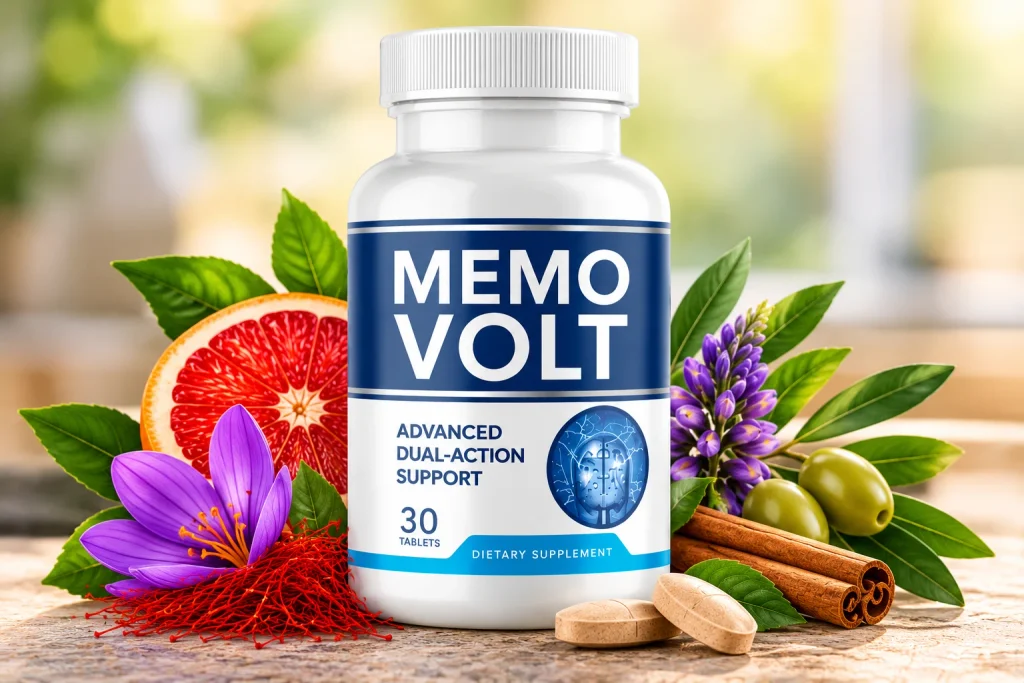
The MemoVolt supplement is a dietary supplement sold as a once-daily chewable tablet (some promotional pages describe it as a capsule, so check the current product page for the format you receive). According to the product’s published supplement facts, it contains a 458 mg proprietary blend of ten ingredients. It is marketed for memory, mental clarity, focus, and general cognitive wellness, and it is described as stimulant-free.
Two things are worth saying up front:
- MemoVolt is a dietary supplement, not an FDA-approved drug. It is not intended to diagnose, treat, cure, or prevent any disease, including Alzheimer’s disease or dementia.
- The formula is built around ingredients that have been studied on their own. As of this writing, I could not find a clinical trial that tested the finished MemoVolt product as a whole.
That second point is not unusual in the supplement world, but it matters, and we will come back to it.
The Idea Behind the Formula: Brain Protection Plus Brain Fuel
Most brain supplements lean on one idea, often caffeine-style stimulation or a single herb. MemoVolt takes a broader approach. Roughly speaking, its ingredients fall into two groups:
- Antioxidant and neuroprotective support: saffron, fucoxanthin, fucoidan, oleuropein and red orange extract.
- Glucose and metabolic support: berberine, Ceylon cinnamon, corosolic acid, kudzu flower, and others.
Why does the second group matter for a memory support supplement? The brain is only about 2% of body weight yet uses roughly a fifth of the body’s energy, mostly in the form of glucose. Researchers have long explored the link between metabolic health and cognitive health, which is why a formula that pairs brain-protective compounds with blood-sugar-supporting compounds is an interesting design choice.
MemoVolt Ingredients: A Closer Look at All Ten
The quality of any supplement comes down to its label. Here are the MemoVolt ingredients, explained in plain language.
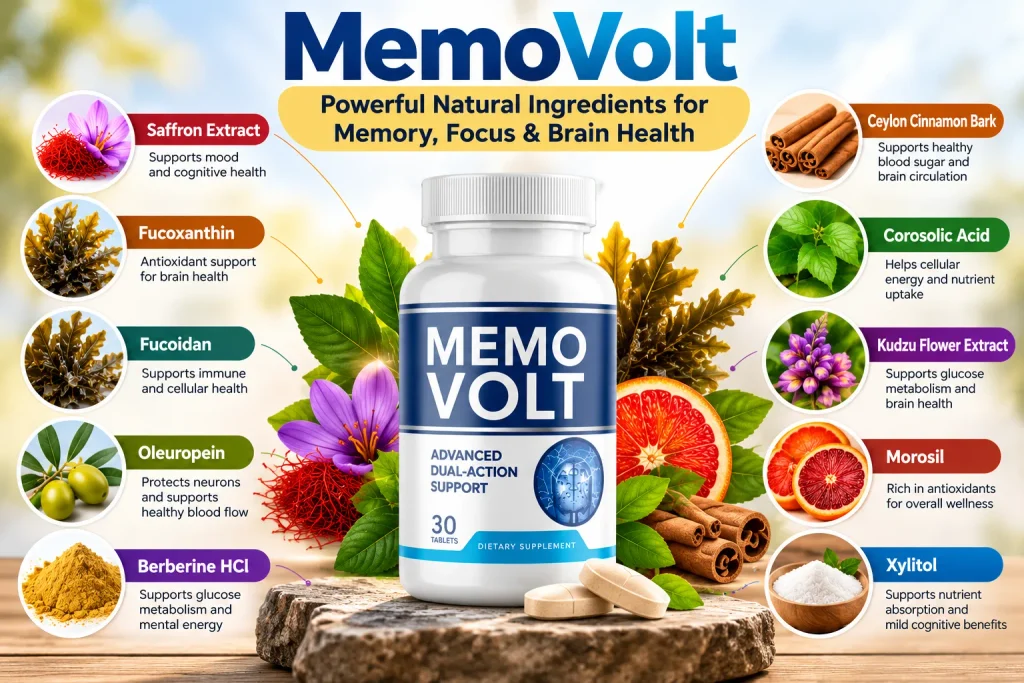
1. Saffron Extract
Saffron is a well-known botanical traditionally used in wellness routines. It contains naturally occurring compounds, such as crocin and safranal, with antioxidant properties. It has been investigated for potential effects on mood and cognitive health, and it is arguably the best-researched ingredient in the blend. Small human studies have looked at saffron in people with mild cognitive concerns, though results should be seen as early rather than conclusive.
2. Fucoxanthin
Fucoxanthin is a marine carotenoid found in brown seaweed. Researchers have studied it for antioxidant and metabolic properties, which makes it a distinctive addition to a brain and wellness formula. Most of the research so far is laboratory- or animal-based, so it is best viewed as a promising extra.
3. Fucoidan
Fucoidan is a polysaccharide found mainly in brown seaweed, and the brand states that its source is Japanese sea kelp. It has been researched for antioxidant, immune-related and cellular properties, and it adds a second marine-derived component to the formula.
4. Oleuropein
Found naturally in olive leaves, oleuropein is a polyphenol with strong antioxidant activity. It is associated with protecting neurons from free radical damage and with supporting healthy blood flow, which helps deliver oxygen and nutrients to the brain’s cognitive centers.
5. Berberine HCl
This alkaloid is widely studied for its role in healthy glucose metabolism and insulin sensitivity. In a brain health context, the idea is that better glucose handling helps brain cells access energy more efficiently, which may support sustained mental energy during demanding tasks. Because berberine is biologically active, it is also the ingredient that most calls for a conversation with your doctor if you take medication (more on that in the safety section).
6. Ceylon Cinnamon Bark
Unlike the common cassia cinnamon in most grocery stores, Ceylon (“true”) cinnamon is prized for antioxidant properties and metabolic support. It may help support insulin sensitivity and healthy blood sugar levels, and it is often chosen over cassia because it contains far less coumarin.
7. Corosolic Acid
Derived from banaba leaf, corosolic acid is described as working at the cellular level to activate GLUT4 glucose transporters, which helps cells take in nutrients quickly during demanding mental tasks.
8. Kudzu Flower Extract
Kudzu flower is loaded with isoflavones. In this formula it is positioned to help balance systemic glucose metabolism and to help protect brain tissue from inflammatory stress.
9. Morosil (Sicilian Red Orange Extract)
Morosil is a branded extract from Sicilian red oranges. Compounds such as anthocyanins and other polyphenols are associated with antioxidant activity and have attracted research interest in metabolic wellness.
10. Xylitol
This natural sugar alcohol does more than sweeten the tablet. It may support the bioavailability of other ingredients, offers mild cognitive-wellness benefits as positioned by the brand, and makes the product pleasant enough to take every day, which matters because consistency is the whole game with supplements.
A Note on the “Proprietary Blend”
MemoVolt lists its ten ingredients inside a single 458 mg proprietary blend. That means the label does not tell you the exact milligrams of each ingredient. It is a common practice, but it makes it harder to compare doses with those used in clinical studies. If this matters to you, ask the manufacturer’s customer support for a breakdown before you buy.
MemoVolt Benefits: What Users May Expect
Let’s talk about MemoVolt benefits in realistic terms. Based on the formula and how the brand positions it, these are the areas people are hoping to support:
- MemoVolt memory support: everyday recall, such as names, errands and where you left your keys.
- MemoVolt for focus: steadier concentration through the afternoon without the jitters of a stimulant.
- Mental clarity: a feeling of less “brain fog” during busy days.
- Antioxidant protection: support against everyday oxidative stress in brain tissue.
- Healthy glucose metabolism: helping the brain’s energy supply stay more even.
- Convenience: one tablet a day, no multi-pill routine, no caffeine crash.
Supplements are not drugs, and responses are personal. Age, sleep, diet, stress, exercise and genetics all shape how any person responds. The best way to think about MemoVolt is as one supportive piece of a bigger brain-healthy lifestyle, not a shortcut.
MemoVolt Price: What Does It Cost?
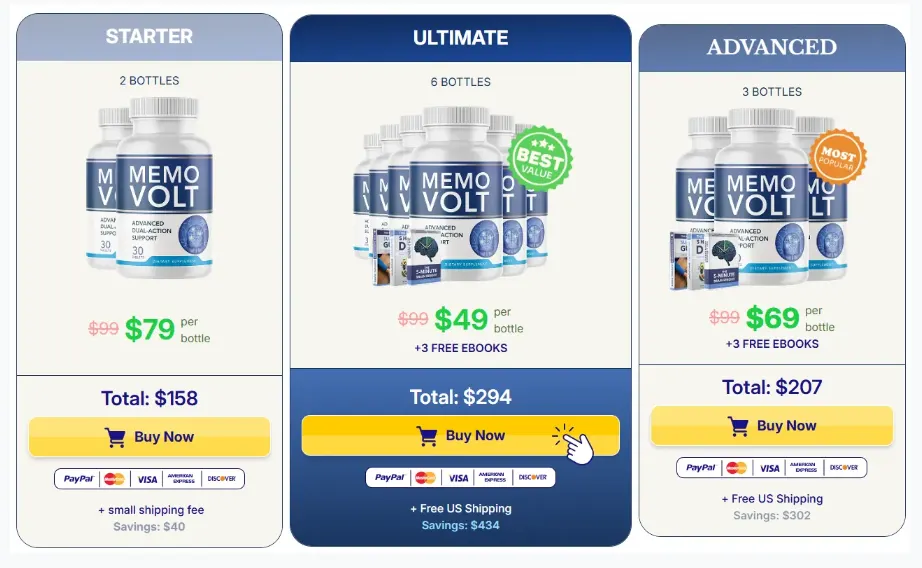
MemoVolt pricing depends on the package, with larger bundles reportedly costing around $49 per bottle. Prices and offers may change.
Before buying, check these points:
- Price per bottle: Compare single-bottle and bundle offers.
- Shipping fees: Check for additional delivery costs.
- Money-back guarantee: Review the refund period and return conditions.
- Subscription terms: Confirm whether recurring payments apply.
- Official website: Check the latest offer
Always verify the current price and terms before placing your order. Check the MemoVolt official website, trymemovolt.com, and compare it against any third-party listing you find.
MemoVolt Customer Reviews: What Are People Saying?
The MemoVolt customer reviews picture is mixed, and it is worth being open about that. The product is new, having launched in 2026, so the review base is still small. A Trustpilot page for the brand’s store showed an average rating of about 3.1 out of 5 at the time I checked, which is middling rather than glowing. Meanwhile, the official site publishes its own testimonials and star rating.
Here is how I read it:
- Testimonials on a company’s own site are curated, so treat them as marketing.
- Independent platforms give a fairer picture but can include complaints about shipping, billing or expectations that were not about the formula itself.
- Many “MemoVolt reviews” online are affiliate pages written by people paid per sale. That is another reason to rely on ingredient science and independent sources, not hype.
A smart habit with any supplement is to read the three-star and four-star reviews first. They tend to be the most balanced.
Case Study: What a Typical U.S. User Journey Might Look Like
Important: The scenario below is an illustrative composite, not a real customer testimonial. No MemoVolt user was interviewed for it, and it is not a promise of results. It is meant to show how an informed American shopper might evaluate and use a supplement like this.
Meet “Dana,” 48, a project manager in Columbus, Ohio.
The situation: Dana works long days, sleeps about six hours, drinks too much coffee and notices that by 2 p.m. she loses her train of thought in meetings. Her annual checkup showed blood sugar on the high side of normal, though not diabetic.
Step 1: Research. She reads about the MemoVolt supplement, sees the glucose-support angle, and notes that ingredients like berberine can interact with medication.
Step 2: Talk to a professional. Before buying, she mentions it to her primary care doctor and pharmacist. Because she takes no prescriptions, they see no obvious conflict, and they remind her that her sleep and diet matter at least as much as any supplement.
Step 3: Buy carefully. She goes straight to the official website instead of a marketplace listing, reads the guarantee terms, and starts with a smaller package to test tolerance rather than committing to the biggest bundle.
Step 4: Track it. For 60 days, she takes one tablet daily with breakfast and keeps a simple note: afternoon focus rating from 1 to 10, number of “lost my train of thought” moments, and any stomach upset. She also adds a daily walk and moves her last coffee to noon.
Step 5: Review honestly. After two months she looks at her notes. Whatever the result, she can’t tell how much came from the supplement versus the walking, the earlier caffeine cutoff and better sleep. She decides to continue for another month and re-check with her doctor.
The lesson: The smartest approach for U.S. users is to combine a supplement with lifestyle changes, speak with a healthcare provider, track your own results, and buy only from a source you can verify. That approach protects both your health and your wallet.
How to Take MemoVolt
Follow the directions on the product label. The brand positions it as a once-daily tablet. Some practical tips:
- Take it at the same time each day to build a habit.
- Do not exceed the stated serving.
- Give it a fair trial period, since supplements are generally not instant.
- Keep a short log of your focus and memory so you can judge for yourself.
MemoVolt Side Effects and Safety
The question of MemoVolt side effects deserves a clear answer: the brand does not publish a list of serious adverse events, and the ingredients are generally used in food or traditional wellness, but any supplement can affect people differently.
Things to consider:
- Berberine can cause digestive upset in some people and may interact with medications, especially diabetes drugs, blood pressure medication, blood thinners and certain drugs processed by the liver.
- Blood-sugar-supporting ingredients (berberine, Ceylon cinnamon, corosolic acid) could in theory add to the effect of glucose-lowering medication. People managing diabetes should ask their clinician first.
- Saffron is generally well tolerated at supplement doses, but very high doses are not advised, and pregnant individuals are usually told to avoid saffron supplements.
- Xylitol is a sugar alcohol that can cause loose stools in sensitive people, and it is toxic to dogs, so keep the bottle away from pets.
- Allergies: if you have seafood or seaweed sensitivities, check with your doctor about the marine ingredients.
Who should be especially careful: pregnant or nursing women, anyone under 18, people with diabetes, anyone taking prescription medication, and anyone scheduled for surgery. Stop use and call your doctor if you experience a reaction.
Pros and Cons of MemoVolt
Pros
- Ten-ingredient formula combining antioxidant and glucose-support ingredients
- Stimulant-free, so no caffeine-style jitters or crash
- Includes well-studied ingredients such as saffron and berberine
- Once-daily, easy routine
- Larger bundles reduce cost per bottle (about $49 advertised)
- Money-back guarantee advertised (check current terms)
- Sold through an official website with direct customer support
Cons
- No published clinical trial on the complete formula
- Proprietary blend hides the dose of each ingredient
- Possible interactions, especially with diabetes and other medications
- Independent customer ratings are only average so far (new product, small sample)
- Best pricing requires buying multiple bottles upfront
- Results vary and are not guaranteed; many online reviews are affiliate-driven
- Not for pregnant or nursing women, children, or those with certain conditions without medical advice
How Does MemoVolt Compare With Other Brain Supplements?
Here is a general, category-level comparison (not a head-to-head clinical test) to show where MemoVolt fits.
| Feature | MemoVolt | Typical stimulant-based focus supplement | Single-ingredient supplements (e.g., fish oil, ginkgo) |
|---|---|---|---|
| Main approach | Antioxidant plus glucose/metabolic support | Caffeine and similar stimulants | One targeted compound |
| Energy feel | Gentle, no stimulants | Quick lift, possible crash | Subtle |
| Daily routine | One tablet | Often 1 to 3 servings | Varies |
| Dose transparency | Proprietary blend | Often listed | Usually listed |
| Evidence for full product | None published | Varies | Often more ingredient-specific research |
| Best for | People who want a broad, non-stimulant routine | Short-term alertness | People wanting a simple, well-known option |
The honest takeaway: MemoVolt’s design is more thoughtful than a simple caffeine pill, but single-ingredient products with clearer dosing and bigger research bases can be easier to evaluate.
Is MemoVolt Worth Buying?
MemoVolt may be worth considering if:
- You want a non-stimulant daily routine for focus and memory support.
- You like the idea of combining antioxidants with metabolic support.
- You are comfortable buying from the official site and testing it for a couple of months.
- Your doctor has no concerns about the ingredients for you.
You may want to skip it, or wait, if:
- You take diabetes, blood pressure or blood-thinning medication and have not spoken to your doctor.
- You need exact ingredient doses or published trial data on the finished product.
- You are pregnant, nursing, or have a diagnosed memory condition (talk to a clinician first).
- You are looking for a guaranteed or medical-level result.
My balanced verdict: for a healthy adult who wants an extra layer of support alongside good sleep, movement and nutrition, the MemoVolt brain health supplement looks like a reasonable, thoughtfully designed option, with the caveat that its full-formula evidence is still to come.
Buy MemoVolt Online: How to Do It Safely
When you decide to buy MemoVolt online, protect yourself:
- Use the MemoVolt official website (trymemovolt.com). Counterfeits and look-alike listings do appear when a product trends.
- Avoid unverified marketplace sellers who may sell expired or tampered products.
- Read the refund policy and keep your order confirmation.
- Beware of fake urgency, such as countdown timers and “only 3 left” banners.
- Check the label when it arrives for the supplement facts panel, lot number and expiration date.
- Watch for recurring billing and cancel promptly if you do not want automatic shipments.
Lifestyle Habits That Boost Any Memory Supplement
No capsule can outwork poor habits. If you want your memory support routine to count, pair it with:
- Sleep: 7 to 9 hours supports memory consolidation.
- Exercise: regular aerobic activity is consistently linked to better cognitive health.
- Diet: a Mediterranean-style pattern with vegetables, olive oil, fish, nuts and berries.
- Stress management: chronic stress can crowd out focus.
- Mental challenge: learning a language, reading, puzzles or a new hobby.
- Social connection: staying engaged with others protects mood and thinking.
- Regular checkups: blood sugar, blood pressure, and vitamin levels all affect the brain.
Frequently Asked Questions (FAQ)
What is MemoVolt?
MemoVolt is a once-daily dietary supplement with ten ingredients, marketed for memory, focus, mental clarity, and overall cognitive wellness.
What are the main MemoVolt ingredients?
Saffron extract, fucoxanthin, fucoidan, oleuropein, berberine HCl, Ceylon cinnamon bark, corosolic acid, kudzu flower extract, Morosil (Sicilian red orange), and xylitol.
Does MemoVolt really work?
Individual ingredients have been studied, some more than others, but I could not find a clinical trial on the finished formula. Results vary, and it is best used alongside healthy habits.
How much does MemoVolt cost?
Price depends on the bundle. Larger bundles advertise about $49 per bottle. Always confirm the latest price on the official website.
Is MemoVolt safe? What are the side effects?
Ingredients are generally used in foods or traditional wellness, but berberine and glucose-support ingredients can interact with medications, and some people get digestive upset. Talk to your doctor first, especially if you have diabetes or take prescriptions.
Does MemoVolt contain caffeine or stimulants?
It is marketed as stimulant-free.
How long until I notice anything?
Supplements are not instant. Many people give any new formula at least 30 to 60 days and track changes rather than expecting overnight results.
Can I take MemoVolt with other supplements or medications?
Check with a pharmacist or doctor. The metabolic ingredients are the main concern.
Is MemoVolt FDA approved?
No. Dietary supplements are not approved by the FDA before sale. The brand states that its product is not intended to diagnose, treat, cure or prevent any disease.
Where can I buy MemoVolt?
The MemoVolt official website, trymemovolt.com, is the safest place. Be cautious with third-party sellers.
Is there a money-back guarantee?
The brand advertises one. Terms can change, so read the current policy before ordering.
Can MemoVolt treat Alzheimer’s or dementia?
No. It is not a treatment for any diagnosed condition. If you are worried about memory loss, see a healthcare professional.
Final Thoughts
The MemoVolt supplement brings a refreshing idea to a crowded category: protect the brain with antioxidants and support its fuel supply with metabolic ingredients, all without stimulants. That is a thoughtful design, and several ingredients, including saffron, berberine, and Ceylon cinnamon, have real research behind them on their own.
At the same time, an honest review has to say that the full formula has not been clinically tested, the blend is proprietary, and independent customer ratings are still modest. The best path is to speak with your doctor, buy from the official source, give it a fair trial, and track your own results.
If you do those things, you will make a decision based on evidence and experience, not hype.
Sources and Scientific References
For independent, evidence-based reading on the ingredients and on supplement safety, start with these:
- MemoVolt official website: trymemovolt.com (product information, supplement facts, current pricing and guarantee)
- Trustpilot, MemoVolt reviews page: trustpilot.com/review/memovolt.shop (independent customer ratings)
- PubMed (U.S. National Library of Medicine): pubmed.ncbi.nlm.nih.gov (search saffron cognition, berberine glucose, fucoxanthin, oleuropein neuroprotection)
- NIH National Center for Complementary and Integrative Health (NCCIH): nccih.nih.gov (herbs-at-a-glance safety pages on saffron and other botanicals)
- NIH Office of Dietary Supplements: ods.od.nih.gov (consumer guidance on choosing and using supplements)
- U.S. Food and Drug Administration, Dietary Supplements: fda.gov/food/dietary-supplements (how supplements are regulated, adverse event reporting)
- MedlinePlus: medlineplus.gov (monographs on berberine, cinnamon and other ingredients)
- Examine.com: examine.com (independent summaries of ingredient research)
- National Institute on Aging: nia.nih.gov (evidence on supplements and cognitive health)
- Mayo Clinic: mayoclinic.org (healthy-aging and memory resources)
Disclaimer: This article is designed to provide helpful information about MemoVolt, including its ingredients, potential benefits, and important considerations. MemoVolt is intended to diagnose, treat, cure, or prevent any disease, and its claims have been evaluated by the FDA. For the latest pricing and offers, visit the official website. Consult a qualified healthcare professional before starting any supplement to ensure it suits your individual needs, especially if you are pregnant, nursing, taking medication, or managing a health condition.

For more expert-backed health tips, wellness guides, and supplement insights, be sure to read more articles on the Health Line Guide