
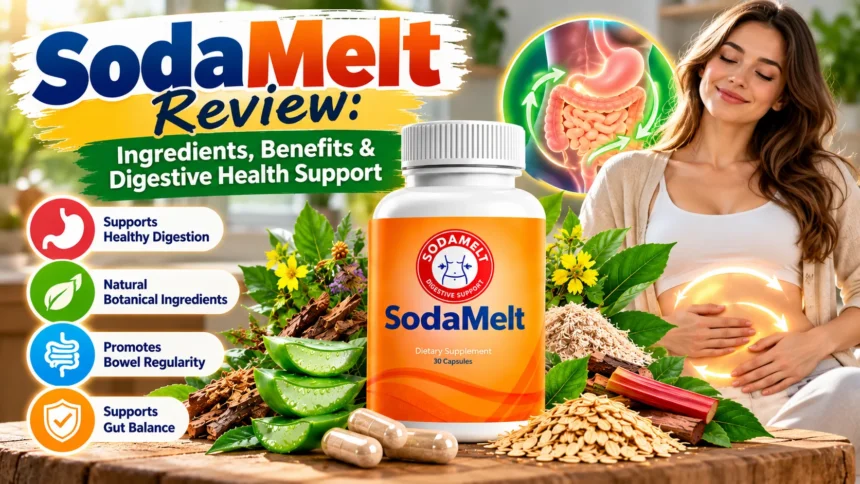
Digestive discomfort can affect everyday life in ways that are easy to underestimate. Feeling bloated after meals, experiencing irregular bowel movements, or dealing with occasional constipation can make it difficult to feel comfortable throughout the day. For this reason, many people look for practical ways to support their digestive health.
In this SodaMelt review, we examine the supplement’s advertised ingredients, potential digestive benefits, safety considerations, customer feedback, and available scientific evidence. The formula combines 12 fiber-rich botanical, mineral, and probiotic ingredients intended to support digestive wellness and promote a lighter feeling.
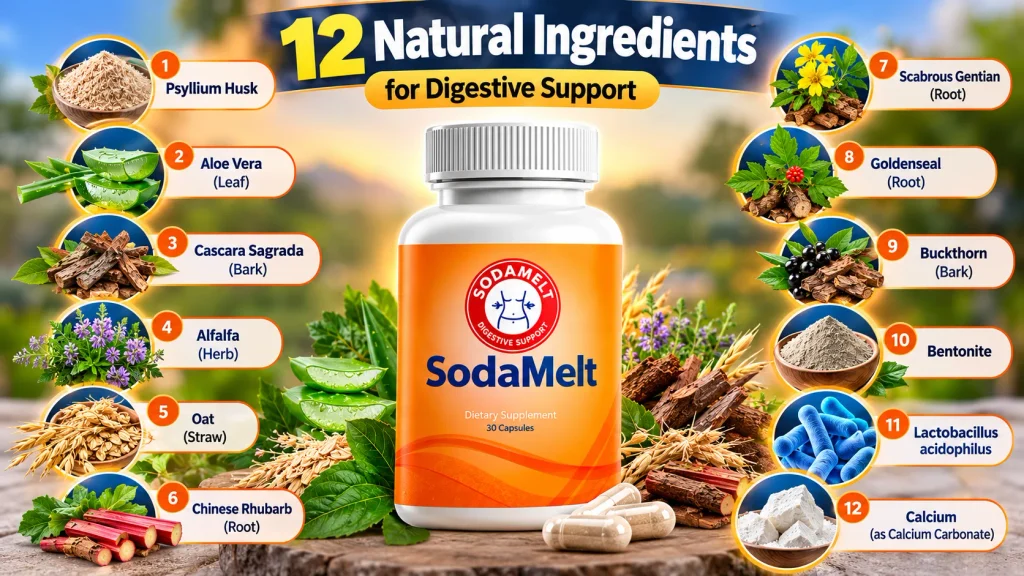
The ingredient list includes psyllium husk, aloe vera, cascara sagrada, alfalfa, oat straw, Chinese rhubarb, scabrous gentian, goldenseal, buckthorn bark, bentonite, Lactobacillus acidophilus, and calcium carbonate.
Some ingredients have established nutritional or traditional uses, while others raise important questions about safety, dosage, and long-term use. Understanding these differences is essential before deciding whether this digestive support supplement fits your needs.
Important: This article reviews the ingredient information supplied for the product. We have independently verified the complete formula, ingredient quantities, manufacturing quality, and clinical effectiveness of the finished supplement.

What Is SodaMelt?
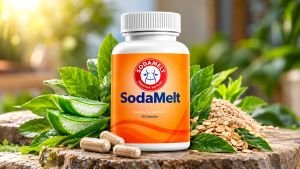
SodaMelt is marketed as a daily digestive wellness supplement in capsule form. According to the product description, it combines 12 ingredients selected to support bowel regularity, digestive comfort, and a balanced approach to everyday wellness.
The formula brings together soluble fiber, traditional botanical ingredients, a probiotic species, and a mineral. Rather than relying on a single ingredient, the product is presented as a multi-ingredient approach to digestive support.
The advertised goals include:
- Supporting regular bowel movements.
- Helping maintain comfortable digestion.
- Providing fiber as part of a digestive wellness routine.
- Supporting the gut microbiome through a probiotic ingredient.
- Helping users feel more comfortable after meals.
These are intended benefits, not guaranteed outcomes. The presence of an ingredient with a history of scientific study does not establish that the complete product produces the same results.
One particularly important distinction is that digestive regularity and reduced bloating are not identical outcomes. Fiber may help some people with constipation, but increasing fiber too quickly can also cause gas or abdominal discomfort. Meanwhile, laxative herbs may stimulate bowel movements without addressing the underlying reason for persistent bloating.
For that reason, the ingredient amounts and the product’s directions for use matter as much as the ingredient names.
How Does SodaMelt Work?
The proposed approach behind this supplement involves several different digestive mechanisms.
1. Soluble fiber and bowel regularity
Psyllium husk is a soluble fiber that absorbs water and forms a gel-like substance. When taken with sufficient fluid, it can help improve stool consistency and bowel regularity.
The American College of Gastroenterology recommends psyllium for improving overall symptoms in people with irritable bowel syndrome (IBS). However, this evidence concerns psyllium itself and does not establish that a particular multi-ingredient supplement provides the same benefit.
2. Botanical ingredients and bowel movements
Some ingredients in the formula, including cascara sagrada, Chinese rhubarb, and buckthorn bark, are traditionally associated with stimulating bowel movements.
This may sound appealing to people experiencing constipation, but stimulant-laxative ingredients require particular caution. Frequent or prolonged use can create problems, and these ingredients are not interchangeable with ordinary dietary fiber.
A product containing multiple laxative botanicals should not automatically be treated as a harmless everyday wellness capsule.
3. Probiotic support
The formula includes Lactobacillus acidophilus, a bacterial species used in some probiotic products.
Probiotics may influence the gut microbiome, but their effects depend on the specific strain, dose, and health outcome being studied. The species name alone is not enough to determine whether the amount in this product is effective.
4. A broader digestive wellness routine
Fiber intake, fluid consumption, physical activity, meal patterns, and individual food tolerances can all affect digestive comfort. A supplement may form part of a broader routine, but it cannot replace these habits or identify the cause of ongoing digestive symptoms.
SodaMelt Ingredients: A Detailed Breakdown
The most useful way to evaluate this formula is to consider each ingredient separately, including its potential role and limitations.
1. Psyllium Husk
Psyllium husk is one of the better-studied ingredients in the formula. It is a source of soluble fiber that absorbs water in the digestive tract, helping add bulk to stool and support regularity.
Potential benefits:
- Supports stool consistency.
- May help relieve occasional constipation.
- Can support bowel function in some people with IBS.
- Adds soluble fiber to the diet.
Psyllium can also cause gas, bloating, or cramping, especially when someone increases fiber intake too quickly. It must be taken with sufficient liquid, and people who have swallowing difficulties or a history of intestinal narrowing should seek medical advice before using it.
The quantity included in SodaMelt is not provided in the ingredient information supplied for this review. Therefore, it is not possible to determine whether one capsule delivers a meaningful amount of psyllium.
2. Aloe Vera Leaf
Aloe vera has a long history of traditional use in wellness products, including products marketed for digestive comfort. However, aloe products can differ substantially depending on which part of the plant is used and how it is processed.
Aloe latex contains compounds with laxative effects, whereas purified inner-leaf preparations have different properties. The exact preparation therefore matters.
Potential digestive effects cannot be assumed from the words “aloe vera” alone. Consumers should check the product label for the plant part, preparation, and quantity.
3. Cascara Sagrada Bark
Cascara sagrada is a botanical traditionally used as a stimulant laxative. Its active compounds can encourage bowel movements by affecting intestinal activity.
This ingredient deserves special attention because stimulant laxatives are not the same as gentle fiber supplements. Repeated use can cause abdominal cramps and diarrhea, and excessive fluid loss may lead to electrolyte disturbances.
The US Food and Drug Administration removed cascara sagrada from the category of ingredients generally recognized as safe and effective for OTC laxative drug products. That regulatory history is an important reason not to assume that a cascara-containing supplement is suitable for continuous daily use.
Consumers should seek professional advice before using a product containing cascara, especially if constipation is persistent or if other laxatives are already being used.
4. Alfalfa Herb
Alfalfa is a plant used in foods and traditional herbal preparations. It contains various plant compounds and nutrients, although its nutritional contribution depends on the preparation and amount consumed.
Its presence does not establish that the finished supplement improves digestion. The product’s label would need to specify the amount and preparation before its likely contribution could be evaluated.
People taking medication or managing a medical condition should discuss concentrated herbal products with a qualified healthcare professional.
5. Oat Straw
Oat straw refers to the above-ground parts of the oat plant. It should not be confused with oat bran or whole oats, which are established food sources of dietary fiber.
The product description associates oat straw with soluble fiber and beta-glucan. However, that claim should be interpreted cautiously because the amount and type of fiber present depend on the actual preparation.
Evidence about beta-glucan from oats cannot automatically be applied to oat straw in a capsule. The exact ingredient specification is needed to assess the formula accurately.
6. Chinese Rhubarb Root
Chinese rhubarb root has a history of use in traditional preparations, including preparations intended to promote bowel movements.
Some rhubarb preparations contain compounds with stimulant-laxative effects. As with cascara, the presence of such an ingredient raises questions about dosage, duration of use, and the possibility of cramps or diarrhea.
The name alone does not reveal how much active material is present. People with persistent constipation, abdominal pain, or unexplained changes in bowel habits should seek medical advice instead of relying on repeated laxative use.
7. Scabrous Gentian Root
Gentian plants are traditionally used in herbal preparations, sometimes to encourage appetite or support digestive function.
However, traditional use is not equivalent to proof of clinical effectiveness. Evidence for gentian in one preparation cannot establish that scabrous gentian, at an undisclosed dose, improves the digestive symptoms advertised for this product.
More information about the botanical identity, extraction method, and amount would be necessary for a meaningful evaluation.
8. Goldenseal Root
Goldenseal is a botanical used in traditional herbal products. Nevertheless, the US National Center for Complementary and Integrative Health reports that rigorous human studies have not established its effectiveness for health conditions.
Goldenseal can also interact with medications by affecting how the body processes them. This is particularly relevant for people taking prescription medicines or managing chronic conditions.
It should not be used during pregnancy or breastfeeding. Consumers should consult a healthcare professional before taking a product containing goldenseal.
9. Buckthorn Bark
Buckthorn bark is listed as another botanical traditionally associated with bowel elimination. Certain buckthorn preparations contain compounds that can have laxative effects.
The main concern is the possibility of overlapping effects when multiple laxative botanicals appear in the same formula. Without individual ingredient quantities, it is difficult to assess the combined strength or safety of this supplement.
Consumers should not assume that combining several traditional laxatives makes the product more effective or appropriate for long-term use.
10. Bentonite
Bentonite is a type of clay used in various industrial, cosmetic, and other products. It has also appeared in some preparations marketed for digestive wellness.
However, its inclusion does not establish that a supplement detoxifies the body or improves digestive health. Oral bentonite products require careful consideration of product purity, contamination testing, and possible effects on the absorption of medications or nutrients.
Before using a clay-containing supplement, consumers should look for reliable quality information and discuss potential interactions with a pharmacist or healthcare professional.
11. Lactobacillus acidophilus
Lactobacillus acidophilus is a bacterial species used in some probiotic supplements. It is studied for its possible role in supporting the gut microbiome and certain digestive symptoms.
However, probiotic effects are often strain-specific. Two products containing the same species may not provide the same results because they can use different strains, doses, and manufacturing methods.
For a more complete assessment, the label should identify the strain and provide the viable microorganism count, ideally through the expiration date.
12. Calcium as Calcium Carbonate
Calcium is an essential mineral involved in bone health, muscle function, and other normal physiological processes. Calcium carbonate is a commonly used form of calcium in supplements.
Its inclusion does not independently demonstrate that the product relieves bloating or improves bowel regularity. Calcium carbonate can also cause constipation in some people, depending on the amount and individual response.
The amount of elemental calcium and the intended nutritional contribution should be checked on the Supplement Facts label.
Potential SodaMelt Benefits
Based on the advertised formula and the known properties of individual ingredients, several potential benefits can be discussed. However, these should not be confused with proven benefits of the finished supplement.
Support for bowel regularity
Psyllium is the clearest ingredient-based reason to consider this formula for bowel regularity. Adequate soluble fiber can help some people manage constipation and improve stool consistency.
The important unanswered question is whether SodaMelt supplies enough psyllium to produce a meaningful effect.
Support for digestive comfort
Some users may be interested in the product because they experience discomfort after meals. Better bowel regularity may help certain people feel more comfortable, but bloating has many possible causes.
Food intolerances, constipation, eating patterns, gastrointestinal conditions, and other factors can all contribute. A supplement cannot be expected to address every cause.
A convenient capsule format
The product is marketed as a simple capsule-based routine. Capsules may be convenient for people who prefer them to mixing fiber powders.
Convenience, however, does not guarantee that a capsule contains an effective amount of fiber. The quantity per serving should be compared with the amounts used in relevant studies or recommended by a healthcare professional.
Probiotic-related digestive support
The inclusion of L. acidophilus may appeal to consumers interested in gut microbiome support. Whether this particular formula provides a meaningful probiotic benefit depends on its strain, viable count, storage conditions, and evidence for the intended use.
A multi-ingredient approach
The formula combines fiber, botanicals, a probiotic, and a mineral. Some consumers prefer products with multiple ingredients, but a longer ingredient list does not automatically mean greater effectiveness.
In this case, the combination of several laxative-associated botanicals makes careful safety evaluation especially important.
Does SodaMelt Help With Bloating?
The question of whether SodaMelt for bloating is effective deserves a careful answer.
There is not enough verified evidence to conclude that the finished product reliably reduces bloating.
Psyllium may help some people whose symptoms are associated with constipation. However, adding fiber too quickly can temporarily increase gas and abdominal distension.
Stimulant-laxative ingredients may encourage bowel movements, but that does not mean they resolve the underlying cause of bloating. Excessive laxative effects can instead lead to cramps, diarrhea, dehydration, or electrolyte problems.
If bloating occurs regularly, consider the following practical steps:
- Eat slowly and notice whether particular meals trigger symptoms.
- Increase dietary fiber gradually rather than making sudden changes.
- Drink enough water, particularly when increasing fiber intake.
- Keep a simple record of meals, bowel movements, and symptoms.
- Discuss persistent or worsening symptoms with a healthcare professional.
Seek prompt medical attention for severe abdominal pain, repeated vomiting, blood in the stool, unexplained weight loss, or marked abdominal swelling. A person who cannot pass stool or gas and has significant abdominal pain or vomiting needs urgent assessment.
SodaMelt Side Effects and Safety Considerations
Although the product is marketed for digestive wellness, its ingredients deserve a closer safety review.
Potential side effects may include:
- Gas or abdominal bloating from fiber.
- Cramping or diarrhea from stimulant-laxative botanicals.
- Dehydration and electrolyte disturbances if diarrhea is excessive.
- Constipation in some users, depending on the formulation and individual response.
- Interactions with prescription or over-the-counter medicines.
- Possible contamination concerns if clay-containing ingredients are not appropriately tested.
The combination of cascara sagrada, Chinese rhubarb, and buckthorn bark is particularly important. Because the amounts of these ingredients have not been supplied, their combined effects cannot be reliably assessed.
Goldenseal also raises concerns about medication interactions. People who take regular medication, have kidney or intestinal conditions, or are managing a chronic health problem should consult a healthcare professional before using this product.
Pregnant or breastfeeding individuals should avoid goldenseal, and anyone considering the supplement during pregnancy or breastfeeding should obtain professional guidance about the entire formula.
Do not assume that the supplement is safe for long-term daily use simply because it is sold as a dietary supplement.
SodaMelt Pros and Cons
Pros
- Includes psyllium, a well-studied soluble fiber
- Contains a probiotic species
- Combines several types of ingredients in capsule form
- May appeal to people seeking help with bowel regularity
- Offers a convenient format compared with some fiber powders
- Could fit into a broader digestive wellness routine if appropriate
Cons
- The amount of psyllium per serving is unknown
- The specific strain and viable count are not supplied
- More ingredients do not necessarily mean better results
- The finished product’s effectiveness has not been established
- Multiple laxative-associated botanicals raise safety questions
- Long-term suitability and medication interactions need consideration
SodaMelt vs. Other Digestive Support Options
When comparing digestive supplements, it helps to separate products with a clearly defined purpose from multi-ingredient formulas whose doses are uncertain.
| Option | Main purpose | Evidence and considerations |
|---|---|---|
| SodaMelt | Multi-ingredient digestive support | Finished-product effectiveness and ingredient doses are unverified |
| Psyllium fiber | Bowel regularity and stool consistency | Has clinical guideline support for certain bowel symptoms |
| Probiotic supplement | Support for specific gut-related outcomes | Benefits depend on strain, dose, and condition |
| Dietary fiber from food | General bowel health and nutritional support | Can be increased gradually through foods such as oats, beans, fruit, and vegetables |
| Clinician-recommended constipation treatment | Management of constipation based on individual needs | Choice depends on symptoms, medical history, and the cause of constipation |
For someone whose main concern is constipation, a clearly labeled psyllium product may be easier to evaluate because the dose can be identified and compared with relevant guidance. A clinician or pharmacist can help determine whether it is appropriate.
For someone whose main concern is unexplained bloating, identifying the cause may be more useful than trying several supplements in succession.
Where to Buy and Pricing Tips
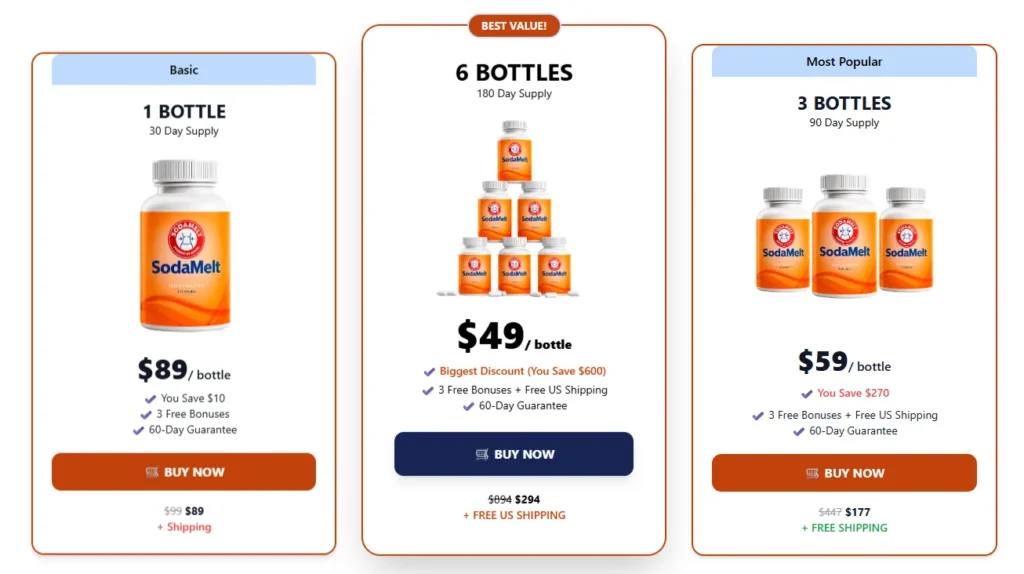
To avoid imitations, purchase only through the SodaMelt official website or sellers it explicitly authorizes. Visit Official Price Page:
A U.S.-Focused Consumer Case Study
A real customer case or a clinical study
Consider an adult living in the United States who regularly experiences abdominal fullness after dinner and occasionally has hard stools. They see an advertisement for SodaMelt that emphasizes digestive comfort and a lighter feeling.
Before purchasing the supplement, the person checks the label and notices that it contains psyllium alongside several stimulant-laxative botanicals. They also discover that the product information they have does not specify the amount of each ingredient.
Instead of assuming the formula will work, they take three practical steps.
First, they review their symptoms, including how often they have bowel movements and whether particular meals seem to trigger discomfort. Second, they consult a pharmacist about the laxative ingredients and any possible interactions with their existing medicines. Third, they compare the product with alternatives that have clearer dosing information.
The person may ultimately choose a different approach based on professional advice. The important lesson is not that SodaMelt succeeds or fails, but that an informed purchasing decision considers the formula, dose, evidence, and personal health circumstances.
For U.S. consumers, the FDA’s dietary supplement guidance is also relevant: supplements are not approved by the agency for safety and effectiveness before marketing in the same way as prescription medicines. Consumers should review labels carefully and consult qualified healthcare professionals when necessary.
SodaMelt Customer Reviews: What Can We Learn?
The supplied product material includes three positive testimonials attributed to Daniel R., Priya M., and Carlos G. The comments describe perceived improvements in post-meal bloating, convenience, and satisfaction with a multi-bottle package.
These testimonials represent the brand-provided feedback available for this article. Their purchase status and individual experiences have not been independently verified, and the comments should not be treated as clinical evidence.
Customer feedback can help readers understand what a product’s marketing emphasizes, but it cannot establish how consistently a supplement works across different people.
When assessing customer reviews, look for:
- Independent reviews with clear purchase-verification methods.
- A range of experiences rather than only positive comments.
- Specific information about the length of use and the outcome reported.
- Transparent disclosure of incentives or commercial relationships.
- Evidence that separates temporary changes in bowel movements from lasting improvements in digestive health.
A person may feel less bloated after changing their diet, increasing fiber, or experiencing a bowel movement. That does not prove that the supplement itself caused the change.
Is SodaMelt Worth Considering?
Whether this supplement is appropriate depends on the reason you are considering it and the information available about its formulation.
The strongest ingredient-based argument for digestive support is psyllium, which has evidence for improving certain bowel symptoms. The probiotic ingredient may also be relevant to specific digestive outcomes if the strain and dose are suitable.
However, the formula also contains cascara sagrada, Chinese rhubarb, and buckthorn bark. These ingredients make it especially important to understand the doses, directions, intended duration of use, and potential interactions.
Before purchasing, look for the complete Supplement Facts panel, including the quantity of every active ingredient. Check the manufacturer or distributor information, product directions, quality-testing details, return policy, and total cost rather than relying only on promotional claims.
Where to Buy SodaMelt
If you are considering purchasing SodaMelt, use the brand’s official website only after independently confirming that the website is authentic. The exact official URL, current price, bottle quantities, shipping charges, and refund terms were not provided for this review, so they cannot be confirmed here.
Before ordering, verify:
- Check ingredients and dosage.
- Review safety warnings.
- Verify seller details.
- Confirm price and refund policy.
Buy SodaMelt Online
Where to Buy SodaMelt: Pricing, Offers & Purchase Options
- Supports bowel regularity
- Promotes digestive wellness
- Provides soluble fiber
- Supports gut microbiome health
Frequently Asked Questions About SodaMelt
1. What is SodaMelt used for?
SodaMelt is marketed as a digestive wellness supplement intended to support bowel regularity and digestive comfort. Its advertised purposes should not be interpreted as proven treatment effects.
2. What are the main SodaMelt ingredients?
The supplied ingredient list includes psyllium husk, aloe vera leaf, cascara sagrada bark, alfalfa herb, oat straw, Chinese rhubarb root, scabrous gentian root, goldenseal root, buckthorn bark, bentonite, Lactobacillus acidophilus, and calcium carbonate.
3. Does SodaMelt help reduce bloating?
There is insufficient verified evidence to establish that the finished product reliably reduces bloating. Psyllium may help some people with constipation-related symptoms, but fiber can also temporarily increase gas. Persistent bloating should be evaluated according to its underlying cause.
4. How long does SodaMelt take to work?
A reliable time frame cannot be provided because the finished formula and ingredient doses have not been independently evaluated. Different ingredients can act at different speeds, and results vary by person. Do not increase the dose or extend use in an attempt to force faster results.
5. Does SodaMelt have side effects?
Possible concerns include gas, cramping, diarrhea, dehydration, electrolyte disturbances, and medication interactions. The risk depends on the ingredient quantities, individual health circumstances, and how the product is used.
6. Is SodaMelt safe for daily use?
Daily use cannot be recommended without knowing the complete formulation and directions. The presence of several stimulant-laxative botanicals makes prolonged use a particular concern. Ask a healthcare professional to review the label before using it regularly.
7. Does SodaMelt contain probiotics?
The supplied product description lists Lactobacillus acidophilus. To evaluate its probiotic potential, check the specific strain, viable count, storage instructions, and evidence for the intended benefit.
8. Is SodaMelt FDA-approved?
The FDA does not approve dietary supplements for safety and effectiveness before they are marketed in the same way it approves drugs. Do not interpret a seller’s claim about FDA registration, facility registration, or manufacturing standards as proof that a supplement has been FDA-approved or clinically proven.
9. Where can I buy SodaMelt?
Check the manufacturer’s verified official website and review the full label, price, shipping terms, and refund conditions before purchasing. The official URL and current offer could not be verified from the information available for this review.
10. Is SodaMelt better than a regular fiber supplement?
Not necessarily. A single-ingredient fiber product with a clearly stated dose may be easier to evaluate for constipation-related symptoms. SodaMelt combines fiber with other ingredients, including stimulant-laxative botanicals, so its potential benefits and risks are more complex.
Final Verdict: Is SodaMelt Worth Trying?
This SodaMelt review highlights a formula that combines psyllium fiber, botanical ingredients, probiotics, and calcium to support digestive wellness. While psyllium has evidence for helping with certain bowel symptoms, the effectiveness of the complete SodaMelt supplement has not been established. Ingredients such as cascara sagrada and Chinese rhubarb also raise concerns about repeated use. Before purchasing, check the complete ingredient label, dosage, and product quality information. Consult a healthcare professional before regular use, especially if you take medication or experience persistent digestive discomfort.
Medical Disclaimer
This article is intended to provide helpful, balanced information about SodaMelt, its ingredients, and potential digestive health benefits. Individual experiences may vary depending on diet, lifestyle, and personal health needs. Although dietary supplements may complement a healthy routine, they should not replace a balanced diet or professional medical care. Consult a qualified healthcare professional before using SodaMelt, especially if you take medication, have an existing health condition, or are pregnant or breastfeeding. Always follow the product label and seek medical advice for persistent digestive concerns.
Scientific References and Further Reading
- American College of Gastroenterology (ACG). Soluble Fiber: Psyllium and Irritable Bowel Syndrome. Guidance on soluble fiber and relevant bowel symptoms.
- National Center for Complementary and Integrative Health (NCCIH). Goldenseal: Usefulness and Safety. Evidence limitations and potential medication interactions.
- National Institutes of Health, Office of Dietary Supplements (NIH ODS). Probiotics: Fact Sheet for Health Professionals. Information about probiotic strains, doses, and evidence.
- U.S. Food and Drug Administration (FDA). Information for Consumers on Using Dietary Supplements. Guidance on supplement use and regulatory oversight.
- NIH Office of Dietary Supplements. Dietary Supplements: Background Information for Consumers. General information about supplement evidence and regulation.

For more expert-backed health tips, wellness guides, and supplement insights, be sure to read more articles on the Health Line Guide