


You know the feeling. You stayed up too late scrolling, or you tossed and turned all night, and by mid-morning your head is pounding like someone is tightening a belt around your skull. So you start Googling, half-hoping the answer is “no.” But here’s the truth: can lack of sleep cause headaches? Yes, it absolutely can — and science backs this up in a big way.
If you’ve ever asked yourself “can lack of sleep cause a headache,” or wondered whether that groggy, throbbing feeling after a rough night is all in your head (pun intended), you’re not imagining things. Sleep and headaches are tangled together in a two-way relationship that doctors call “bidirectional” — poor sleep triggers headaches, and headaches, in turn, wreck your sleep. It’s a frustrating loop, but understanding it is the first step to breaking free.
In this guide, we’ll dig into exactly how sleep deprivation triggers head pain, what the research says, what a headache from lack of sleep actually feels like, and — most importantly — how to fix it. We’ll also look at a real-world case study of U.S. adults, a handy pros and cons table, a comparison chart of headache types, and answers to the most common questions people ask about this exact topic.
Can Lack of Sleep Cause Headaches? The Short Answer
Let’s cut right to it: can lack of sleep cause headaches in a way that’s medically recognized? Yes. Sleep researchers and neurologists agree that insufficient, fragmented, or irregular sleep is one of the most common headache triggers out there — right up there with stress and dehydration.
According to the Sleep Foundation, there’s a well-documented relationship between sleep problems and several headache types, including tension-type headaches, migraines, cluster headaches, and even a rarer condition called hypnic headaches (sometimes nicknamed “alarm clock headaches” because they wake you up at the same time every night).
So if you’re asking, “can a headache be caused by lack of sleep,” the honest answer from the medical community is a confident yes — but the why behind it is more interesting than you’d think.
Why Does Missing Sleep Lead to Head Pain? The Science Explained
To understand
whether lack of sleep causes a headache, it helps to look at what’s happening inside your brain when you don’t get enough rest.
1. The Hypothalamus Connection
Your hypothalamus is a small but mighty part of your brain. It regulates sleep, mood, and pain signaling all at once. It also houses the suprachiasmatic nucleus (SCN), your body’s internal clock, which syncs your sleep-wake cycle to light and darkness. When sleep gets disrupted, this delicate system gets thrown off balance, which can trigger both mood changes and headache activity.
2. Lower Pain Tolerance
Here’s something that surprises most people: a study published in the journal Pain found that even a single night of partial sleep deprivation significantly reduced participants’ pain tolerance — an effect roughly comparable to reversing the pain-relieving impact of a moderate dose of ibuprofen.<sup>[3]</sup> In plain English, when you’re sleep-deprived, everything hurts more, including your head.
3. Inflammation and Brain Excitability
Poor sleep quality has been linked to increased brain “hyperexcitability,” meaning your brain’s pain-processing centers become more sensitive and reactive. Research suggests sleep deprivation disrupts the inhibition-facilitation balance in the cerebral cortex, making migraine attacks more likely. Sleep loss also raises inflammatory markers in the body within as little as 24 hours, according to research published in PLoS One.
4. Low Melatonin Levels
The pineal gland produces melatonin, the hormone that helps you fall asleep. Low melatonin levels have been linked to a higher chance of migraines and cluster headaches, especially the kind you wake up with.
5. The Glymphatic System
Newer research points to something called the glymphatic system — your brain’s built-in waste-clearance network, which is most active during deep sleep. When sleep is cut short, this cleanup process is interrupted, and a buildup of metabolic waste in the brain may contribute to headache development.
Can a Headache Be Caused by Lack of Sleep and Dizziness Together?
This is one of the most searched follow-up questions, and for good reason — headaches rarely show up alone. So, can lack of sleep cause headache and dizziness at the same time? Yes, and it’s actually a very common combination.
Here’s why the two often travel together:
- Dehydration often accompanies sleep loss, since people forget to drink water when they’re groggy, and dehydration itself causes both headaches and lightheadedness.
- Low blood sugar can result from irregular sleep-wake patterns, especially if sleep loss disrupts your normal meal schedule.
- Inner ear and balance disruption — fatigue affects the vestibular system, which controls balance, leading to a wobbly or dizzy sensation.
- Blood pressure fluctuations caused by poor sleep can trigger both headache pain and a lightheaded feeling upon standing.
- Sleep apnea, an underlying condition in many chronic poor sleepers, causes repeated drops in blood oxygen overnight — this alone can cause both morning headaches and daytime dizziness.
If dizziness and headaches are showing up together frequently, it’s worth mentioning to your doctor, especially if you also have vision changes, confusion, or chest pain, which need immediate medical attention.
Types of Headaches Linked to Sleep Deprivation
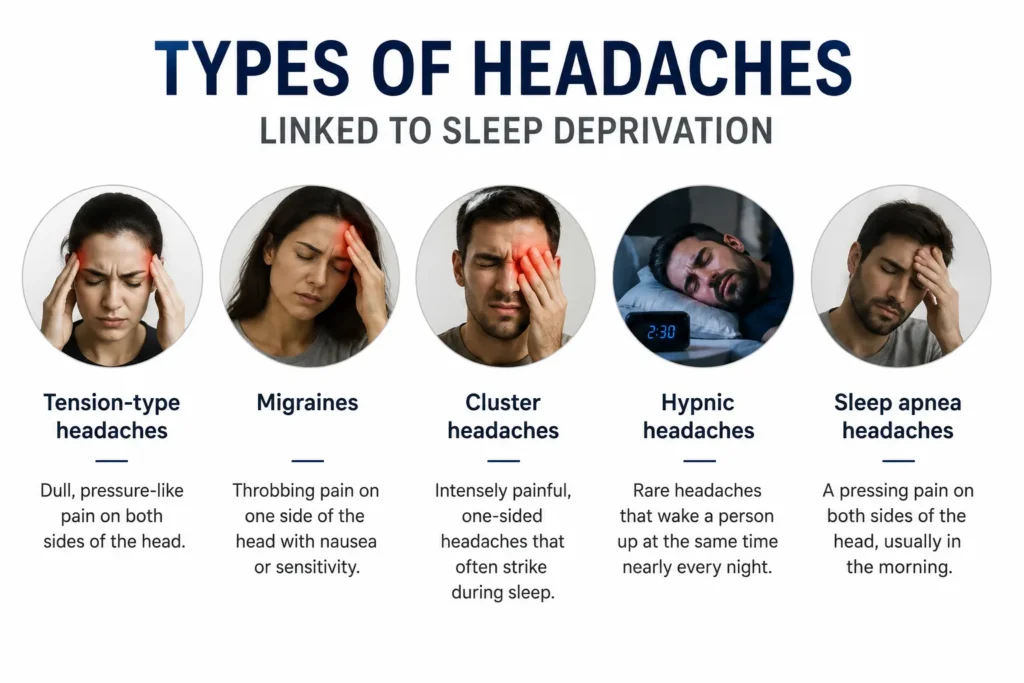
Not every “sleep headache” feels the same. Here’s a breakdown of the most common types:
- Tension-type headaches – A dull, pressure-like pain on both sides of the head, often with neck or scalp tightness. This is the most common headache linked to short sleep.
- Migraines – Often one-sided, throbbing, and paired with nausea or sensitivity to light and sound. The American Migraine Foundation notes that people with migraine are two to eight times more likely to have sleep disorders like insomnia or sleep apnea compared to the general public.
- Cluster headaches – Intensely painful, one-sided headaches that often strike during sleep and are linked to disruptions in the body’s internal clock.
- Hypnic headaches – Rare headaches that wake a person up at the same time nearly every night, sometimes called “alarm clock headaches.”
- Sleep apnea headaches – A systematic review in Sleep Medicine Reviews found that sleep apnea causes morning headaches in up to 29% of people with the condition. These feel like a pressing sensation on both sides of the head and typically fade within a few hours of waking.
Common Symptoms of a Sleep-Deprivation Headache
If you’re not sure whether your headache is sleep-related, watch for this cluster of symptoms:
- Dull, pressing pain on both sides of the head (tension-type pattern)
- Throbbing, one-sided pain with light or sound sensitivity (migraine pattern)
- Morning headaches that improve within a few hours of waking
- Brain fog, poor concentration, or slowed thinking
- Irritability or mood swings
- Fatigue and heavy eyelids
- Neck or shoulder tightness
- Occasional dizziness or lightheadedness
- Increased sensitivity to normal pain triggers
If your headache is sudden, unusually severe (“the worst headache of your life”), or accompanied by slurred speech, numbness, vision loss, or confusion, seek emergency medical attention — this could signal something more serious than sleep deprivation.
Case Study: Sleep Deprivation and Headaches Among U.S. Adults
To put this into real-world perspective, let’s look at what’s happening across the United States.
According to a 2026 data brief from the CDC’s National Center for Health Statistics, based on the 2024 National Health Interview Survey of over 31,000 U.S. adults, 30.5% of American adults slept less than seven hours per night on average — and only 54.8% said they woke up feeling well-rested most days. Meanwhile, 18.1% reported trouble staying asleep, and 15.4% reported trouble falling asleep, with women reporting both issues more frequently than men.
Separately, the Korean Headache-Sleep Study — a population-based survey often cited in U.S. clinical literature — found that among 2,695 participants, 27% were classified as having insufficient sleep, and this group showed a significantly higher rate of migraine compared to well-rested individuals. While that particular study was conducted abroad, U.S.-based neurologists frequently reference it because the biological mechanism applies universally, and American headache clinics report similar patterns in their own patient populations.
What this looks like in practice: Take the case of a hypothetical (but very typical) 34-year-old office worker in Texas — we’ll call her Sarah. Sarah works a demanding job, checks emails late into the night, and averages about 5.5 hours of sleep on weekdays. Over several months, she starts noticing a pattern: nearly every Monday and Tuesday morning (after weekend sleep schedule disruptions), she wakes up with a dull, band-like headache across her forehead. By Wednesday, once her sleep schedule stabilizes, the headaches fade.
This pattern — common among shift workers, new parents, students, and busy professionals across the U.S. — lines up exactly with what sleep researchers describe: short-term sleep debt triggering tension-type headaches that resolve once regular sleep resumes. Clinics report this as one of the most frequent complaints in headache consultations, especially among adults aged 35–49, a group the CDC identifies as having some of the highest rates of insufficient sleep in the country.
The takeaway from real U.S. population data is clear: this isn’t a rare or isolated issue — it’s a widespread, measurable public health pattern affecting roughly one in three American adults.
Pros and Cons of Common Headache Relief Methods
When a sleep-deprivation headache hits, people usually reach for one of these fixes. Here’s how they stack up:
| Relief Method | Pros | Cons |
|---|---|---|
| Short nap (20–30 min) | Quickly restores alertness; often relieves tension headaches; no side effects | Napping too long or too late can disrupt nighttime sleep further |
| Hydration | Simple, free, and treats dehydration-related headache and dizziness | Won’t fully resolve headaches caused by sleep debt alone |
| Caffeine (moderate) | Can narrow blood vessels and ease headache pain quickly | Too much causes rebound headaches and can worsen sleep quality later |
| OTC pain relievers (ibuprofen, acetaminophen) | Fast, effective short-term relief | Frequent use can lead to medication-overuse headaches |
| Improved sleep hygiene | Addresses the root cause; long-term, sustainable fix | Takes time and consistency to show results |
| CPAP therapy (for sleep apnea) | Often eliminates morning headaches entirely | Requires diagnosis, equipment, and an adjustment period |
| Relaxation/stress reduction | Reduces tension-headache frequency and improves sleep onset | Requires practice; not an instant fix |
Sleep-Deprivation Headache vs. Other Headache Types: A Quick Comparison
| Feature | Sleep-Deprivation (Tension) Headache | Migraine | Sleep Apnea Headache |
|---|---|---|---|
| Pain location | Both sides of the head | Usually one side | Both sides, pressing |
| Pain type | Dull, pressure-like | Throbbing, pulsing | Dull, pressing |
| Triggers | Short/irregular sleep, stress | Sleep loss, hormones, light, stress | Interrupted breathing during sleep |
| Associated symptoms | Neck tightness, fatigue, low mood | Nausea, light/sound sensitivity | Snoring, daytime sleepiness, dry mouth |
| Timing | Anytime, often after poor sleep | Morning or any time | Almost always upon waking |
| Typical duration | A few hours | 4–72 hours | Fades within hours of waking |
| Best long-term fix | Sleep hygiene, stress management | Consistent sleep schedule, medical treatment | CPAP or sleep study evaluation |
How to Relieve a Headache Caused by Lack of Sleep
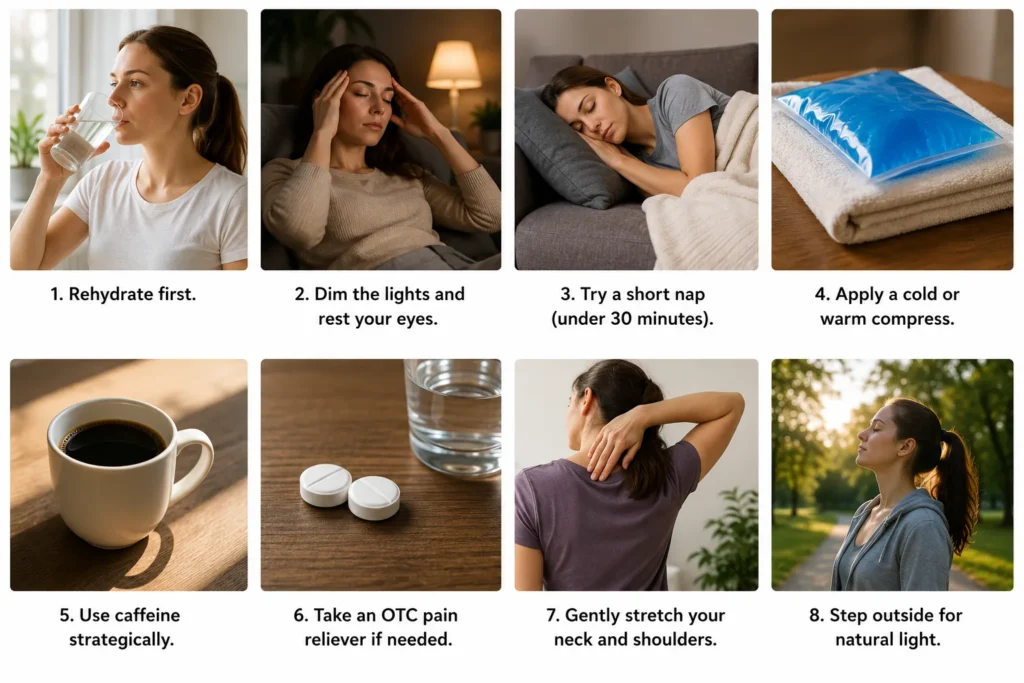
If you’re dealing with a headache right now, try these evidence-backed relief tips:
- Rehydrate first. Drink a full glass of water — dehydration mimics and worsens sleep-related headaches.
- Dim the lights and rest your eyes for 10–15 minutes in a quiet room.
- Try a short nap, but keep it under 30 minutes and before mid-afternoon.
- Apply a cold or warm compress to your forehead or neck, depending on what feels better.
- Use caffeine strategically — one cup of coffee can help, but avoid it late in the day.
- Take an OTC pain reliever if needed, but don’t rely on this more than a couple of times a week.
- Gently stretch your neck and shoulders to release tension that builds from poor sleep posture.
- Step outside for natural light, which helps reset your circadian rhythm faster than staying indoors.
How to Prevent Sleep-Related Headaches Long-Term
Quick fixes help in the moment, but prevention is where the real relief lives:
- Aim for 7–9 hours of sleep per night, in line with American Academy of Sleep Medicine recommendations.
- Keep a consistent sleep and wake time, even on weekends.
- Limit screens and blue light at least 30–60 minutes before bed.
- Avoid caffeine and alcohol in the evening hours.
- Create a cool, dark, and quiet bedroom environment.
- Manage stress through mindfulness, journaling, or light exercise during the day.
- If you snore heavily or feel exhausted despite “enough” sleep, ask a doctor about sleep apnea testing.
- Track your headaches and sleep in a simple journal to spot patterns.
Frequently Asked Questions (FAQ)
1. Can lack of sleep cause headaches every single day?
Yes. If your sleep debt is chronic — meaning you consistently sleep less than your body needs — you can experience near-daily tension headaches or more frequent migraine attacks. Fixing your sleep schedule usually reduces this frequency significantly.
2. Can a headache be caused by lack of sleep even after just one bad night?
Yes. Research shows that even a single night of partial sleep deprivation can lower your pain tolerance and trigger a headache the next day, especially in people already prone to migraines or tension headaches.
3. Can lack of sleep cause headache and dizziness at the same time?
Yes, this combination is common and usually points to dehydration, low blood sugar, blood pressure changes, or an underlying issue like sleep apnea. A doctor should check persistent or severe dizziness paired with headaches.
4. How much sleep do I need to avoid headaches?
Most adults need between 7 and 9 hours per night. Sleeping too little — or even oversleeping — has been linked to a higher risk of headaches.
5. Is a headache from lack of sleep dangerous?
Usually not — it’s typically a short-term, benign tension-type headache. However, sudden, severe, or unusual headaches accompanied by neurological symptoms (vision changes, numbness, confusion) require immediate medical attention.
6. Can naps fix a sleep-deprivation headache?
Often, yes. A short 20–30 minute nap can ease a tension headache caused by short-term sleep loss. Longer naps, however, can backfire by disrupting your nighttime sleep.
7. Does oversleeping also cause headaches?
Yes. Sleeping too much can disrupt your circadian rhythm, delay routine caffeine intake, and cause blood sugar dips — all of which can trigger headaches, similar to sleep deprivation.
Final Thoughts
So, can lack of sleep cause headaches? The research leaves little doubt — yes, it can, and it does, for millions of people every single day. Whether it shows up as a tension headache, a migraine, or a groggy, dizzy morning after a rough night, the connection between sleep and head pain is real, well-documented, and — most importantly — manageable.
The good news is that this is one of the more fixable headache triggers out there. Prioritizing consistent, quality sleep isn’t just good for your energy and mood — it’s one of the simplest, most effective ways to reduce how often headaches show up in your life.
References and Scientific Sources
- Sleep Foundation – Can a Lack of Sleep Cause Headaches?
- BCBS Michigan Health & Wellness – Can Lack of Sleep Cause Headaches?
- Study published in Pain journal on sleep deprivation and pain tolerance (referenced via Superpower Health guide) – Can Lack of Sleep Cause Headaches? Causes and Relief
- Effect of Sleep Quality on Headache-Related Impact in Primary Headache Disorders – National Library of Medicine (PMC) – Read the study
- Glymphatic System Dysfunction: A Novel Mediator of Sleep Disorders and Headaches – National Library of Medicine (PMC) – Read the study
- American Migraine Foundation – referenced via BCBS Michigan summary above
- Sleep Medicine Reviews – systematic review on sleep apnea and morning headaches (referenced via Superpower Health guide)
- CDC/NCHS Data Brief No. 559 (2026) – Short Sleep Duration and Sleep Difficulties Among Adults: United States, 2024
- CDC – FastStats: Sleep in Adults
- Kim, J., Cho, S. J., Kim, W. J., Yang, K. I., Yun, C. H., & Chu, M. K. (2017). Insufficient sleep is prevalent among migraineurs: a population-based study. The Journal of Headache and Pain, 18(1), 50. Read on NCBI
This article is designed to help you better understand sleep, headaches, and healthy habits. For reliable health guidance, consider trusted resources such as Healthline, MedlinePlus, and the National Institutes of Health. For persistent or unusual symptoms, a qualified healthcare professional can provide personalized guidance.
For more expert-backed health tips, wellness guides, and supplement insights, be sure to read more articles on: Health Line Guide