
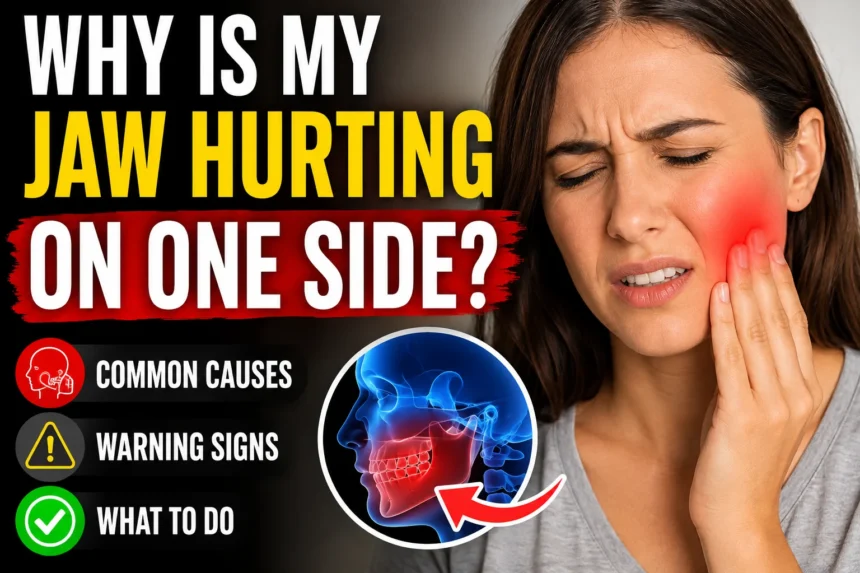
If you’ve been rubbing the side of your face wondering, “why does my jaw hurt on one side?” you’re definitely not alone. My Jaw Hurting on One Side can be one of those nagging problems that throws off your whole day—eating, talking, and even yawning can suddenly feel like a chore. Some mornings, it’s a dull ache near your ear; other times, it’s a sharp twinge that travels toward your neck. Whatever form it takes, one-sided jaw pain is a common complaint dentists and doctors encounter regularly.
The good news? Most cases of one-sided jaw pain are not dangerous, and once you understand what’s causing the discomfort, you can often find effective ways to manage it. This guide walks you through the most common causes, warning signs that shouldn’t be ignored, and practical steps you can take today—plus a real-world case study, pros and cons table, quick comparison chart, and answers to common questions.
What Does It Mean When Jaw Pain Is on One Side?
When jaw pain on one side shows up, it usually points to something localized rather than a body-wide issue. Unlike a toothache that can radiate everywhere, one-sided jaw pain tends to have a specific trigger — a joint problem, a muscle strain, a dental issue, or sometimes even a sinus infection acting up.
It’s worth paying attention to where exactly the pain sits. Is your jaw hurting near ear? Is it pain under ear and jawbone that gets worse when you chew? Or is it more of a sore jaw joint that clicks or pops? Each pattern can hint at a different root cause behind your jaw pain on one side, which we’ll break down below.
Common Causes
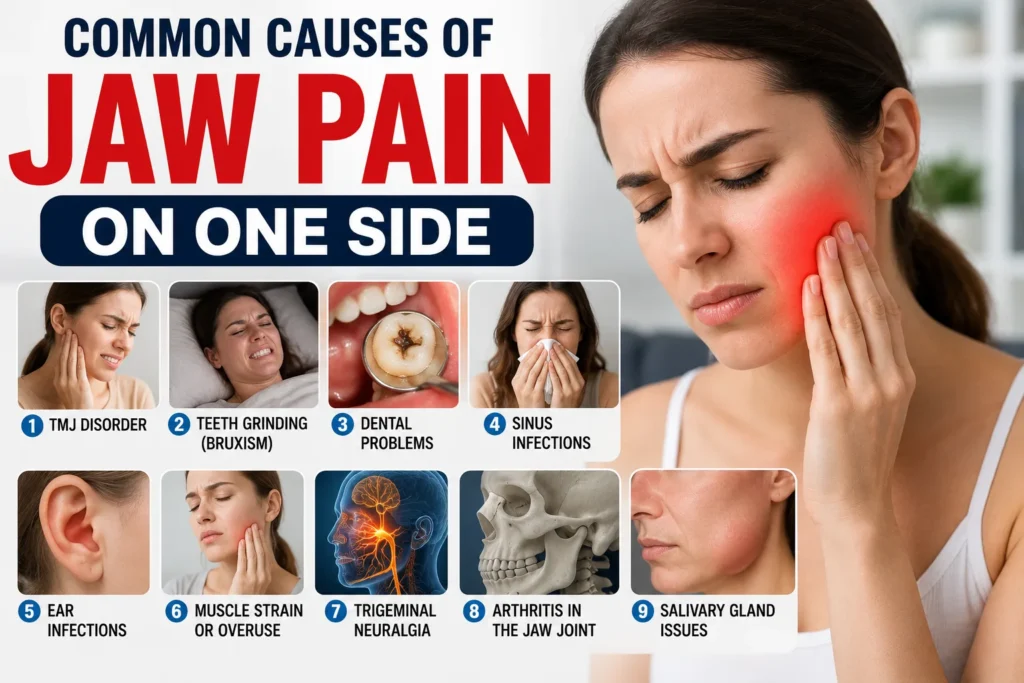
Let’s go through the usual suspects. This isn’t a diagnosis — just a starting point to help you understand what might be going on.
1. TMJ Disorder (Temporomandibular Joint Dysfunction)
This is probably the number one reason people search “what would cause jaw pain on one side.” The temporomandibular joint connects your jawbone to your skull, sitting right in front of your ear on each side. When this joint gets irritated, inflamed, or slightly out of alignment, it often causes jaw pain on one side rather than both, since the two joints don’t always malfunction together.
In fact, TMJ disorder is behind a huge share of the cases where people report jaw pain on one side to their dentist. TMJ-related jaw pain on one side often comes with:
- Clicking or popping sounds when opening your mouth
- Jaw locking or getting “stuck” briefly
- Pain that gets worse with chewing gum or hard foods
- Headaches or ear fullness on the same side
2. Teeth Grinding and Jaw Clenching (Bruxism)
Stress does strange things to our bodies, and for a lot of people, it shows up as nighttime teeth grinding. If you clench harder on one side, you’ll likely wake up with jaw pain on one side, plus a sore jaw joint that feels tight or fatigued, almost like you did a workout with your jaw muscles. Bruxism is one of the sneakier causes of jaw pain on one side because it happens while you’re asleep and unaware of it.
3. Dental Problems
A cracked tooth, an abscess, or a deep cavity on one side of your mouth can easily masquerade as jaw pain on one side. Dental infections are a classic cause of jaw pain near ear, especially if the affected tooth is a back molar close to the jaw joint.
4. Sinus Infections
This one catches people off guard. Your maxillary sinuses sit just above your upper back teeth, and when they get inflamed or infected, the pressure can radiate downward, producing jaw pain left side or right side depending on which sinus is affected. It’s a good example of how jaw pain on one side isn’t always about the jaw itself.
5. Ear Infections
Because the jaw joint sits so close to the ear canal, an ear infection can easily be mistaken for jaw pain on one side, or the two can occur together. If you’re noticing jaw pain near ear along with muffled hearing or drainage, an ear infection is worth ruling out.
6. Muscle Strain or Overuse
Chewing tough foods, talking for long stretches, wide yawning, or even holding a phone between your shoulder and jaw can strain the muscles around your jaw. This kind of strain typically causes jaw pain on one side that feels more like a dull, tired ache than a sharp pain, and it’s often the mildest form of jaw pain on one side you’ll experience.
7. Trigeminal Neuralgia
Less common but important to know about, trigeminal neuralgia affects the nerve responsible for facial sensation. It can cause sudden, electric-shock-like jaw pain on one side, often triggered by touching the face, chewing, or even brushing teeth, making this type of jaw pain on one side feel very different from a typical TMJ ache.
8. Arthritis in the Jaw Joint
Osteoarthritis or rheumatoid arthritis can settle into the temporomandibular joint just like it does in knees or hips, leading to jaw pain on one side that’s stiff in the morning and gradually loosens up through the day.
9. Salivary Gland Issues
A blocked salivary gland (often from a small stone) can cause swelling and pain under ear and jaw bone, resulting in jaw pain on one side that’s especially noticeable right before or during meals when saliva production ramps up.
Warning Signs You Shouldn’t Ignore
Most cases of jaw pain on one side resolve with home care, but certain symptoms deserve prompt medical attention:
- Sudden, severe jaw pain along with chest pain, arm pain, or shortness of breath (this can be a sign of a heart attack, especially in women)
- Jaw pain after any kind of facial trauma or injury
- High fever combined with jaw swelling
- Difficulty opening your mouth, swallowing, or breathing
- Numbness or weakness on one side of your face
- Pain that keeps getting worse over several days despite home treatment
If any of these apply to you, don’t wait it out — seek medical care right away.
Case Study: A Real-World Example from the United States
To make this more concrete, let’s look at a fairly typical case reported in U.S. clinical settings.
Maria, a 34-year-old office worker from Ohio, came to her dentist complaining of jaw pain on one side that had been building for about three weeks. Like many Americans dealing with jaw pain on one side, she had first tried to ignore it, hoping it would go away on its own. She described it as a sore jaw joint on the right, worse in the mornings, along with occasional clicking when she opened her mouth wide. She also mentioned she’d been under heavy work stress and had started waking up with headaches.
Her dentist checked her bite, examined her jaw joint, and asked about her sleep habits. The diagnosis: mild TMJ disorder combined with nighttime bruxism, likely triggered by work-related stress. There was no dental infection and no red-flag symptoms.
Treatment was conservative: a custom night guard to prevent clenching, a short course of anti-inflammatory medication, warm compresses before bed, and a referral to a physical therapist who specialized in jaw exercises. Within six weeks, Maria reported that her jaw pain on one side had dropped by roughly 80%, and the morning headaches had mostly disappeared.
This case reflects a pattern seen often in American dental and medical practices: stress-related TMJ dysfunction is one of the most frequent causes of jaw pain on one side among working-age adults, and it typically responds well to non-invasive treatment rather than surgery.
What to Do When Your Jaw Hurts on One Side
Here’s a practical, step-by-step approach you can try at home for jaw pain on one side before booking an appointment:
- Apply a warm compress to the sore area for 15-20 minutes, several times a day, to relax tight muscles
- Switch to soft foods for a few days — soups, eggs, mashed potatoes — to give the jaw a rest
- Avoid chewing gum and hard or chewy foods like ice, nuts, or steak
- Practice gentle jaw stretches as recommended by a physical therapist or dentist
- Try over-the-counter pain relief, like ibuprofen, to reduce inflammation (check with a doctor if you have other health conditions)
- Notice your stress levels and consider relaxation techniques, since clenching often ties back to tension
- Sleep on your back instead of on the side that hurts, to avoid extra pressure on the joint
If jaw pain on one side sticks around for more than one to two weeks, or if it’s interfering with eating and sleeping, it’s time to see a professional — a dentist, an ENT specialist, or your primary care doctor, depending on the suspected cause.
Pros and Cons of Common Treatment Options for Jaw Pain on One Side
| Treatment Option | Pros | Cons |
|---|---|---|
| Warm compress & rest | Free, easy, no side effects | Only helps mild cases; slow results |
| Night guard (for bruxism) | Prevents grinding damage, reduces morning pain | Costs money; takes adjustment time |
| Over-the-counter pain relievers | Fast relief, widely available | Not a long-term fix; can irritate stomach |
| Physical therapy/jaw exercises | Addresses root cause, long-term benefit | Requires time and consistency |
| Dental treatment (fillings, extractions) | Fixes underlying dental cause | Can be costly; may need multiple visits |
| Prescription medication (muscle relaxants) | Effective for severe muscle tension | Possible drowsiness or dependency risk |
| Jaw surgery (rare, severe cases) | Can permanently correct structural issues | Invasive, expensive, longer recovery |
Quick Comparison: TMJ Pain vs. Dental Pain vs. Sinus-Related Jaw Pain
| Feature | TMJ Disorder | Dental Issue | Sinus Infection |
|---|---|---|---|
| Pain location | Near ear, jaw joint | Localized to a specific tooth | Upper jaw, under cheekbones |
| Worsens with | Chewing, wide opening | Chewing, hot/cold foods | Bending forward, congestion |
| Extra symptoms | Clicking, popping, headaches | Swelling, sensitivity | Stuffy nose, facial pressure |
| Typical trigger | Stress, clenching, joint wear | Cavity, cracked tooth, infection | Cold, allergies, sinusitis |
| Best first step | Dentist or TMJ specialist | Dentist | Doctor or ENT |
Seeing these side by side can help you get a rough sense of what’s causing your jaw pain on one side before you even walk into a clinic. Comparing symptoms this way is often the fastest route to figuring out your jaw pain on one side without unnecessary tests — though a proper exam is always the safest way to confirm it.
When Jaw Pain on One Side Might Signal Something Serious
It’s rare, but jaw pain on one side can occasionally be linked to more serious conditions. Doctors sometimes call this “referred pain,” and it’s one reason jaw pain on one side should never be brushed off completely if it comes with other unusual symptoms. Serious causes include:
- Heart-related issues (referred pain, particularly common in women)
- Tumors or growths near the jaw or salivary glands (uncommon, but worth ruling out if pain is persistent and unexplained)
- Nerve disorders like trigeminal neuralgia
- Severe infections that could spread if untreated
This isn’t meant to alarm you — the vast majority of jaw pain on one side is muscular, dental, or joint-related and clears up with simple care. But it’s worth knowing the outliers so you know when extra caution makes sense.
Tips to Prevent Jaw Pain on One Side From Coming Back
- Be mindful of clenching during the day, especially when concentrating or stressed
- Chew evenly on both sides rather than favoring one
- Maintain good posture, particularly if you work at a desk for long hours
- Keep up with regular dental checkups to catch problems early
- Manage stress through exercise, sleep, or relaxation practices
- Avoid resting your chin on your hand for long periods
These small habit changes won’t guarantee jaw pain on one side never returns, but they meaningfully lower the odds, especially if stress or clenching was the trigger the first time around.
FAQ: Jaw Pain on One Side
Why does my jaw hurt on one side but not the other? Most causes of jaw pain on one side, like TMJ dysfunction, muscle strain, or a dental issue, are localized to a single joint or tooth, which is why jaw pain on one side often stays put instead of spreading to both sides.
Is jaw pain near ear always related to TMJ? Not always. While TMJ disorder is a common cause, jaw pain near ear can also come from ear infections, sinus problems, or dental issues in the back teeth.
How long does jaw pain on one side usually last? Mild cases of jaw pain on one side from muscle strain often ease up within a few days to a week. TMJ-related jaw pain on one side can come and go over weeks or months if the underlying cause, like clenching, isn’t addressed.
Can jaw pain on one side be a sign of a heart attack? In rare cases, yes, especially in women. If jaw pain shows up suddenly along with chest discomfort, shortness of breath, or arm pain, seek emergency care immediately.
What helps a sore jaw joint at home? Warm compresses, soft foods, gentle stretches, and avoiding gum or hard foods can all help calm a sore jaw joint while it heals.
Should I see a dentist or a doctor for jaw pain on one side? Start with a dentist if you suspect a tooth issue or TMJ problem. See a doctor or ENT if you suspect a sinus or ear infection, or if you have any warning signs listed above.
Final Thoughts
Jaw pain on one side is common, and in most cases, it’s your body’s way of flagging muscle tension, a joint issue, or a dental problem that needs a bit of attention. Paying attention to where the pain sits, what makes it worse, and any extra symptoms can go a long way in figuring out the cause of your jaw pain on one side before you even see a professional.
If home care doesn’t bring relief within a week or two, or if you notice any of the warning signs mentioned above, don’t hesitate to check in with a dentist or doctor. Jaw pain on one side is very treatable once the cause is identified, and most people find lasting relief without ever needing surgery.
References and Scientific Sources
- Mayo Clinic — TMJ Disorders: Symptoms and Causes
- Cleveland Clinic — TMJ (Temporomandibular Joint) Disorders
- National Institute of Dental and Craniofacial Research (NIDCR) — TMJ Disorders
- American Dental Association (ADA) — Bruxism (Teeth Grinding)
- American Academy of Otolaryngology — Sinusitis
- American Heart Association — Warning Signs of a Heart Attack
- National Institute of Neurological Disorders and Stroke — Trigeminal Neuralgia
This article is for general informational purposes only and is not a substitute for professional medical or dental advice. If you’re experiencing persistent or severe jaw pain, please consult a licensed healthcare provider.