

If you’ve ever sat at your desk rubbing your eyes and thinking, “Why do my eyes burn?” you’re far from alone. That hot, gritty, stinging feeling is one of the most common eye problems people experience. Whether it’s caused by dry eyes, eye allergies, digital eye strain, allergic conjunctivitis, environmental irritants, or lack of sleep, burning eyes can appear suddenly and make everyday activities uncomfortable. For millions of Americans, the question why my eyes burn isn’t a one-time concern—it’s a recurring issue that often comes with itchy eyes, red eyes, watery eyes, blurred vision, and eye irritation.
The good news is that burning eyes are usually not serious, and many cases improve with simple at-home care. The key is identifying why my eyes burn, because the right treatment depends on the underlying cause. Relief for allergy-related burning eyes is different from treatment for dry eye syndrome, digital eye strain, contact lens irritation, blepharitis, or an eye infection. In this guide, you’ll learn the most common causes of burning eyes, recognize warning signs, compare treatment options, discover prevention tips, and know when it’s time to visit an eye doctor. By the end, you’ll have a clear answer to the question, “Why do my eyes burn?”
Quick Answer: Why Do My Eyes Burn?
Before we go deep, here’s the short version. Eyes burn when the surface of the eye (the cornea and conjunctiva) gets irritated, dried out, or inflamed. The most common triggers include:
- Dry eye disease — not enough tears, or poor-quality tears
- Digital eye strain — staring at screens reduces your blink rate
- Allergies — pollen, dust, pet dander, and mold
- Environmental irritants — smoke, wind, chlorine, dry AC or heater air
- Contact lens overuse — wearing lenses too long or not cleaning them properly
- Eye infections — including conjunctivitis (pink eye)
- Blepharitis — inflammation along the eyelid margin
- Makeup, skincare, or chemical exposure
- Sleep deprivation and fatigue
Now let’s look at each of these in more detail, since understanding the why is the fastest route to real relief.
What Causes Burning Eyes? A Closer Look
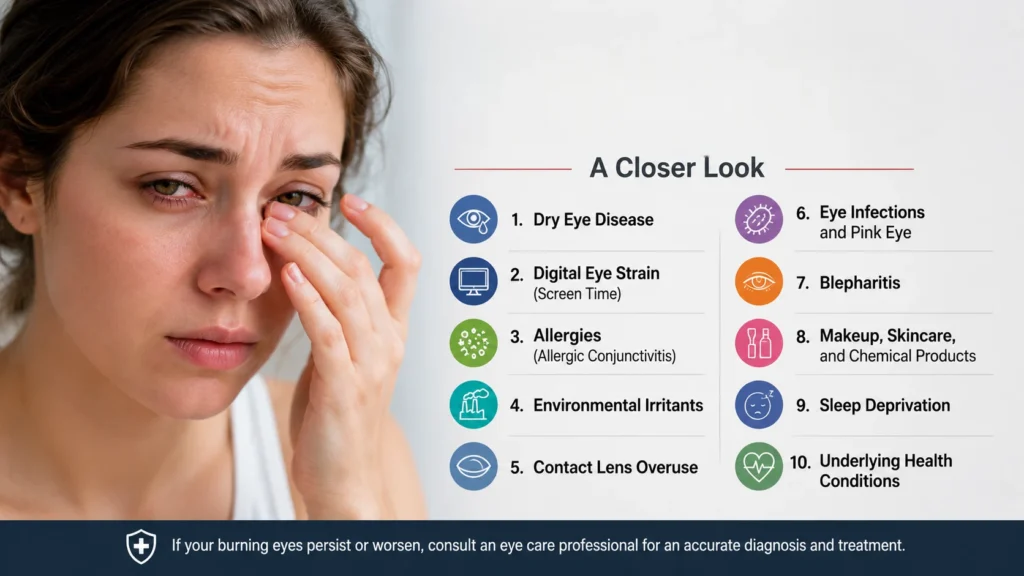
1. Dry Eye Disease
This is, by far, the leading answer to “why do my eyes burn.” Your eyes rely on a thin film of tears to stay lubricated and comfortable. When that tear film breaks down — either because you’re not producing enough tears or the tears evaporate too quickly — the surface of the eye becomes exposed and irritated. This causes burning eyes, along with a gritty, sandpaper-like sensation. According to the National Eye Institute, dry eye disease affects roughly 5% to 17% of the U.S. population, and prevalence rises with age. Research published in the American Journal of Ophthalmology similarly estimates that more than 16 million U.S. adults have a diagnosed case of dry eye disease, with rates climbing as people get older and being notably higher among women.
2. Digital Eye Strain (Screen Time)
If you spend most of your day in front of a laptop or phone, this is probably a big piece of the answer to why do my eyes burn. The American Academy of Ophthalmology notes that prolonged computer work reduces how often you blink, allowing more moisture to evaporate from the eye’s surface. Fewer blinks mean less tear film renewal, which can lead to dry, irritated, and burning eyes by the end of the workday. If you’ve been wondering, “Why do my eyes burn after using a computer or phone?”, digital eye strain is one of the most common causes.
3. Allergies (Allergic Conjunctivitis)
Why Do My Eyes Burn from Allergies? Seasonal or year-round allergens—such as pollen, ragweed, dust mites, mold spores, and pet dander—can trigger the release of histamine in the eyes. This allergic response causes itching, redness, swelling, and the unmistakable burning sensation, often accompanied by excessive tearing and watery eyes.
4. Environmental Irritants
Smoke, smog, strong wind, chlorine from swimming pools, perfume, and dry indoor air from heaters or air conditioners can all strip moisture from the eye’s surface or physically irritate it. These environmental factors often leave your eyes feeling dry, itchy, red, and burning. If you’re wondering, “Why do my eyes burn?“, exposure to these everyday irritants is one of the most common causes, especially for people living in cities or dry climates.
5. Contact Lens Overuse
If you’re wondering, “Why do my eyes burn?”, contact lenses may be the cause. Contacts sit directly on the tear film and can dry out the eye’s surface, trap dust and other irritants beneath the lens, or become uncomfortable after long hours of wear. Old protein deposits, wearing lenses longer than recommended, poor cleaning habits, or sleeping in your contact lenses can all increase the risk of burning, irritation, redness, and discomfort.
6. Eye Infections and Pink Eye
Why Do My Eyes Burn? Bacterial, viral, or allergic conjunctivitis (pink eye) is a common cause of burning eyes and is often accompanied by other noticeable symptoms. The CDC notes that pink eye may also cause visible redness, swollen eyelids, itching, crusting, and eye discharge. If your burning eyes occur along with these symptoms, it’s important to seek a proper evaluation rather than relying only on home remedies.
7. Blepharitis
This is inflammation of the eyelid margins, often related to clogged oil glands or a tiny mite called Why Do My Eyes Burn? One possible reason is blepharitis, an inflammation of the eyelid margins often linked to clogged oil glands or tiny Demodex mites. According to the American Academy of Ophthalmology, blepharitis is a well-documented cause of burning eyes and commonly makes symptoms worse first thing in the morning.
8. Makeup, Skincare, and Chemical Products
Mascara, eyeliner, cleansers, and makeup removers can migrate into the eye or leave residue along the lash line, causing ongoing low-grade irritation that mimics dry eye.
9. Sleep Deprivation
Why Do My Eyes Burn? One often-overlooked cause is lack of sleep. It may seem minor, but skipping sleep genuinely affects eye health. During rest, your body repairs the cells on the eye’s surface and helps regulate tear production. After just a few nights of poor sleep, you may notice burning, dryness, itchiness, redness, and eye fatigue, making your eyes feel irritated throughout the day.
10. Underlying Health Conditions
Conditions like diabetes, rosacea, thyroid disorders, and autoimmune diseases (such as Sjögren’s syndrome) can all affect tear production or eyelid health, making burning eyes a recurring symptom rather than a one-time nuisance.
Common Symptoms That Come With Burning Eyes
Burning rarely shows up alone. Watch for these accompanying symptoms, since they help narrow down the cause:
- A stinging, hot, or “sandy” sensation
- Burning watery eyes — burning combined with excess tearing
- Redness or visible bloodshot appearance
- Itchiness, especially with allergies
- Blurry vision that improves with blinking
- Crusting or discharge (often a sign of infection)
- Sensitivity to light
- Eyelid swelling or heaviness
- A feeling that something is “stuck” in the eye
Why Do My Eyes Burn and Water at the Same Time?
This confuses a lot of people, but it makes physiological sense. If you’re asking, “Why do my eyes burn and water at the same time?”, the answer is often related to the surface of your eyes rather than having too many tears.
Surface irritation can trigger reflex tearing, causing your eyes to water heavily while still feeling dry, gritty, or as though they are burning. In other words, burning watery eyes are often a sign of dry eye disease, not excess moisture. Your eyes are simply overcompensating for a lack of stable lubrication by producing watery tears that don’t effectively protect the eye’s surface.
This is one of the most common reasons people search “Why do my eyes burn?” or “My eyes are burning and watering” online. The good news is that, once the underlying cause is identified, it is often one of the easiest conditions to manage with the right eye care, lubricating drops, and lifestyle changes.
Case Study: Burning Eyes in U.S. Office Workers
To put this in a real-world context, consider a pattern that’s become extremely common across American workplaces. A 2023 industry survey of eye-care professionals found that 66% of ophthalmologists reported seeing patients with screen-related eye problems, and 88% pointed to smartphone use as a driving factor behind rising rates of dry eye disease.
Take “Sarah,” a 34-year-old marketing coordinator based in Chicago (a composite example built from patterns reported in clinical literature, not an individual patient). She spends roughly nine hours a day on a laptop, works in an air-conditioned office, and wears contact lenses. By 3 p.m. most days, her eyes burn, feel gritty, and occasionally water uncontrollably. She initially assumed she had allergies, but an eye exam revealed mild dry eye disease driven by reduced blink rate and contact lens wear — not pollen at all.
Her treatment plan was simple: preservative-free artificial tears, a switch to daily disposable contacts, the 20-20-20 rule (every 20 minutes, look at something 20 feet away for 20 seconds), and a desk humidifier. Within three weeks, her burning episodes dropped from daily to about once a week. Her case mirrors a broader U.S. trend: dry eye and digital strain, not infection, are now the leading reasons Americans ask their doctors why do my eyes burn during the workweek.
Pros and Cons of Common Burning Eye Treatments
| Treatment | Pros | Cons |
|---|---|---|
| Artificial tears/lubricating drops | Fast relief, inexpensive, available OTC, preservative-free options widely sold | Needs repeat use; won’t fix underlying cause (allergy, infection, etc.) |
| Warm compress | Great for blepharitis and clogged oil glands, soothing, zero cost | Takes consistent daily use to see results; not ideal for infections |
| Antihistamine eye drops | Very effective for allergy-driven burning and itching | Can cause mild dryness or rebound irritation if overused |
| Prescription anti-inflammatory drops | Targets chronic dry eye at the source, long-term improvement | Requires a doctor’s visit, slower to show results, can be costly |
| Humidifier / environmental changes | Passive, ongoing protection, helps everyone in the household | Doesn’t address allergies, infections, or eyelid disease |
| Reducing screen time / 20-20-20 rule | Free, easy to build into your day, improves overall eye comfort | Requires discipline; not a fix for medical causes |
| Antibiotic drops (for bacterial infection) | Resolves bacterial conjunctivitis quickly | Only works for bacterial causes; needs a prescription |
Comparison: Home Remedies vs. OTC Products vs. Medical Treatment
| Approach | Best For | Speed of Relief | Cost |
|---|---|---|---|
| Home remedies (compress, blinking exercises, humidifier) | Mild, occasional burning from screens or dry air | Gradual (days) | Low / free |
| Over-the-counter drops | Everyday dryness, mild allergies, contact lens discomfort | Fast (minutes) | Low |
| Prescription treatment | Chronic dry eye, blepharitis, infections, autoimmune-related dryness | Moderate (weeks) | Moderate to high |
Why Do My Eyes Burn? If your burning eyes are occasional and mild, home care and over-the-counter lubricating eye drops are often enough to relieve discomfort. However, if you’re wondering “Why do my eyes burn every day?“ or your symptoms are worsening, or accompanied by eye pain, vision changes, light sensitivity, or significant redness, it’s important to move beyond self-care and seek evaluation from an eye care professional. Early diagnosis can help identify the underlying cause and prevent potential complications.
How to Cure Burning Watery Eyes at Home (Safe, Simple Remedies)
If you’re dealing with mild to moderate irritation, these are the most trusted starting points for a burning eyes home remedy routine:
- Use preservative-free artificial tears. They rehydrate the eye’s surface without the additives that can worsen irritation over time.
- Apply a warm compress for 5–10 minutes to loosen clogged oil glands along the eyelids — especially helpful for blepharitis-related burning.
- Blink deliberately and often, especially during screen use, to keep the tear film fresh.
- Step away from screens using the 20-20-20 rule to give your eyes recovery time throughout the day.
- Remove contact lenses and switch to glasses until the burning settles.
- Avoid rubbing your eyes. It worsens inflammation and can introduce more irritants or bacteria.
- Run a humidifier, particularly in winter or in air-conditioned spaces, to prevent your tear film from evaporating too quickly.
- Rinse with clean water if you suspect makeup, smoke, or a chemical irritant is the trigger.
- Get consistent sleep, since rest directly affects tear production and ocular surface repair.
- Stay hydrated and consider omega-3 fatty acids, which some studies link to improved tear quality.
If you’re wondering, “Why do my eyes burn?” the answer often depends on the underlying cause. For mild burning caused by dry eyes or everyday environmental exposure, the Cleveland Clinic recommends using lubricant eye drops, avoiding rubbing your eyes, and moving away from the source of irritation. If you use eye drops, the FDA advises washing your hands first and ensuring the bottle tip does not touch your eye, fingers, or any other surface to help prevent contamination and reduce the risk of infection.
When Burning Eyes Are a Warning Sign
Most of the time, the answer to why do my eyes burn is something manageable. But certain symptoms mean it’s time to stop self-treating and call a doctor:
- Sudden, severe pain
- Sudden changes in vision
- A chemical splash or foreign object in the eye
- Intense light sensitivity
- Heavy discharge, crusting, or swelling
- Redness or burning that doesn’t improve after 48 hours
- Burning after eye surgery or an injury
If you’ve experienced a direct chemical exposure, this is a true emergency — chemical burns can damage the cornea within seconds, and potent alkali chemicals like those found in drain cleaners can reach the internal structures of the eye in under 15 seconds. Flush the eye with clean water immediately and seek emergency care.
FAQ: Why Do My Eyes Burn?
Q: Why do my eyes burn all of a sudden with no clear reason?
Sudden burning is often triggered by something subtle — smoke in the air, a new skincare product, low humidity, or extended screen time earlier in the day. If it happens repeatedly without an obvious cause, it’s worth getting your tear production checked.
Q: Is burning eyes a sign of pink eye?
Not always. Burning alone doesn’t confirm pink eye. Pink eye usually comes with added redness, discharge, crusting, and eyelid swelling. Burning without those extra signs is more often linked to dryness or irritation.
Q: How do I cure burning watery eyes fast?
Preservative-free artificial tears usually bring the fastest relief, often within minutes. Pair that with removing contact lenses and stepping away from screens or irritants for best results.
Q: Can allergies cause burning eyes?
Yes. Allergic conjunctivitis is one of the most common causes of burning, itching, and watery eyes, especially during high-pollen seasons.
Q: Why do my eyes burn after wearing contacts?
This usually points to overwear, deposits on the lens, dryness underneath the lens, or a lens-care solution that doesn’t agree with your eyes. Switching to daily disposables often helps.
Q: Should I be worried if my eyes burn every day?
Daily burning is a signal worth investigating, especially if it’s affecting your work or sleep. It’s commonly linked to chronic dry eye disease, which is very treatable once diagnosed.
Q: Can lack of sleep really cause burning eyes?
Yes — sleep is when your eyes repair their surface cells and regulate tear-related hormones, so poor sleep is a genuine, common contributor to burning and dryness.
The Bottom Line
Burning eyes are uncomfortable, but they’re rarely a mystery once you look at the full picture: dry eye disease, screen time, allergies, environmental irritants, contact lens habits, and eyelid conditions cover the vast majority of cases. The next time you catch yourself asking why do my eyes burn, run through this list — dryness, screens, allergies, environment, contacts, or infection — and you’ll usually land on the answer within minutes. Start with simple home care, watch for warning signs that call for a doctor, and remember that most burning-eye episodes improve significantly with a few consistent habit changes.
Sources & Scientific References
- American Academy of Ophthalmology — Burning Eyes: Symptoms
- American Academy of Ophthalmology — Treating Acute Chemical Injuries of the Cornea
- Centers for Disease Control and Prevention (CDC) — Conjunctivitis (Pink Eye)
- National Eye Institute (NEI) — Dry Eye
- Farrand, K. et al. — Prevalence of Diagnosed Dry Eye Disease in the United States, American Journal of Ophthalmology
- NCBI Bookshelf (StatPearls) — Ocular Burns
- Cleveland Clinic — Burning Eyes: Causes and Home Remedies
- Ophthalmology Times — Understanding Prevalence and Demographics of Dry Eye Disease
This article is for general educational purposes and is not a substitute for professional medical advice. If your symptoms are severe, worsening, or accompanied by vision changes, please consult an ophthalmologist or optometrist.