
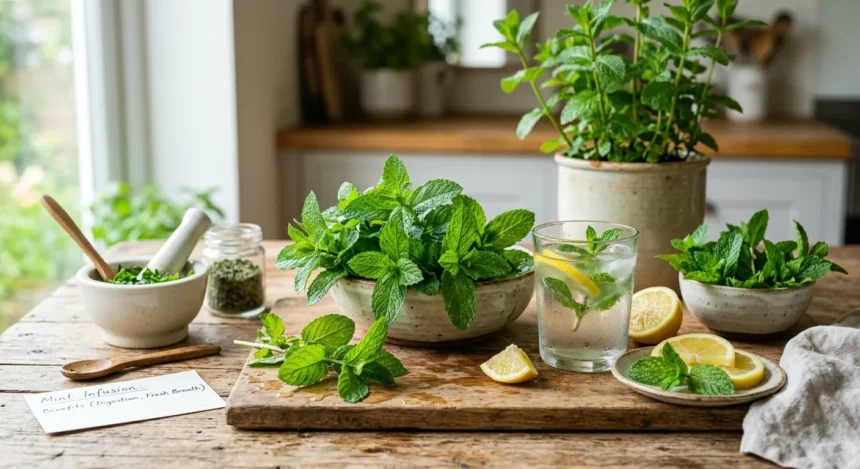
If you’ve ever crushed a mint leaf between your fingers and caught that cool, sharp aroma, you already know mint is something special. But there’s much more to this refreshing herb than its pleasant scent and cooling taste. The advantages of mint leaves extend from supporting digestion and oral health to promoting skin wellness and mental clarity, and researchers have studied these potential benefits for decades.
At the same time, it’s important to remember that mint isn’t suitable for everyone. Although uncommon, some people may experience an allergic reaction to mint leaves, with symptoms such as itching, skin rashes, swelling, or irritation after consuming or applying mint products. People with known allergies to plants in the mint family (Lamiaceae) should use caution and seek medical advice if they notice any unusual symptoms.
In this guide, we’ll explore the science-backed advantages of mint leaves, their nutritional value, common culinary and medicinal uses, and what current research actually says. You’ll also learn about potential side effects, including allergic reactions, compare peppermint and spearmint, review a small U.S.-based case study, and find answers to the most frequently asked questions. Whether you’re interested in improving digestion, freshening your breath, or simply learning more about this versatile herb, this guide provides a balanced, evidence-based overview without unnecessary hype.
What Exactly Are Mint Leaves?
Mint belongs to the genus Mentha, part of the larger Lamiaceae (mint) family that also includes basil, rosemary, and oregano. There are dozens of mint varieties growing across nearly every continent except Antarctica, but two dominate kitchens and medicine cabinets worldwide: peppermint (Mentha × piperita) and spearmint (Mentha spicata). Peppermint is actually a natural hybrid of watermint and spearmint, which is why it carries a stronger, more medicinal menthol punch, while spearmint leans sweeter and milder.
Mint has been used since antiquity. Archaeologists have found dried peppermint leaves in Egyptian tombs dating back roughly 3,000 years, and ancient Greek, Roman, and Egyptian physicians all reached for mint to settle upset stomachs. Traditional systems like Ayurveda and Traditional Chinese Medicine have long treated mint as a cooling, digestion-friendly herb — and modern research is now catching up to confirm some of that old-school wisdom.
Mint Leaves Nutrition: What’s Actually Inside
Before getting into the mint benefits, it helps to know what you’re eating. Mint is low-calorie but surprisingly nutrient-dense for something you use in small amounts. Here’s an approximate nutritional breakdown per 100 grams of fresh mint leaves (values vary slightly by source and variety):
| Nutrient | Approximate Amount (per 100g) | Why It Matters |
|---|---|---|
| Calories | 44–70 kcal | Naturally low, diet-friendly |
| Fiber | 6–8 g | Supports gut health and satiety |
| Vitamin A | 4,000+ IU | Eye health, skin repair |
| Vitamin C | 13–32 mg | Immune support, antioxidant |
| Iron | 5–16 mg | Oxygen transport, energy |
| Calcium | 200 mg | Bone and teeth strength |
| Potassium | 458–569 mg | Blood pressure regulation |
| Manganese | High | Antioxidant enzyme cofactor |
| Menthol & rosmarinic acid | Trace essential oils | Anti-inflammatory, antimicrobial |
This combination of fiber, antioxidant vitamins, minerals, and aromatic plant compounds (menthol, menthone, limonene, and rosmarinic acid) is exactly why the advantages of mint leaves show up in so many different areas of health — not just one.
Top Advantages of Mint Leaves for Your Health
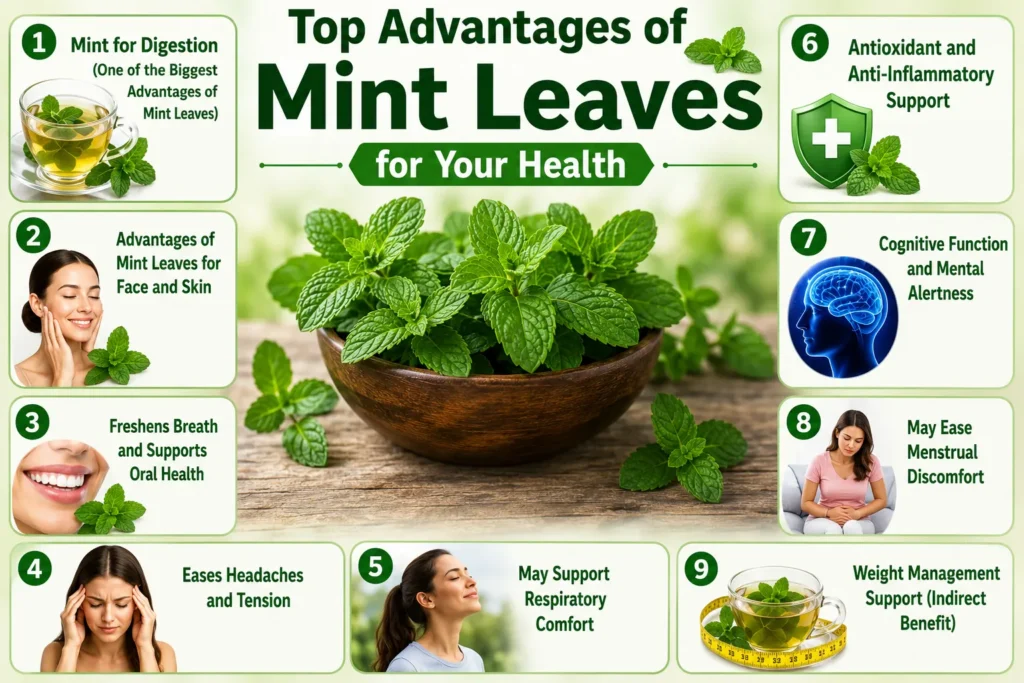
Let’s get into the main event. These are the most talked-about — and most researched — advantages of mint leaves.
1. Mint for Digestion (One of the Biggest Advantages of Mint Leaves)
If there’s one benefit mint is famous for, it’s this one. Mint for digestion has centuries of traditional use behind it, and modern clinical research backs it up too.
- Menthol, mint’s signature compound, relaxes the smooth muscles lining the digestive tract, which helps food move along more comfortably.
- A widely cited review of multiple trials involving people with irritable bowel syndrome (IBS) found that peppermint oil capsules provided better symptom relief than a placebo.
- In one clinical trial, peppermint oil capsules reduced IBS symptoms by roughly 40% after four weeks of use, compared to about 24% with a placebo.
- Mint may also help relieve gas, bloating, and general indigestion by calming intestinal spasms.
This is arguably the most clinically supported of all the advantages of mint leaves, which is why gastroenterologists sometimes recommend enteric-coated peppermint oil capsules for IBS management (always under medical guidance).
2. Advantages of Mint Leaves for Face and Skin
Skincare is where mint quietly does a lot of unsung work. The advantages of mint leaves for face care come mostly from its antimicrobial, cooling, and anti-inflammatory properties.
- Cooling and soothing — Mint’s menthol content creates an instant cooling sensation, which can calm irritated or sunburned skin.
- Oil control — Mint-infused toners and face packs are popular for oily and acne-prone skin because mint has natural antibacterial properties that may help reduce breakout-causing bacteria.
- Antioxidant protection — Vitamin A and vitamin C in mint support skin repair and may help reduce the visible impact of everyday environmental stress on skin.
- Reduced puffiness — Cold mint water or mint-infused ice cubes are a common (if informal) home remedy for under-eye puffiness.
It’s worth noting that while these advantages of mint leaves for face applications are popular in DIY skincare and supported by mint’s known antimicrobial and antioxidant properties, most of the research here is preliminary or based on essential oil extracts rather than large dermatology trials. Always patch-test any DIY mint mask, since undiluted mint oil can irritate sensitive skin.
3. Freshens Breath and Supports Oral Health
This is probably the most obvious of the advantages of mint leaves, and it’s why mint shows up in nearly every toothpaste, mouthwash, and chewing gum on the shelf.
- Mint’s antibacterial compounds help inhibit the oral bacteria responsible for bad breath.
- Chewing fresh mint leaves or rinsing with mint-infused water can neutralize odor-causing compounds instantly.
- Some early research suggests mint extracts may help reduce plaque-forming bacteria, though it’s not a replacement for brushing and flossing.
4. Eases Headaches and Tension
Topical peppermint oil (diluted, applied to the temples) has been studied as a natural remedy for tension headaches. Some research suggests menthol may relax muscles and improve blood flow to the area, offering relief comparable to certain over-the-counter treatments in mild cases. This is one of the benefits of mint that people tend to underestimate until they try it.
5. May Support Respiratory Comfort
Menthol has a well-known decongestant-like effect — it doesn’t literally clear mucus, but it stimulates cold receptors in the nose that create a sensation of easier breathing. This is why menthol shows up in chest rubs and steam inhalations. Mint tea with a bit of honey is a common home remedy during cold season for exactly this reason.
6. Antioxidant and Anti-Inflammatory Support
One of the key advantages of mint leaves is their rich content of rosmarinic acid, a beneficial plant compound also found in rosemary. Research suggests that rosmarinic acid may help reduce allergy-related symptoms such as itchy eyes and a runny nose by supporting a healthy histamine response. Mint leaves also provide vitamin C and manganese, contributing valuable antioxidants that support overall wellness, even when consumed in small culinary amounts.
7. Cognitive Function and Mental Alertness
One of the most interesting advantages of mint leaves highlighted by recent research is their potential to support cognitive health. A 2023 randomized, placebo-controlled trial published in Human Psychopharmacology found that drinking approximately 200 mL of peppermint tea improved memory, attention, and working memory while increasing cerebral blood flow in the prefrontal cortex. Earlier studies have also suggested that simply inhaling the aroma of peppermint may enhance alertness and mental focus. While additional research is needed before mint can be considered a true “brain food,” these findings suggest that one of the notable advantages of mint leaves may be their ability to support brain function and cognitive performance as part of a healthy lifestyle.
8. May Ease Menstrual Discomfort
One of the many advantages of mint leaves is their potential to support menstrual comfort. Some traditional practices and small clinical studies suggest that mint—particularly peppermint—may help relax uterine smooth muscle, which could reduce the intensity of menstrual cramps. While mint is not a substitute for medical treatment for painful periods, it may be a simple, low-risk addition to a healthy comfort routine when used as part of a balanced lifestyle.
9. Weight Management Support (Indirect Benefit)
One of the key advantages of mint leaves is that they may support healthy weight management when included as part of a balanced diet. Mint won’t burn fat on its own, but it is virtually calorie-free when used in tea, infused water, or as a natural flavoring. Some small studies suggest that the aroma of peppermint may help reduce appetite and cravings, although more high-quality research is needed to confirm these effects. Combined with healthy eating and regular physical activity, mint can be a refreshing addition to a wellness-focused lifestyle.
Mentha Health Benefits: What Science Actually Confirms vs. What’s Still Emerging
It’s easy to find bold claims online, so here’s an honest split between what’s well-supported and what’s still preliminary among the various mentha health benefits:
Well-supported by clinical research:
- Digestive symptom relief, especially for IBS
- Reduced nausea
- Fresher breath and antibacterial oral effects
- Tension headache relief (topical, diluted oil)
Promising but still emerging:
- Cognitive/memory enhancement
- Skin and acne benefits
- Allergy symptom relief
- Menstrual cramp relief
- Antibacterial effects against certain pathogens (mostly lab/animal studies so far)
Being upfront about this distinction matters. Mint is genuinely useful, but it isn’t a miracle cure — and no honest breakdown of the advantages of mint leaves should pretend otherwise.
Pros and Cons of Mint Leaves
Pros
Cons
Peppermint vs. Spearmint: A Quick Comparison
Since most of the benefits of mint people talk about actually come from these two varieties, here’s how they stack up:
| Feature | Peppermint | Spearmint |
|---|---|---|
| Flavor | Sharp, cooling, medicinal | Sweet, mild, milder cooling |
| Menthol content | High | Low |
| Best for | Digestive relief, headaches, oral care | Culinary dishes, teas, mocktails |
| Common form used | Oil, capsules, tea | Fresh leaves, tea, garnish |
| Research volume | More clinical studies | Fewer, mostly nutritional/culinary |
| Typical use case | Medicinal/therapeutic | Everyday cooking and beverages |
If you’re chasing therapeutic effects — like IBS relief or headache support — peppermint is the better-studied choice. If you just want a refreshing addition to your kitchen, spearmint is gentler and more versatile in food.
How to Use Mint Leaves Every Day
You don’t need a complicated routine to enjoy the advantages of mint leaves. A few simple, low-effort ideas:
- Mint tea — Steep fresh or dried leaves in hot water for 5–7 minutes.
- Infused water — Add crushed mint leaves, cucumber, and lemon to a pitcher of water.
- Cooking — Toss chopped mint into salads, grain bowls, yogurt dips, or lamb dishes.
- Smoothies — A few leaves add brightness without adding sugar or calories.
- DIY face mist — Steep mint leaves, cool, strain, and store in a spray bottle in the fridge.
- Aromatherapy — A few drops of diluted peppermint oil in a diffuser for alertness.
- After-meal chew — Chewing a fresh leaf can freshen breath and ease mild bloating.
Case Study: How U.S. Wellness Consumers Are Using Mint
To ground this in real-world behavior, it’s worth looking at how mint fits into wellness habits in the United States specifically, since demand and usage patterns here look a little different from other regions.
Background: U.S. consumer interest in herbal digestive aids has grown steadily over the past decade, driven largely by rising IBS diagnoses (the CDC and NIH estimate IBS affects roughly 10–15% of American adults) and a broader shift toward “food as medicine” habits.
What the data shows:
- Peppermint oil capsules are among the most commonly recommended over-the-counter options by U.S. gastroenterologists for mild-to-moderate IBS symptoms, often before prescription treatment is considered.
- Mint tea sales in the U.S. herbal tea category have remained consistently strong, with peppermint and spearmint ranking among the top-selling herbal tea flavors year after year, according to National Coffee Association and specialty tea industry reports.
- Mint-based skincare products (cleansers, toners, lip balms) have grown in the U.S. natural beauty segment, driven largely by younger consumers seeking “clean beauty” alternatives to synthetic cooling agents.
- A notable share of U.S. functional beverage brands now include mint or menthol extract in relaxation and “focus” drinks, tying into the emerging cognitive-benefit research.
Takeaway for U.S. users: Mint isn’t a fringe herbal trend in the U.S. anymore — it’s mainstream, backed by both consumer demand and a growing (if still incomplete) body of clinical evidence, especially around digestive health. If you’re in the U.S. and dealing with mild digestive discomfort, mint tea or enteric-coated peppermint capsules are a reasonable, low-risk first step, though it’s still smart to check with a doctor if symptoms are frequent or severe.
Precautions and Possible Side Effects
Mint is generally very safe in normal culinary amounts, but a few precautions are worth knowing:
- Acid reflux (GERD): Mint can relax the esophageal sphincter, which may worsen reflux or heartburn in some people.
- Pregnancy and breastfeeding: Culinary amounts are typically fine, but concentrated peppermint oil supplements should be discussed with a doctor first.
- Infants and toddlers: Menthol-heavy products (including rubs and oils) should never be applied near an infant’s face, as it can affect breathing.
- Allergies: Rare, but possible — discontinue use if you notice a rash, itching, or swelling.
- Medication interactions: Mint may interact with certain antacids, blood pressure medications, and diabetes drugs. If you’re on regular medication, check with your pharmacist before using concentrated mint extracts.
Frequently Asked Questions (FAQ)
1. What are the main advantages of mint leaves?
The core advantages of mint leaves include improved digestion, fresher breath, antioxidant support, skin benefits, headache relief, and possible cognitive and respiratory support. Most of the strongest clinical evidence centers on digestive health, especially IBS symptom relief.
2. Is it safe to eat raw mint leaves every day?
Yes, for most healthy adults, eating a few fresh mint leaves daily is safe and can be a simple way to get antioxidants and fiber. People with acid reflux should moderate their intake since mint can trigger symptoms.
3. What are the advantages of mint leaves for face care specifically?
Mint offers cooling, antibacterial, and antioxidant properties that can help calm irritated skin, control excess oil, and reduce the appearance of puffiness. It works well as a toner or in a diluted face mask, but should always be patch-tested first.
4. Does mint really help with digestion?
Yes — mint for digestion is one of the most researched uses of the herb. Menthol relaxes digestive tract muscles, and peppermint oil capsules have shown measurable symptom improvement in IBS clinical trials.
5. What’s the difference between mentha health benefits and general “mint benefits”?
Mentha is simply the genus name for all mint species, so “mentha health benefits” essentially covers the same territory as general mint benefits — digestion, oral health, skin, and antioxidant support — but the term is often used in more scientific or botanical contexts.
6. Can mint leaves help with weight loss? Not directly. Mint is low-calorie and may help curb appetite through its aroma, but there’s no strong evidence it burns fat. It’s better thought of as a supportive, calorie-free addition to a broader healthy diet.
7. How much mint tea is safe to drink per day?
Two to three cups of mint tea per day is generally considered safe for most healthy adults. As always, moderation is key, and anyone with GERD or specific health conditions should check with a doctor.
8. Are the benefits of mint the same for peppermint and spearmint?
Mostly overlapping, but peppermint has more menthol and more clinical research behind it, especially for digestive and headache relief. Spearmint is milder and used more for everyday culinary purposes.
Final Thoughts
The advantages of mint leaves are genuinely broad — this is one of those rare herbs where the traditional folklore and the modern clinical research actually line up fairly well, at least when it comes to digestion, oral health, and general antioxidant support. Where the science is still catching up (skin, cognition, allergies), the early results are promising enough that adding mint to your daily routine is a low-risk, low-cost way to potentially support your health.
Whether you’re brewing a cup of mint tea after dinner, tossing fresh leaves into a salad, or trying a mint-based face toner, you’re tapping into a plant that’s been trusted for thousands of years — and one that modern research keeps finding new reasons to take seriously.
References and Scientific Sources
- National Center for Complementary and Integrative Health (NCCIH) — Peppermint Oil: Usefulness and Safety — https://www.nccih.nih.gov/health/peppermint-oil
- Healthline — 12 Science-Backed Benefits of Peppermint Tea and Extracts — https://www.healthline.com/nutrition/peppermint-tea
- WebMD — Health Benefits of Mint Leaves — https://www.webmd.com/diet/health-benefits-mint-leaves
- Dr. Axe — Mint Leaves Benefits, Nutrition, Uses and Recipes — https://draxe.com/nutrition/mint-leaves/
- UT Physicians — Benefits of Peppermint: Healthy Holiday Herb — https://www.utphysicians.com/perks-of-peppermint/
- Nutrition and You — Peppermint Herb Nutrition Facts and Health Benefits — https://www.nutrition-and-you.com/peppermint.html
- U.S. Department of Agriculture (USDA) FoodData Central — https://fdc.nal.usda.gov/
- Centers for Disease Control and Prevention (CDC) — Irritable Bowel Syndrome data and statistics — https://www.cdc.gov/
- Human Psychopharmacology (2023) — Peppermint tea and cognitive performance, cerebral blood flow study (referenced via peer-reviewed literature)
- Journal of Advanced Pharmaceutical Technology & Research — The Nutritional and Health Benefits of Mint: A Review
Disclaimer: This article is for general educational purposes and is not a substitute for professional medical advice. Speak with a healthcare provider before using mint supplements or essential oils for a specific health condition, especially if you are pregnant, breastfeeding, or taking medication.