
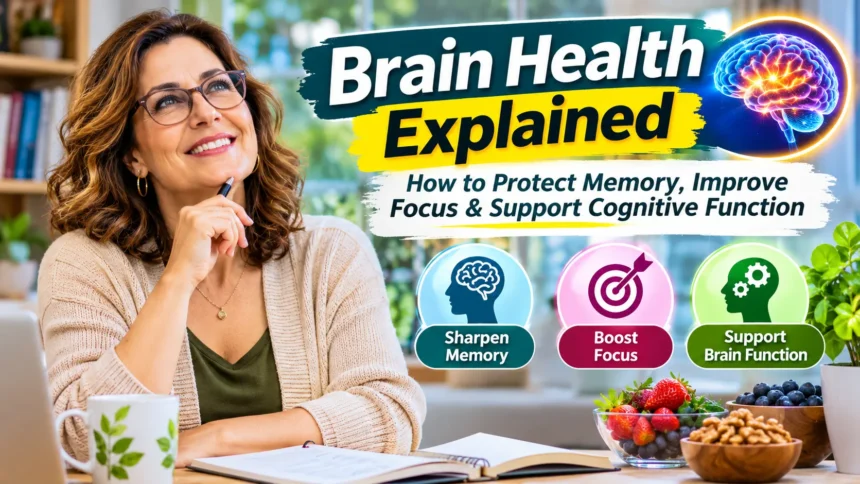
Have you ever walked into a room and forgotten why you went there? Or read the same paragraph three times without absorbing a word? Almost everyone has. Most of the time it is harmless. But these small slips are also a gentle reminder that brain health is not something to think about only when we get older. It is something we build, day by day, starting right now.
Here is the encouraging part. Research suggests that a large share of dementia cases may be delayed or prevented by changing habits we already know how to change. The 2024 Lancet Commission on dementia named 14 modifiable risk factors and estimated that addressing them could prevent or delay up to 45% of cases worldwide. That does not mean you can fully control your future. It does mean your daily choices matter more than most people think.
In this guide, we will walk through what brain health really means, how to improve brain health with realistic steps, and how to support your memory and focus without gimmicks. You will also find a US-based case study, comparison tables, a pros and cons table, an FAQ, and a list of trusted scientific sources.
What Is Brain Health, Really?
Brain health is the ability to think clearly, remember what matters, learn new things, manage emotions, and make good decisions. The National Institute on Aging describes it as a broad idea that covers how well your brain functions across several areas, including thinking, memory, mood, and movement.
Put simply, healthy brain function means your brain does its everyday jobs smoothly. You can follow a conversation, find your keys, plan your week, and stay calm under pressure.
You will often hear these related terms:
- Cognitive health: how well you think, learn, and remember.
- Cognitive function: the mental skills your brain uses every day, such as attention, language, and problem-solving.
- Mental performance: how sharp and efficient you feel while working, studying, or driving.
- Brain wellness: the whole picture, including sleep, mood, stress, and physical condition.
- Neurological wellness: the health of the brain, spinal cord, and nerves working together.
Think of your brain like a busy city. Roads (neural connections) need maintenance, power (blood flow and nutrients) must stay steady, and the night crew (sleep) has to clear the trash. When any part slips, the whole city slows down.
Why Brain Health Matters More Than Ever in the USA
The numbers explain why so many Americans are paying attention. The Alzheimer’s Association estimates that about 7.2 million Americans aged 65 and older were living with Alzheimer’s disease in 2025, and that number is expected to keep growing as the population ages.
But brain health is not only about older adults. Many working-age Americans deal with:
- Constant digital distraction and notifications
- Long work hours and chronic stress
- Short sleep, with the CDC noting that a large portion of US adults do not get the recommended seven or more hours
- Sedentary jobs and a diet heavy in ultra-processed food
These pressures can make anyone feel foggy. The good news is that the same habits that protect long-term cognitive wellness also boost mental clarity today.
How Your Brain Adapts: Neuroplasticity and BDNF
For years, people believed the adult brain was fixed. We now know that is wrong. Neuroplasticity is your brain’s ability to form new connections and reorganize itself throughout life. Every time you learn a skill, meet a new challenge, or practice a language, you are strengthening certain pathways.
One key player is brain-derived neurotrophic factor (BDNF), a protein that supports the growth and survival of brain cells. Think of it as fertilizer for your neurons. Studies in humans and animals link regular aerobic exercise with higher BDNF activity, and exercise is one of the most reliable ways to support the brain’s ability to adapt.
In a well-known 2011 study published in PNAS, older adults who did moderate aerobic exercise for a year had about a 2% increase in the size of the hippocampus, a region tied to memory. In the same period, the stretching-only group saw typical age-related shrinkage. That result is a strong reason to move your body for the sake of your brain.
Brain Health and Aging: What Is Normal and What Is Not
Brain health and aging go hand in hand, but aging does not automatically mean serious memory loss. Some changes are common and usually harmless.
Typical age-related changes:
- Occasionally forgetting a name and remembering it later
- Taking a little longer to learn new technology
- Needing a reminder now and then
- Slightly slower processing speed
Signs that deserve a medical check:
- Getting lost in places you know well
- Repeating the same question again and again
- Trouble managing bills or medications
- Noticeable changes in personality or judgment
- Difficulty finding common words
The term cognitive decline covers a spectrum, from mild changes to dementia. Many people stay sharp well into their 80s and 90s, and the phrase healthy aging reminds us that protecting mental sharpness is a lifelong project, not a last-minute rescue.
How to Support Brain Health: The Six Core Pillars
If you want ways to maintain brain health, start with these six pillars. They work together, so you do not need to be perfect at all of them.
Pillar 1: Brain-Friendly Nutrition
What you eat shapes your brain. Brain-friendly nutrition does not require expensive superfoods. It needs a steady pattern of whole foods.
The MIND diet, which blends Mediterranean and DASH eating styles, emphasizes leafy greens, berries, nuts, olive oil, beans, whole grains, fish, and poultry. In a 2015 observational study from Rush University, people who followed it closely had a notably lower risk of Alzheimer’s disease. Later, a 2023 randomized trial in the New England Journal of Medicine found that the MIND diet did not produce significantly better cognitive results than a control diet over three years. The takeaway? Healthy eating is good for you, but it is one piece of the puzzle, not a magic bullet.
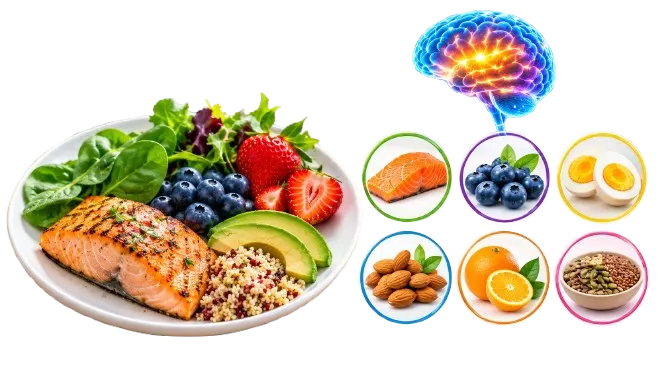
Nutrients for brain function worth knowing:
- Omega-3 fatty acids (salmon, sardines, walnuts, flaxseed): support cell membranes in the brain.
- Antioxidant-rich foods (blueberries, spinach, dark chocolate, green tea): help protect cells from oxidative stress.
- B vitamins (eggs, legumes, fortified cereals): involved in energy and nerve function.
- Vitamin E and flavonoids (nuts, seeds, citrus, berries): linked to healthy aging in observational studies.
- Choline (eggs, beans): used to build key brain chemicals.
For a natural brain health support plate, aim for half vegetables and fruit, a quarter whole grains, and a quarter lean protein, with fish twice a week.
Pillar 2: Exercise and Cognitive Function
Exercise and cognitive function are tightly linked. Physical activity increases blood flow, lowers inflammation, and supports BDNF. The CDC recommends adults get at least 150 minutes of moderate-intensity activity per week, plus muscle-strengthening on two days.

You do not need a gym. Try:
- A brisk 30-minute walk five days a week
- Cycling, swimming, or dancing
- Strength training twice a week
- Short “movement snacks” of two to five minutes every hour if you sit all day
Pillar 3: Sleep and Brain Health
Sleep and brain health are inseparable. During deep sleep, your brain consolidates memories and clears out waste. A landmark 2013 study in Science showed that the space between brain cells expands during sleep, allowing waste products to be cleared more efficiently.

To protect your sleep:
- Keep a consistent bedtime and wake time
- Aim for seven to nine hours
- Keep your bedroom cool, dark, and quiet
- Stop screens 45 to 60 minutes before bed
- Limit caffeine after early afternoon and alcohol near bedtime
If you snore loudly or wake up exhausted, ask a doctor about sleep apnea, which is linked to memory problems when untreated.
Pillar 4: Stress Management
Short bursts of stress are normal. Chronic stress, however, keeps stress hormones high, which can interfere with memory and mood. Stress management is not a luxury. It is a core part of brain health.

Try one of these for ten minutes a day:
- Slow breathing (inhale for four seconds, exhale for six)
- Mindfulness or guided meditation
- A walk outside without your phone
- Journaling or talking with a friend
- Time in nature or gardening
Pillar 5: Social Connection and Mental Stimulation
Loneliness and social isolation appear on the Lancet Commission’s risk list. Staying connected gives your brain a workout: you listen, react, remember, and read emotions in real time.

Keep your mind active by learning new things, such as a language, an instrument, painting, or chess. The key is novelty and challenge. Doing the same crossword every day is nice, but learning something genuinely new builds more flexible thinking.
Pillar 6: Protect Your Heart, Ears, and Head
What is good for your heart is good for your brain. High blood pressure, diabetes, high cholesterol, smoking, and obesity all raise the risk of cognitive problems. The SPRINT MIND trial found that intensive blood pressure control lowered the risk of mild cognitive impairment.

Also consider:
- Hearing: untreated hearing loss is one of the largest modifiable risk factors in the Lancet report. Get your hearing checked and use aids if needed.
- Head safety: wear a helmet and a seat belt.
- Alcohol and smoking: limit alcohol and avoid tobacco.
Brain Health and Memory: How to Improve Memory Naturally
Many people search for ways to improve memory naturally. The truth is that memory retention depends on attention, sleep, and repetition more than on any pill.
Here are practical techniques:
- Pay attention first. You cannot remember what you never fully noticed. Put the phone down when you meet someone new.
- Use spaced repetition. Review new information after a day, then three days, then a week.
- Teach it. Explaining a topic to someone else locks it in.
- Create vivid mental pictures. Link a new name to a funny image.
- Write things down. Notes and calendars are tools, not weakness.
- Sleep after learning. Memory consolidation happens overnight.
- Keep a home for everything. Put keys, glasses, and wallet in the same spot.
Good brain health and memory habits also include moving your body before a study session. Even a 20-minute walk can improve alertness for a short time.
How to Improve Concentration and Focus
If you want to improve concentration and focus, begin by reducing what steals it. Modern life is a focus thief.
Focus-friendly habits:
- Single-task. Multitasking is mostly rapid switching, and it costs you time and accuracy.
- Use time blocks. Try 25 minutes of deep work followed by a five-minute break.
- Silence notifications. Turn off alerts or use focus mode.
- Eat steady meals. Large blood sugar swings can leave you foggy.
- Hydrate. Even mild dehydration can affect attention.
- Take outdoor breaks. Daylight helps regulate your body clock.
Better mental clarity often comes from small changes, such as a protein-rich breakfast, a consistent sleep schedule, and a short midday walk. Combine those and many people feel a real difference within a couple of weeks.
Comparison: Lifestyle Habits vs. Supplements vs. Brain-Training Apps
People often ask what works best. Here is an honest side-by-side look.
| Factor | Lifestyle Habits (diet, exercise, sleep) | Supplements | Brain-Training Apps |
|---|---|---|---|
| Strength of evidence | Strongest overall | Mixed to limited | Mixed; gains often stay within the trained task |
| Typical cost | Low | Ongoing monthly cost | Low to moderate subscription |
| Side effects | Rare | Possible interactions with medicines | Minimal |
| Wider health benefits | Heart, mood, weight, immunity | Depends on the product | Mostly limited to the games |
| Time needed | Daily, built into life | A few seconds | 10 to 20 minutes |
| Best for | Long-term cognitive wellness | Correcting a confirmed deficiency | Fun, light challenge |
The National Institutes of Health has said that evidence is not strong enough to recommend supplements such as omega-3s or ginkgo for preventing cognitive decline in healthy people. A large 2023 trial (COSMOS-Mind) did find a modest memory benefit from a daily multivitamin in older adults, but researchers called for more study. Always speak with a doctor or pharmacist before starting anything new.
Pros and Cons of Natural Brain Health Support
| Pros | Cons |
|---|---|
| Low risk and low cost for most people | Results build slowly and need consistency |
| Benefits the heart, mood, sleep, and energy at the same time | No habit can guarantee you will avoid cognitive decline |
| Works at any age, so it is never too late to start | Hard to measure progress day to day |
| Fits into everyday life with no special equipment | Requires changing long-standing habits |
| Supports healthy aging and independence | Marketing hype can mislead people toward costly products |
| Can be done with family or friends for motivation | Genes and medical conditions also play a role you cannot control |
The bottom line: natural brain health support is a smart, low-risk investment, as long as expectations stay realistic.
Case Study: A Day-to-Day Plan for a US Adult
This is a review based on what is reported in US lifestyle research. It is a real individual and medical advice.
Meet Linda, 58, a project manager in Columbus, Ohio.
Linda sat at a desk for nine hours a day, slept about five and a half hours, skipped lunch, and drank four cups of coffee. She noticed she was forgetting names, losing her train of thought in meetings, and feeling constantly drained. Her mother had developed dementia in her late 70s, so Linda worried.
What she did with her primary care doctor’s guidance:
- Checked the basics. Her doctor reviewed her blood pressure, cholesterol, blood sugar, thyroid, vitamin B12, and hearing. Her blood pressure was slightly high, so she began monitoring it.
- Fixed sleep first. She set a 10:30 p.m. bedtime, moved her phone out of the bedroom, and stopped caffeine after 1 p.m.
- Started walking. She began with 15 minutes after lunch and built up to 35 minutes, five days a week.
- Changed her plate gradually. She added salmon twice a week, a handful of walnuts, berries at breakfast, and more vegetables, using a Mediterranean-style pattern.
- Cut down on distractions. She used 45-minute focus blocks with notifications off.
- Stayed social and curious. She joined a local community walking group and took an evening Spanish class at a community college.
What she noticed after about three months (self-reported):
- Easier mornings and steadier energy
- Fewer forgotten names and fewer missed details
- Better concentration in meetings
- A healthier blood pressure reading at follow-up
Linda’s story mirrors the approach used in the US POINTER study, a two-year clinical trial of older adults at risk for cognitive decline. Results published in 2025 showed that a structured lifestyle program, combining exercise, healthy eating, cognitive challenge, social engagement, and health monitoring, improved global cognition modestly more than a self-guided approach. The lesson: structure and support make healthy habits easier to keep.
A Simple Daily Routine
If you want an easy starting point, try this:
- Morning: Drink a glass of water, get daylight, and eat a protein-rich breakfast with fruit.
- Midday: Take a 20 to 30 minute walk and eat a balanced lunch.
- Afternoon: Use focus blocks, stretch every hour, and have a nut-and-fruit snack.
- Evening: Have a lighter dinner, connect with someone you care about, and learn or practice something new for 15 minutes.
- Night: Dim the lights, put screens away, and keep a steady bedtime.
Start with just two habits and add another every two weeks. Small wins stack up, and that is how lasting brain health is built.
When to Talk to a Doctor
See a healthcare professional if you or someone close to you notices:
- Memory problems that interfere with daily life
- Sudden confusion or changes in behavior
- Trouble with familiar tasks
- Ongoing mood changes such as depression or anxiety
- Memory changes after a head injury or after starting a new medication
Some causes of brain fog are very treatable, including thyroid problems, vitamin B12 deficiency, depression, sleep apnea, and medication side effects. Getting checked early is always a good move. If you ever have sudden weakness, trouble speaking, vision loss, or a severe headache, call 911 immediately.
Frequently Asked Questions
1. What is brain health?
Brain health describes how well your brain performs its jobs, including thinking, memory, learning, mood, and movement. It is shaped by genes, lifestyle, environment, and medical conditions.
2. How can I improve brain health at any age?
Focus on regular exercise, a plant-forward diet, seven to nine hours of sleep, stress management, social connection, and regular health checkups. These habits help whether you are 25 or 75.
3. What are the best foods for brain health?
Fatty fish, leafy greens, berries, nuts, olive oil, beans, and whole grains are all strong choices. A pattern like the Mediterranean or MIND diet is more useful than any single food.
4. Can you improve memory naturally?
Yes, to a meaningful degree. Good sleep, regular exercise, focused attention, spaced repetition, and a healthy diet all support memory retention. No natural method can promise to reverse serious memory disease, though.
5. Do brain supplements work?
Evidence is mixed. Supplements may help if you have a confirmed deficiency, such as low B12, but most healthy people do not gain clear benefits from brain pills. Talk to your doctor first.
6. How much exercise is enough for the brain?
The CDC’s target of 150 minutes of moderate activity per week is a solid goal. Even smaller amounts help, so something is always better than nothing.
7. Does stress really damage memory?
Long-term stress can affect attention and memory and may raise the risk of mood disorders. Regular stress management lowers that burden.
8. Is memory loss always a sign of dementia?
No. Stress, poor sleep, depression, medications, and nutrient deficiencies can all cause forgetfulness. A doctor can help sort out the cause.
9. How long does it take to feel a difference?
Some people notice better focus and energy within two to four weeks of improving sleep and activity. Long-term protective effects build over years.
10. Are brain games worth it?
They can be fun and mildly challenging, but research shows the benefits often do not carry over to everyday thinking. Learning real-world skills and staying social is usually a better use of your time.
Final Thoughts
Protecting brain health is less about dramatic fixes and more about steady, ordinary choices: a walk, a good night’s sleep, a plate full of colorful food, a phone call with a friend, and a regular checkup. None of these are glamorous, but together they support healthy brain function, sharper focus, and stronger memory now and in the decades ahead.
You do not have to overhaul your life this week. Pick one habit from this guide, try it for 14 days, and see how you feel. Your future self will thank you.
References and Scientific Resources
- National Institute on Aging (NIA), Brain Health and Cognitive Health resources: https://www.nia.nih.gov/health/brain-health
- Alzheimer’s Association, 2025 Alzheimer’s Disease Facts and Figures: https://www.alz.org/alzheimers-dementia/facts-figures
- Alzheimer’s Association, U.S. POINTER Study: https://www.alz.org/us-pointer
- The Lancet Commission on Dementia Prevention, Intervention and Care (Livingston et al., 2024): https://www.thelancet.com/commissions/dementia-prevention-intervention-and-care
- Erickson KI et al., Exercise training increases size of hippocampus and improves memory, PNAS, 2011: https://pubmed.ncbi.nlm.nih.gov/21282661/
- Xie L et al., Sleep drives metabolite clearance from the adult brain, Science, 2013: https://pubmed.ncbi.nlm.nih.gov/24136970/
- Morris MC et al., MIND diet associated with reduced incidence of Alzheimer’s disease, Alzheimer’s & Dementia, 2015: https://pubmed.ncbi.nlm.nih.gov/25681666/
- Barnes LL et al., Trial of the MIND Diet for Prevention of Cognitive Decline, New England Journal of Medicine, 2023: https://www.nejm.org/doi/full/10.1056/NEJMoa2302368
- SPRINT MIND Investigators, Intensive vs Standard Blood Pressure Control and Mild Cognitive Impairment, JAMA, 2019: https://pubmed.ncbi.nlm.nih.gov/30688979/
- Centers for Disease Control and Prevention (CDC), Physical Activity and Sleep guidance: https://www.cdc.gov/physical-activity-basics/ and https://www.cdc.gov/sleep/
- National Center for Complementary and Integrative Health (NCCIH): https://www.nccih.nih.gov/
- Harvard Health Publishing, Brain health resources: https://www.health.harvard.edu/
- Mayo Clinic, Healthy Aging: https://www.mayoclinic.org/healthy-lifestyle/healthy-aging
Medical Disclaimer
This article is designed to provide helpful information about brain health, memory, focus, and overall cognitive wellness. Its purpose is to encourage readers to make informed lifestyle choices through balanced nutrition, regular physical activity, quality sleep, and healthy daily habits. The information is intended for educational purposes only and should not replace personalized medical guidance. Everyone’s health needs are different, so consult a qualified healthcare professional for advice about your individual health concerns, symptoms, or treatment options.
For more expert-backed health tips, wellness guides, and supplement insights, be sure to read more articles on the Health Line Guide