

Maintaining healthy blood sugar is an important part of overall wellness. For many adults, busy schedules, changing eating habits, limited physical activity, and inconsistent sleep can make it difficult to maintain a balanced routine. As a result, some people explore nutritional supplements that may complement their everyday health habits.
Gluconara is a dietary supplement marketed for blood sugar support and metabolic wellness. According to the product information provided, its formula combines eight ingredients: turmeric, cocoa, berberine HCl, Gymnema sylvestre, cinnamon, chromium picolinate, bitter melon, and banaba leaf.
These ingredients have attracted scientific interest for different reasons, including their antioxidant properties, nutritional roles, and possible effects on glucose metabolism. However, research findings vary, and the benefits of individual ingredients do not automatically prove that a finished supplement will produce the same effects.
So, does Gluconara really work? What are its ingredients, possible benefits, safety considerations, and cost? And is Gluconara worth buying?
In this detailed Gluconara review, we examine the supplied ingredient information, discuss relevant scientific research, compare supplement use with established wellness approaches, and explain what buyers should check before making a decision.

Gluconara at a Glance: Essential Product Information
Gluconara is presented as a daily nutritional supplement for adults interested in blood sugar habits and metabolic wellness. It is intended to complement a healthy lifestyle rather than replace balanced nutrition or professional healthcare.
| Product feature | Details |
|---|---|
| Product name | Gluconara |
| Product category | Blood sugar and metabolic wellness supplement |
| Main purpose | Marketed for nutritional support alongside healthy habits |
| Listed ingredients | Turmeric, cocoa, berberine HCl, Gymnema sylvestre, cinnamon, chromium picolinate, bitter melon, and banaba leaf |
| Disclosed ingredient quantity | Chromium picolinate is listed at 100 mcg in the supplied information |
| Other ingredient quantities | Not provided in the information reviewed |
| Product format | Confirm the current product label |
| Price | Check the current seller listing |
| Official website | Verify the current seller URL before purchasing |
| Clinical evidence for the complete formula | Established by the evidence reviewed for this article |
Quick review: Gluconara combines several ingredients that have been investigated for possible metabolic effects. Berberine and chromium have some human research behind them, while evidence for many herbal ingredients remains limited or inconsistent. There is not enough verified product-specific evidence to conclude that Gluconara reliably controls blood glucose.
What Is the Gluconara Supplement?
The Gluconara supplement is a daily capsule made for adults who want more intentional support for their metabolic wellness. The brand describes it as a complement to healthy blood sugar habits, balanced nutrition, regular movement, and an active lifestyle. It doesn’t pitch itself as a drastic overhaul. It positions itself as a simple nutritional companion to the routine you already have.
In plain terms, it is a botanical-and-mineral blend. The label combines plant extracts with a trace mineral (chromium), and both categories have a long history in the glucose-support aisle.
The brand’s marketing describes a three-stage process: dissolving what it calls “pancreatic sludge,” boosting what it calls natural gastric regulatory extract production, and supporting steadier energy and craving control through the day (as reported in consumer coverage on Webull/Barchart). I’ll be upfront about this: those terms are marketing language, not recognized medical concepts. I’ll come back to that in the ingredients section.
The brand’s headline promises:
- Supports everyday metabolic wellness
- Complements healthy blood sugar habits
- Pairs naturally with balanced nutrition
- Designed for an active, healthy lifestyle
- Convenient daily nutritional support
Notice the careful wording: “supports” and “complements,” not “treats” or “cures.” That is deliberate. Supplements in the United States can’t legally claim to treat disease, and the brand’s own disclaimer says it is a dietary supplement, not a drug, and not FDA-approved.
Gluconara Ingredients: What’s Inside Every Capsule
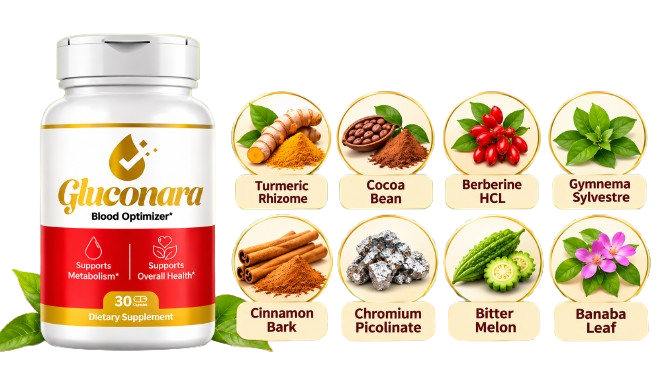
The ingredient list is where most of this Gluconara review comes down to. Here is each ingredient, what the brand says it does, and what the research actually shows.
1. Turmeric (Curcuma longa) Rhizome
Brand claim: Calms inflammation around the pancreas and protects insulin-supporting cells.
What research says: Turmeric and its compound curcumin are well studied for inflammation and antioxidant activity. Some small trials suggest modest benefits for glucose markers in people with prediabetes. The idea that it protects specific pancreatic “L-cells” is a leap that the evidence doesn’t directly support. Curcumin is also poorly absorbed unless paired with piperine or a special delivery system.
2. Cocoa (Theobroma cacao) Bean
Brand claim: Flavanols support insulin sensitivity and mood.
What research says: Cocoa flavanols have shown small improvements in insulin resistance in some short-term studies. The effect depends heavily on the flavanol dose, and a capsule may deliver far less than a studied dose.
3. Berberine HCL
Brand claim: A “metabolic switch” that activates AMPK.
What research says: This is the strongest ingredient on the list. Berberine has been studied in multiple human trials and meta-analyses for fasting glucose, HbA1c, and cholesterol. AMPK activation is a real mechanism that researchers have described. The catch is that the trials generally used around 900 to 1,500 mg per day, and Gluconara doesn’t disclose its berberine dose.
4. Gymnema Sylvestre Leaf
Brand claim: The “sugar destroyer” that dulls sweet cravings.
What research says: Gymnema has a long Ayurvedic history, and its active compounds (gymnemic acids) do temporarily blunt sweet taste perception. Small human studies suggest it may help lower blood sugar. The studies are small, though, and the evidence is not definitive.
5. Cinnamon (Cinnamomum cassia) Bark
Brand claim: Acts in an insulin-like way to move sugar into cells.
What research says: Results are mixed. Some meta-analyses show modest drops in fasting glucose, while others find little effect. Cassia cinnamon also contains coumarin, which in large amounts can stress the liver.
6. Chromium Picolinate (100 µg)
Brand claim: The base mineral for insulin function.
What research says: Chromium is an essential trace mineral and the one ingredient with a fully disclosed dose. The NIH Office of Dietary Supplements notes that research on chromium for blood sugar has been inconsistent, and benefits appear most plausible in people who are deficient or have impaired glucose tolerance. At 100 µg, the dose sits well above the typical daily intake of 25 to 35 µg, but it is within the range commonly used in supplements.
7. Bitter Melon (Momordica charantia)
Brand claim: Insulin-like plant compounds that move glucose into cells.
What research says: Bitter melon contains compounds such as charantin and polypeptide-p that appear to have glucose-lowering effects in lab and animal work. Human evidence is weaker and less consistent, and systematic reviews have found insufficient proof to recommend it for diabetes.
8. Banaba (Lagerstroemia speciosa) Leaf
Brand claim: Corosolic acid blunts sharp spikes.
What research says: Corosolic acid has shown glucose-transport activity in early studies, including a few small human trials. The overall evidence base is thin.
The Big Transparency Problem
I want to flag something you won’t find in the glossy marketing. Descriptions of the label vary between sources. One independent consumer review (Accessnewswire) describes an eight-ingredient, 528 mg proprietary blend, while a separate piece (Webull/Barchart) refers to a 13-ingredient formula and says the real Supplement Facts panel tells a different story than the sales page. That mismatch is exactly why I’d urge you to read the actual label on the bottle or the Gluconara official website before buying.
The practical issue with a proprietary blend is that it lists ingredients without showing how much of each one is inside. When only chromium has a disclosed dose, you can’t tell whether the berberine is at a research-backed level or a sprinkle.
Gluconara Benefits: What You Might Realistically Expect
Let’s separate what’s plausible from what’s promotional.
Plausible benefits (with caveats):
- Gluconara blood sugar support: Ingredients like berberine, chromium, and cinnamon have some research suggesting modest effects on glucose markers. “Modest” is the key word.
- Fewer sweet cravings: Gymnema’s taste-blunting effect is documented, though it varies from person to person.
- Steadier energy: If better glucose control happens, fewer afternoon crashes can follow. That’s an indirect benefit and not guaranteed.
- Antioxidant support: Turmeric, cocoa, and banaba all contain antioxidant compounds.
- Convenience: One daily capsule is easier than juggling several separate supplements.
Unproven or overstated benefits:
- Dissolving “pancreatic sludge” has no scientific definition and no clinical backing.
- “Resetting” your metabolism or repairing the pancreas isn’t something a supplement has been shown to do.
- Replacing medication or reversing diabetes is not supported and can be dangerous to attempt.
The honest framing is that Gluconara may help nudge things in a supportive direction when combined with good habits. It is not the main driver of results.
Gluconara Side Effects and Safety
Natural doesn’t mean risk-free. Here is what to watch for.
Possible side effects:
- Digestive upset (nausea, gas, loose stools, or constipation), most commonly linked to berberine
- Low blood sugar (hypoglycemia), especially if you take diabetes drugs
- Headache or dizziness
- Rare liver stress from high intake of cassia cinnamon (coumarin)
Who should talk to a doctor first:
- Anyone with type 1 or type 2 diabetes, or on insulin, metformin, or sulfonylureas
- Anyone on blood thinners, cholesterol medications, or blood pressure drugs (berberine can interact with several medications through liver enzymes)
- Pregnant or breastfeeding women (berberine is generally advised against)
- People with liver or kidney conditions
- Anyone scheduled for surgery (herbs that affect blood sugar can complicate it)
If you are managing diabetes, please don’t swap prescribed treatment for a supplement. The American Diabetes Association is clear that supplements shouldn’t replace medical care.
Gluconara Customer Reviews: What Are People Saying?
Before trusting any review, ask who wrote it and who paid for it. This category is full of affiliate content and invented testimonials.
Here is what I found while researching:
- Independent platforms are thin. One review found no independent third-party rating from Trustpilot, BBB, or similar sources on the official pages it examined, with only brand-reported testimonials shown.
- Trustpilot data is minimal. A Danish Trustpilot page for a Gluconara-related listing showed a single review, a 3.5 TrustScore, and a note that the company hadn’t recently invited customers to leave reviews, so the rating may not be representative. One review is not a trend.
- Many “reviews” are sponsored. One article (Your Health Magazine) carries a disclosure that it may contain sponsored content or affiliate links. Treat glowing write-ups with that in mind.
My take: there isn’t enough verified, independent feedback yet to say what typical users experience. Anyone promising you a specific result, like “dropped my A1C 40 points,” is selling something. Individual experiences vary a lot, and a handful of testimonials doesn’t equal evidence.
Case Study: A U.S. Adult’s Realistic Experience
This is a review of how supplement use typically plays out in the United States. It is a real customer’s testimony, and it is a clinical result.
Meet “Dana,” 52, from Columbus, Ohio. Dana works a desk job, has a family history of type 2 diabetes, and recently learned from a routine checkup that her fasting glucose was in the prediabetes range (around 108 mg/dL, where the CDC and ADA define prediabetes as 100 to 125). Her doctor recommended lifestyle changes and a recheck in three months. Dana, hoping for extra help, considered Gluconara.
What a sensible approach looks like:
- She asked first. Dana brought the label to her doctor and pharmacist to check for interactions. She wasn’t on medication, so there were no conflicts, but she learned berberine could matter later if she started metformin.
- She changed the basics. A 20-minute walk after dinner, swapping soda for sparkling water, and adding protein and fiber at breakfast.
- She tracked outcomes. She kept a simple log of energy, cravings, and any stomach upset, and she planned a repeat blood test rather than relying on how she felt.
- She set a timeline. Three months, with the money-back window as her safety net.
A realistic outcome: After three months, Dana noticed fewer 3 p.m. crashes and less sweet-tooth pull. Her fasting glucose improved somewhat. The catch is that she couldn’t tell how much came from the capsule and how much from the walking and diet changes. That’s the honest limit of any supplement story: when you change several things at once, you can’t isolate the cause.
The lesson for U.S. readers: the supplement, if it helps at all, is the smallest piece of the puzzle. The habits do the heavy lifting, and a lab test beats a gut feeling.
Gluconara Price and Where to Buy
Let’s talk money, since Gluconara price is one of the first things people search for.
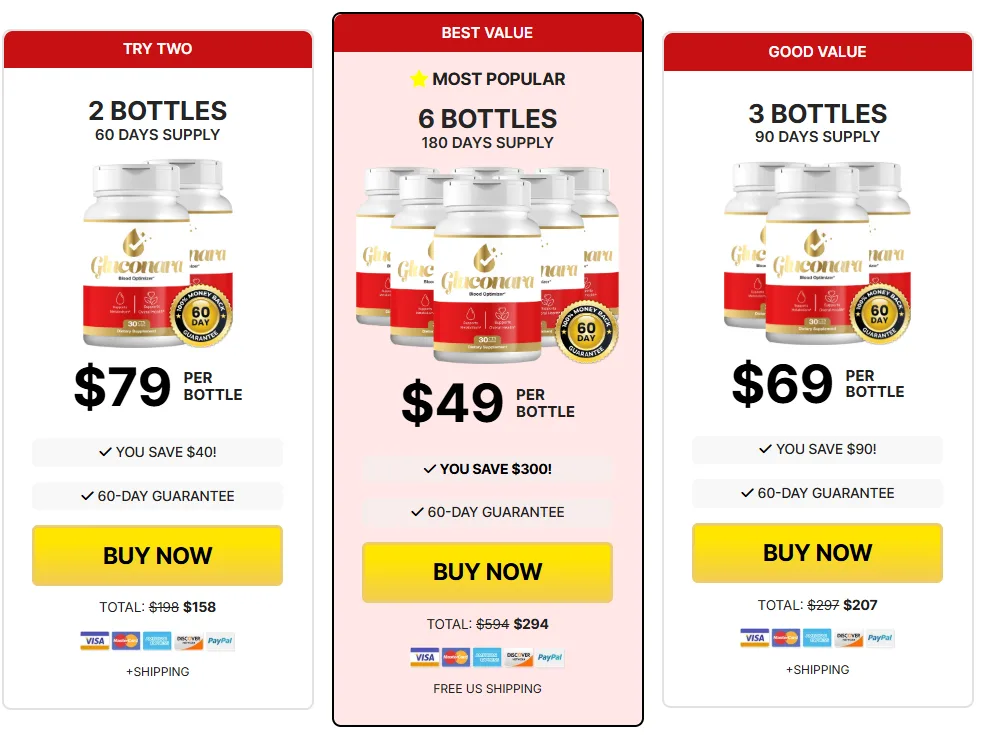
Here is what I can verify: the seller offers three bundle sizes through its website, along with a 60-day money-back guarantee as described by the seller (Your Health Magazine). The brand’s site is gluconara.com.
I could not confirm exact, current per-bottle prices from a reliable source, and supplement pricing changes often with promotions. So I won’t print a number that might be wrong. Check the Gluconara official website directly for today’s bundle prices, shipping costs, and the exact refund terms.
Smart buying tips:
- Buy only from the official website to avoid counterfeits or unauthorized resellers
- Read the full refund policy (what counts, how long, whether bottles must be returned)
- Screenshot your order and the terms at the time of purchase
- Be cautious with third-party marketplaces and “too good to be true” discounts

Gluconara vs. Alternatives: A Quick Comparison
| Factor | Gluconara | Single-ingredient berberine | Doctor-guided care (diet, exercise, prescribed meds if needed) |
|---|---|---|---|
| Format | Multi-ingredient capsule | One active ingredient | Individualized plan |
| Dose transparency | Mostly undisclosed (only chromium listed) | Usually clearly labeled | Fully prescribed and monitored |
| Research depth | Ingredients studied; formula itself not | Stronger human research | Strongest evidence base |
| Convenience | High (one capsule) | High | Takes more effort |
| Cost | Varies by bundle; verify on site | Often lower per dose | Varies with insurance |
| Medication interaction risk | Present, since several ingredients affect glucose | Present | Managed by your clinician |
| Best for | Healthy adults wanting general wellness support | People wanting a focused, researched ingredient | Anyone with prediabetes or diabetes |
The takeaway: if you want a focused, well-researched ingredient at a clearly labeled dose, a standalone product may give you more clarity. If you like the convenience of a combined formula, Gluconara fits that, as long as you accept the dose uncertainty.
Gluconara Pros and Cons
| Pros | Cons |
|---|---|
| Contains several ingredients with real research (berberine, chromium, cinnamon) | No clinical trial on the Gluconara formula itself |
| Convenient one-capsule daily routine | Most ingredient doses aren’t disclosed |
| Positioned as complementary, not a drug replacement | Marketing terms like “pancreatic sludge” aren’t scientific |
| Money-back guarantee described by the seller | Limited independent customer reviews |
| Sold through an official website | Possible interactions with diabetes and other medications |
| Chromium dose is clearly stated (100 µg) | Digestive side effects are possible |
| Made in the U.S. in an FDA-registered facility, per the seller | “FDA-registered facility” doesn’t mean the product is FDA-approved |
| Fits easily alongside diet and exercise | Price details can change and should be verified |
Is Gluconara Worth Buying?
Here is my direct answer to “Is Gluconara worth buying?”
It might be worth trying if:
- You’re a generally healthy adult who already eats reasonably and stays active
- You’ve cleared it with your doctor or pharmacist
- You’re comfortable with the dose uncertainty
- You’ll buy from the official site and use the guarantee as protection
- You’ll measure results with lab work, not just feelings
It’s probably not for you if:
- You expect it to fix diabetes or replace medication
- You’re pregnant or breastfeeding
- You take glucose-lowering drugs and haven’t spoken to your clinician
- You want a clearly labeled, research-matched dose of each ingredient
The fairest verdict is that Gluconara is a plausible, convenience-focused wellness product with a credible ingredient lineup and weak transparency. It’s not a miracle, and it isn’t an obvious scam either. Its value depends on your expectations and your habits.
How to Get the Most From Any Blood Sugar Supplement
These habits matter more than whatever’s in the capsule:
- Build meals around protein, fiber, and healthy fats
- Walk for 10 to 15 minutes after meals, since this measurably lowers post-meal glucose
- Prioritize 7 to 9 hours of sleep
- Manage stress, because cortisol raises blood sugar
- Stay hydrated and limit sugary drinks
- Get an A1C or fasting glucose test at least yearly if you’re at risk
- Take the supplement consistently for at least 8 to 12 weeks before judging it
Frequently Asked Questions About Gluconara
1. What is Gluconara?
It is a daily dietary supplement capsule marketed for metabolic wellness and blood sugar support in adults.
2. Does Gluconara really work?
Some ingredients have research behind them, but the finished formula hasn’t been clinically tested. Results vary, and it works best alongside healthy habits.
3. What are the Gluconara ingredients?
Turmeric, cocoa, berberine HCL, gymnema sylvestre, cassia cinnamon, chromium picolinate, bitter melon, and banaba leaf. Check the Supplement Facts panel on the Gluconara official website for the current label, since descriptions vary between sources.
4. How long does Gluconara take to work?
Most blood-sugar-related botanicals are studied over 8 to 12 weeks, so be patient and track objective markers.
5. What are Gluconara side effects?
Digestive discomfort is the most common concern, and low blood sugar is possible if you also take glucose-lowering medicine.
6. Can I take Gluconara with metformin or insulin?
Only with your doctor’s approval. Combining glucose-lowering supplements with medication can cause blood sugar to drop too far.
7. Is Gluconara FDA-approved? No. Supplements aren’t FDA-approved. The brand itself states it isn’t intended to diagnose, treat, cure, or prevent disease.
8. Where is the Gluconara official website?
The brand’s site is gluconara.com. Buy there to avoid imitations.
9. Does Gluconara have a money-back guarantee?
The seller describes a 60-day guarantee. Read the full terms before ordering.
10. Can Gluconara replace diabetes medication?
No. Never stop or change medication without medical guidance.
11. Who shouldn’t take Gluconara?
Pregnant or breastfeeding women, people on diabetes or blood-thinning medication without clearance, and anyone with liver or kidney disease should check with a healthcare professional first.
12. Are Gluconara customer reviews trustworthy?
Treat them cautiously. Independent review volume is low, and many online write-ups are sponsored or affiliate-driven.
Final Verdict
Gluconara earns a cautious “maybe.” The ingredient lineup includes genuinely researched names, the convenience is real, and the money-back guarantee lowers your financial risk. But the lack of dose transparency, the absence of formula-specific clinical trials, and the scientifically vague marketing language keep it from earning a strong recommendation.
If you try it, do it smartly: talk to your doctor, buy from the official site, track real numbers, and let your daily habits carry the load. A supplement can support a good routine, but it can’t build one for you.
References and Source Sites
- U.S. FDA, Dietary Supplements
- FDA, Questions and Answers on Dietary Supplements
- FTC, Health Products Compliance Guidance
- NIH Office of Dietary Supplements
- NIH National Center for Complementary and Integrative Health (licorice, eucalyptus, and other botanicals)
- PubMed (search “1,8-cineole COPD” and “menthol nasal airflow sensation”)
- Cochrane Library (honey for acute cough in children)
- CDC, Chronic Obstructive Pulmonary Disease
- American Lung Association
- American Lung Association, Lung HelpLine
Medical Disclaimer: This article is intended for informational and educational purposes only. Gluconara is a dietary supplement designed to complement a balanced lifestyle and everyday wellness routine. Individual experiences may vary. The information provided is not a substitute for professional medical advice, diagnosis, or treatment. These statements have not been evaluated by the U.S. Food and Drug Administration (FDA). Consult a qualified healthcare professional before adding Gluconara or any new supplement to your routine, especially if you have diabetes, a medical condition, or take prescription medication.
For more expert-backed health tips, wellness guides, and supplement insights, be sure to read more articles on the Health Line Guide