
If you’ve ever blotted your forehead by noon, watched your makeup slide off before lunch, or stared at yet another shiny nose in the mirror, you already know the struggle of having an oily face. You’re not alone. Millions of people deal with excess shine every single day, and the good news is that a proper skincare routine for oily skin can genuinely change how your skin looks and feels — without stripping it dry or making things worse.
This guide walks you through everything: what actually causes oily skin, a simple 5-step skincare routine for oily skin, the best AM and PM habits, ingredients to look for (and avoid), common mistakes, natural fixes, a real case study from a US-based skincare journey, a pros and cons breakdown, and answers to the questions people ask most. By the end, you’ll have a clear plan for how to control shine and finally get that fresh, matte glow you’ve been chasing.
What Causes Oily Skin?
Before jumping into any oily skin routine, it helps to understand why your skin produces so much oil in the first place. Oiliness isn’t random — it’s your body doing exactly what it’s designed to do, sometimes just a little too enthusiastically.
Here’s what typically drives excess oil production:
- Genetics – If your parents had oily skin, there’s a good chance you inherited larger or more active sebaceous (oil) glands.
- Hormones – Androgens, the hormones that surge during puberty, menstruation, pregnancy, and stress, signal your oil glands to work overtime.
- Climate and humidity – Hot, humid weather doesn’t necessarily increase oil production, but it makes existing sebum feel heavier and more visible on the skin.
- Over-washing or harsh products – Ironically, stripping your skin too aggressively can trigger it to produce more oil to compensate, according to guidance from the American Academy of Dermatology.
- Skipping moisturizer – When skin senses dehydration, oil glands often ramp up sebum output to make up for the lack of hydration.
- Diet – Some research suggests high-glycemic foods (sugary, processed carbs) may be linked to increased sebum production, though more studies are needed to confirm a direct cause.
- Large pores – Bigger pores naturally hold and release more oil, making skin appear shinier faster.
Sebum itself isn’t the enemy. It’s a waxy, protective substance made of lipids that keeps your skin barrier healthy and hydrated. The problem starts when your glands produce more sebum than your skin actually needs — that’s when you start noticing that classic greasy shine, enlarged pores, and breakouts. Understanding this is the real starting point of any effective skincare routine for oily skin.
The 5-Step Skincare Routine for Oily Skin
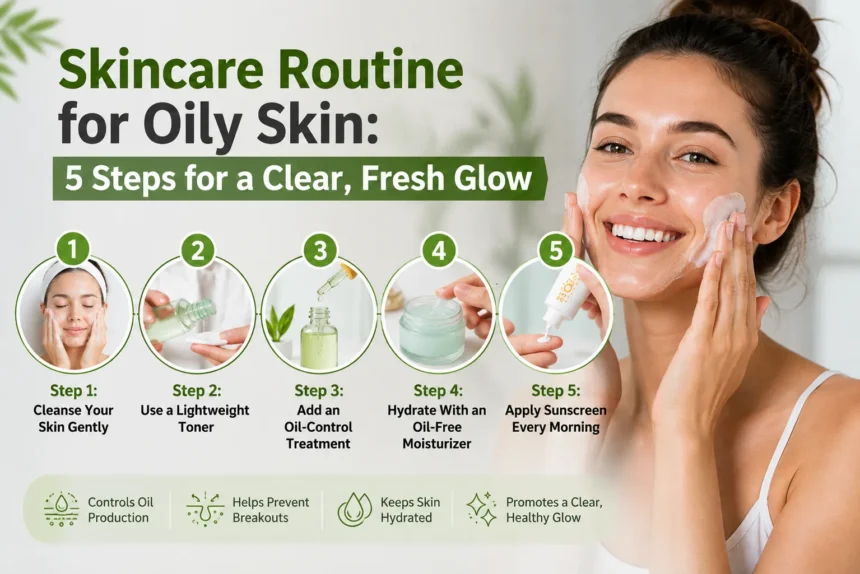
Here’s the core of it — a simple, dermatologist-informed skincare routine for oily skin you can realistically stick to every day. No 12-step routines, no confusing jargon. Just five steps that actually work.
Step 1: Cleanse Your Skin Gently
This is the foundation of every good oily skin routine. The instinct with oily, greasy skin is to scrub hard and use the harshest foaming cleanser you can find — but that’s actually one of the biggest mistakes you can make.
Harsh sulfates and alcohol-based cleansers strip your skin’s natural barrier, and stripped skin panics and overproduces oil to protect itself. Instead:
- Use a gentle, low-pH, foaming or gel cleanser twice a day (morning and night).
- Avoid bar soaps and anything labeled “deep cleansing” with heavy alcohol content.
- Wash with lukewarm water, not hot — hot water strips natural oils and irritates skin.
- Pat dry with a clean towel instead of rubbing.
Look for cleansers with salicylic acid (a beta hydroxy acid) if you also deal with clogged pores or occasional breakouts, since it dissolves oil and debris sitting inside the pore.
Step 2: Use a Lightweight Toner
Toner often gets skipped, but for oily and acne-prone skin, it plays a real role. A lightweight, alcohol-free toner helps rebalance your skin’s pH after cleansing and preps it to absorb the rest of your products better.
- Choose toners with witch hazel (alcohol-free versions), niacinamide, or green tea extract.
- Avoid anything that burns, tingles intensely, or feels tight and dry afterward — that’s a sign it’s too harsh.
- Apply with a cotton pad or press gently into skin with clean hands.
This step is optional in a bare-minimum skincare routine for oily skin, but most people with persistent shine find it genuinely helps control midday oiliness.
Step 3: Add an Oil-Control Treatment
This is where you target the shine directly. A dedicated treatment step — think serums or spot treatments — helps regulate oil production over time rather than just mopping it up temporarily.
- Niacinamide (vitamin B3) is one of the most researched ingredients for reducing sebum production and minimizing the look of pores.
- Salicylic acid exfoliates inside the pore lining, reducing blackheads and future breakouts.
- Retinoids (like adapalene or prescription-strength retinoids) regulate skin cell turnover and oil gland activity, though they should be introduced slowly.
Apply a thin layer of your treatment serum after toner, and give it a minute or two to absorb before layering anything else on top.
Step 4: Hydrate With an Oil-Free Moisturizer
This step trips people up the most. If your face is already oily, why moisturize? Because skipping moisturizer is one of the fastest ways to make oily skin worse. Dehydrated skin signals your glands to produce even more oil to compensate.
- Choose “oil-free,” “non-comedogenic” moisturizers — gels or light lotions work best.
- Look for hyaluronic acid, glycerin, or ceramides for hydration without heaviness.
- Avoid heavy creams, butters, or anything with mineral oil or coconut oil, which can sit on top of skin and clog pores.
A well-formulated, lightweight moisturizer is non-negotiable in any real skincare routine for oily skin — it’s what keeps your barrier calm instead of reactive.
Step 5: Apply Sunscreen Every Morning
No oily skin routine is complete without SPF. Skipping sunscreen leads to sun damage, premature aging, and — for many people — post-inflammatory marks that linger far longer on oily, acne-prone skin.
- Use a broad-spectrum SPF 30 or higher, every single morning, rain or shine.
- Choose lightweight, matte-finish, oil-free sunscreen formulas — many modern SPFs are specifically designed for oily and acne-prone skin.
- Mineral sunscreens with zinc oxide can help calm inflammation while still protecting the skin.
- Reapply every two hours if you’re outdoors for long periods.
Morning Skincare Routine for Oily Skin
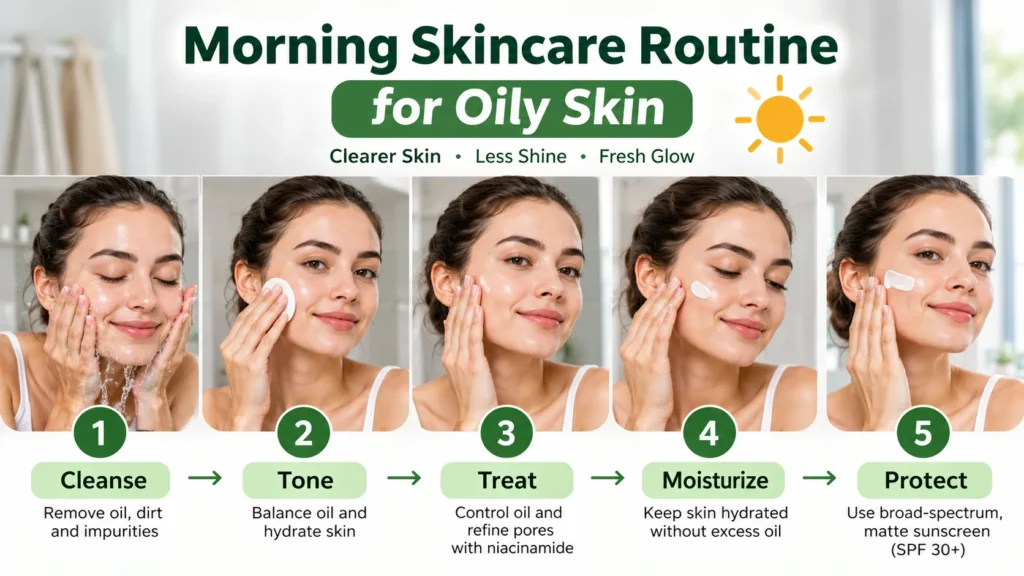
Your am and pm skincare routine for oily skin doesn’t need to be complicated — consistency matters far more than the number of products. Here’s a simple AM routine to start your day:
- Cleanse with a gentle, oil-control face wash.
- Tone with an alcohol-free, hydrating toner.
- Treat with a niacinamide serum to control oil and refine pores.
- Moisturize with an oil-free, lightweight gel moisturizer.
- Protect with a broad-spectrum, matte-finish sunscreen (SPF 30+).
This five-minute routine sets your skin up to stay balanced, shine-controlled, and protected throughout the day.
Nighttime Skincare Routine for Oily Skin
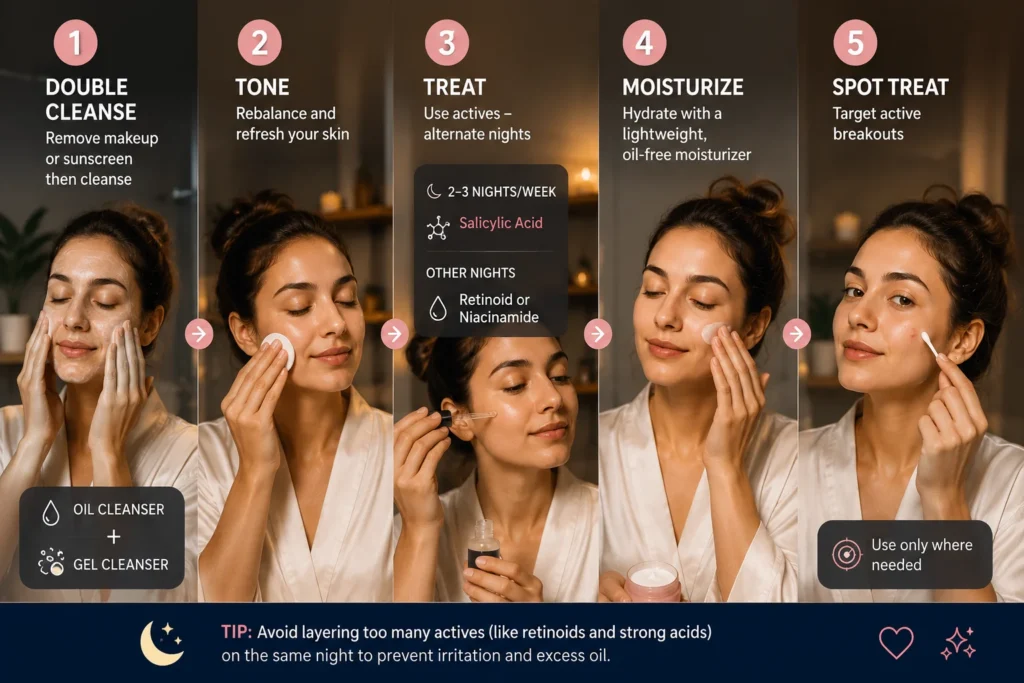
Nighttime is when your skin repairs itself, so this part of your skincare routine for oily skin focuses more on treatment and recovery:
- Double cleanse if you wore makeup or sunscreen — start with a gentle oil-based or micellar cleanser to break down SPF/makeup, then follow with your regular gel cleanser.
- Tone to rebalance skin.
- Treat with an active ingredient — alternate between salicylic acid (2-3 nights a week) and a retinoid or niacinamide serum on other nights.
- Moisturize with a lightweight, oil-free night moisturizer or gel-cream.
- Spot treat any active breakouts with a benzoyl peroxide or salicylic acid spot gel, if needed.
Getting these five steps right is really the backbone of any effective skincare routine for oily skin — everything else (masks, natural remedies, lifestyle tweaks) simply builds on top of this foundation.
How to Choose Products for Oily Skin
When shopping for skincare, product labels can provide useful clues.
Look for terms such as:
- Non-comedogenic
- Oil-free
- Won’t clog pores
- Lightweight
- Gel or water-based
Non-comedogenic products are designed to be less likely to clog pores, which can be especially useful for people with oily or acne-prone skin.
However, labels are not the only consideration. Your skin’s sensitivity and specific concerns matter too.
Ingredients to Look for in Oily Skin Products
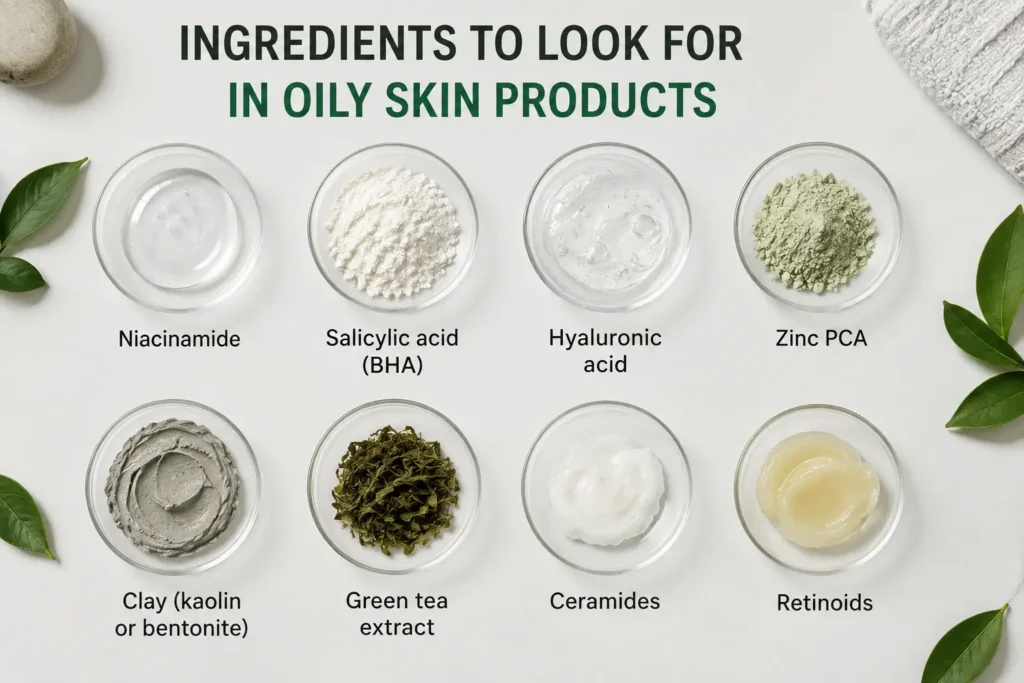
When shopping for products, scan the ingredient list for these oil-friendly heroes:
- Niacinamide – regulates sebum, reduces pore appearance, calms redness
- Salicylic acid (BHA) – exfoliates inside pores, reduces breakouts
- Hyaluronic acid – lightweight hydration without greasiness
- Zinc PCA – naturally helps regulate oil production
- Clay (kaolin or bentonite) – absorbs excess surface oil, great for masks
- Green tea extract – antioxidant with anti-inflammatory, oil-controlling benefits
- Ceramides – strengthen the skin barrier without adding heaviness
- Retinoids – regulate cell turnover and long-term oil gland activity
Ingredients to Avoid for Oily Skin
Some ingredients feel refreshing at first but end up making oiliness worse over time:
- Denatured alcohol (SD alcohol, alcohol denat.) – dries skin short-term, triggers rebound oil production
- Heavy oils (coconut oil, cocoa butter) – can clog pores and feel greasy
- Fragrance-heavy formulas – often irritate sensitized, oily/acne-prone skin
- Harsh physical scrubs – micro-tears in the skin barrier lead to more inflammation and oil
- Comedogenic silicones in some heavy foundations and primers – can trap oil and debris
Common Mistakes That Make Oily Skin Worse
Even with the right products, small habits can quietly sabotage your progress:
- Washing your face more than twice a day (over-cleansing strips the barrier)
- Skipping moisturizer because skin “already feels oily enough”
- Using hot water instead of lukewarm
- Touching your face throughout the day, transferring dirt and oil
- Not changing pillowcases often enough (oil and bacteria build up fast)
- Layering too many active ingredients at once
- Picking at blackheads or breakouts, which spreads bacteria and causes scarring
- Using heavy, matte, long-wear makeup without removing it properly at night
Avoiding these habits is just as important as the products you choose — a great skincare routine for oily skin can still fail if these mistakes are undoing your progress every day.
How to Control Excess Oil Naturally
If you’re looking for how to reduce oily skin without relying purely on cosmetic products, a few lifestyle habits can genuinely help:
- Blotting papers – a quick, product-free way to absorb surface oil during the day without disturbing makeup.
- Clay masks – using a clay mask once or twice a week can help draw out excess oil and unclog pores.
- Balanced diet – some evidence suggests reducing high-glycemic foods and dairy may help certain people manage sebum levels, though results vary person to person.
- Stress management – since cortisol (the stress hormone) can trigger oil glands, activities like exercise, sleep, and mindfulness may indirectly help control breakouts.
- Hydration – drinking enough water supports overall skin balance, even though it won’t directly “dry out” oily skin.
- Cool water rinses – finishing your cleanse with cool water can help minimize the appearance of pores temporarily.
These natural habits work best alongside — not instead of — a consistent skincare routine for oily skin.
How Often Should You Follow a Skincare Routine?
Consistency is everything. Here’s a realistic breakdown:
- Daily: Cleanse, moisturize, and apply SPF morning and night — non-negotiable basics.
- 2-3x per week: Exfoliating treatments (salicylic acid, retinoids) to avoid over-irritating skin.
- 1-2x per week: Clay masks or deeper treatments for extra oil control.
- Ongoing: Reassess your routine every 6-8 weeks, especially with seasonal changes, since oil production can shift with weather, hormones, and stress levels.
Most people notice visible improvement in shine and breakouts within 4-6 weeks of sticking to a proper oily skin routine — skin cell turnover takes time, so patience matters as much as product choice.
When Should You See a Dermatologist?
A solid skincare routine for oily skin handles most day-to-day shine and mild breakouts, but some signs mean it’s time to bring in a professional:
- Persistent, painful, or cystic acne that over-the-counter products aren’t improving
- Sudden changes in oil production alongside other symptoms (like excessive hair growth or irregular periods, which could point to a hormonal issue)
- Scarring or dark marks that aren’t fading
- Skin that’s oily and irritated, red, or flaking (which could indicate a different underlying condition, like seborrheic dermatitis)
- No improvement after 8-12 weeks of a consistent, well-formulated routine
A board-certified dermatologist can prescribe stronger treatments — like prescription retinoids, oral medications, or hormonal treatments — when over-the-counter options aren’t enough.
Case Study: How a US User Cleared Her Oily, Acne-Prone Skin
Background: Jenna, a 27-year-old marketing coordinator from Austin, Texas, had struggled with an oily face and recurring breakouts since her teenage years. Living in a humid climate made things worse — by midday, her T-zone was consistently shiny, her makeup would break down, and she was dealing with frequent breakouts along her jawline and forehead.
The Problem: Jenna’s old routine involved a harsh, foaming drugstore cleanser used three times a day, an alcohol-based astringent toner, and no moisturizer at all — she believed moisturizing would “add more oil” to her already oily skin. She also used heavy, long-wear matte foundation daily without removing it thoroughly at night.
The Change: After consulting a dermatologist and researching a proper skincare routine for oily skin, Jenna made the following changes over 8 weeks:
- Switched to a gentle, sulfate-free gel cleanser used twice daily instead of three times
- Added an alcohol-free, niacinamide-based toner
- Introduced a 2% salicylic acid serum three nights a week
- Started using a lightweight, oil-free gel moisturizer both morning and night
- Added a broad-spectrum, matte-finish SPF 30 every single morning
- Began double-cleansing at night to properly remove makeup and sunscreen
The Results: Within four weeks, Jenna noticed her skin was significantly less shiny by midday, and her breakouts had reduced noticeably. By week eight, her jawline breakouts had almost completely cleared, her pores looked visibly smaller, and — perhaps most surprising to her — her skin actually felt less oily overall, since it was no longer in a constant cycle of stripping and overproducing sebum.
Takeaway: Jenna’s case reflects a pattern reported widely among people with oily and acne-prone skin in the US: gentler cleansing, consistent hydration, and targeted treatments (rather than harsh stripping) tend to produce better long-term results than aggressive “dry it all out” approaches.
Pros and Cons of a Dedicated Skincare Routine for Oily Skin
Pros
- Reduces excess shine and midday greasiness
- Minimizes clogged pores and breakouts over time
- Improves makeup longevity throughout the day
- Strengthens the skin barrier long-term
- Lowers risk of acne scarring and dark marks
- Builds a simple, repeatable daily habit
Cons
- Requires consistency — results take 4-8 weeks
- Some active ingredients (retinoids, acids) can cause initial dryness or purging
- Product costs can add up if not chosen carefully
- Trial and error needed to find the right formulas for your skin
- Overdoing actives can backfire and irritate skin
- Climate and hormones can still cause fluctuations regardless of routine
Comparison: Oily Skin Routine vs. Regular Skin Routine
| Factor | Skincare Routine for Oily Skin | Standard/Normal Skin Routine |
|---|---|---|
| Cleanser type | Gentle foaming or gel, oil-control formulas | Cream or hydrating cleansers |
| Key ingredients | Niacinamide, salicylic acid, zinc PCA | Hyaluronic acid, peptides, antioxidants |
| Moisturizer texture | Lightweight, oil-free gel | Richer creams are fine |
| Exfoliation frequency | 2-3x per week (BHA-focused) | 1-2x per week (AHA or enzyme-based) |
| Sunscreen finish | Matte, oil-free formulas | Any hydrating or matte formula works |
| Main goal | Control sebum, minimize pores, prevent breakouts | Maintain balance and hydration |
Frequently Asked Questions About Oily Skin
1.What is the best skincare routine for oily skin?
The best skincare routine for oily skin involves gentle cleansing twice daily, an alcohol-free toner, an oil-control treatment (like niacinamide or salicylic acid), an oil-free moisturizer, and daily broad-spectrum sunscreen. Consistency matters more than the number of products.
2. How can I get rid of greasy skin fast?
While there’s no overnight fix, blotting papers, oil-absorbing clay masks, and a lightweight matte sunscreen can visibly reduce shine within minutes. For lasting change, a consistent oily skin routine over several weeks is what actually reduces sebum production.
3. How to reduce oily skin naturally?
Managing stress, staying hydrated, avoiding over-washing, using clay masks weekly, and moderating high-glycemic foods in your diet may all help reduce oily skin naturally, alongside a gentle daily routine.
4. Should I moisturize if I have oily skin?
Yes. Skipping moisturizer is one of the most common mistakes — it can actually trigger your skin to produce more oil. Choose an oil-free, non-comedogenic, lightweight moisturizer instead of skipping this step.
6. How often should I exfoliate oily skin?
Two to three times a week with a chemical exfoliant like salicylic acid is typically enough. Over-exfoliating can damage your skin barrier and trigger more oil production as a defense response.
7. Is oily skin genetic?
Yes, genetics play a significant role in how large and active your sebaceous glands are, which is why oily skin often runs in families.
8. What’s the difference between an AM and PM skincare routine for oily skin?
The am and pm skincare routine for oily skin differs mainly in focus: mornings prioritize protection (moisturizer + SPF), while nights focus on treatment and repair (double cleansing, exfoliating actives, and recovery-focused moisturizers).
Final Thoughts on Skincare for Oily Skin
Living with an oily face can feel frustrating, especially when it seems like nothing keeps the shine away for long. But oily skin isn’t a flaw to fight against — it’s a skin type that simply needs the right kind of care. A consistent, gentle skincare routine for oily skin — built around proper cleansing, lightweight hydration, targeted treatments, and daily sun protection — can genuinely transform how your skin looks and behaves over time.
The key takeaways to remember:
- Stop over-washing and stripping your skin; it backfires.
- Never skip moisturizer, even if your skin feels oily.
- Introduce oil-control ingredients like niacinamide and salicylic acid gradually.
- Stick with your oily skin routine for at least 6-8 weeks before judging results.
- See a dermatologist if breakouts persist despite a consistent routine.
Oily skin can absolutely become clear, balanced, and glowing — not shiny in the greasy sense, but glowing in the healthy, radiant sense. With the right five-step approach and a little patience, that fresh, matte-but-luminous look is completely within reach.
Reference & Scientific Sources
- American Academy of Dermatology Association – How to Control Oily Skin: https://www.aad.org/public/everyday-care/skin-care-basics/dry/oily-skin
- American Academy of Dermatology Association – Seborrheic Dermatitis: Causes: https://www.aad.org/public/diseases/a-z/seborrheic-dermatitis-causes
- Cleveland Clinic – What Is My Skin Type and Why Does It Matter?: https://health.clevelandclinic.org/understanding-skin-types
- GoodRx Health – Why Is My Skin So Oily? Causes and Tips for Treatment: https://www.goodrx.com/health-topic/dermatology/why-is-my-skin-so-oily
- Medical News Today – Causes of Oily Skin and 6 At-Home Treatments: https://www.medicalnewstoday.com/articles/321090
- National Center for Biotechnology Information (NCBI/PMC) – Use of Advanced Imaging Techniques for the Characterization of Oily Skin, Frontiers in Physiology (DOI: 10.3389/fphys.2019.00254): https://www.ncbi.nlm.nih.gov/pmc/articles/PMC6443891/
- CeraVe – A Gentle Skincare Routine for Oily Skin: https://www.cerave.com/skin-smarts/skincare-routines/a-gentle-skincare-routine-for-oily-skin
- L’Oréal Paris – What Causes Oily Skin and How Do You Manage It?: https://www.lorealparisusa.com/beauty-magazine/skin-care/skin-care-essentials/what-causes-oily-skin
Disclaimer: This article is for general informational purposes only and is not a substitute for professional medical or dermatological advice. If you have persistent or severe skin concerns, please consult a board-certified dermatologist.
For more expert-backed health tips, wellness guides, and supplement insights, be sure to read more articles on: Health Line Guide