

Last updated: 26 December 2025
Written by: Health Line Guide Editorial Team
Content reviewed for accuracy using trusted medical sources
Important Medical Disclaimer
This article is for educational and informational purposes only. It does not replace medical advice, diagnosis, or treatment. Always consult a qualified endocrinologist or registered dietitian before making dietary changes, especially if you have a thyroid condition or are on thyroid medication.
Introduction
Thyroid disorders such as hypothyroidism and Hashimoto’s thyroiditis are increasingly common in India, especially among women. According to Indian health data, nearly 1 in 3 adults shows some form of thyroid imbalance, often linked to nutrient deficiencies, stress, and lifestyle factors.
While medication remains the primary treatment, long-term thyroid management also depends heavily on diet, nutrient intake, and daily habits. Many people living with thyroid issues report persistent fatigue, weight changes, hair fall, mood fluctuations, and digestive problems—even while taking medication.
Based on nutritional research and experiences shared by individuals managing thyroid disorders under medical supervision, this guide explains:
- Foods that support thyroid health
- Foods to limit or avoid
- A practical 7-day thyroid-friendly Indian diet plan
- Lifestyle habits that support hormone balance and healthy weight loss
Understanding Thyroid Disorders in India
In India:
- Around 1 in 10 people has hypothyroidism
- Women are 5–8 times more likely to develop thyroid disorders
- Nearly 22% of Indians have borderline iodine deficiency
- Over 80% of Indians are deficient in vitamin D
These deficiencies directly affect thyroid hormone production and conversion, especially the transformation of T4 into active T3, which regulates metabolism and energy levels.
Types Of Thyroid
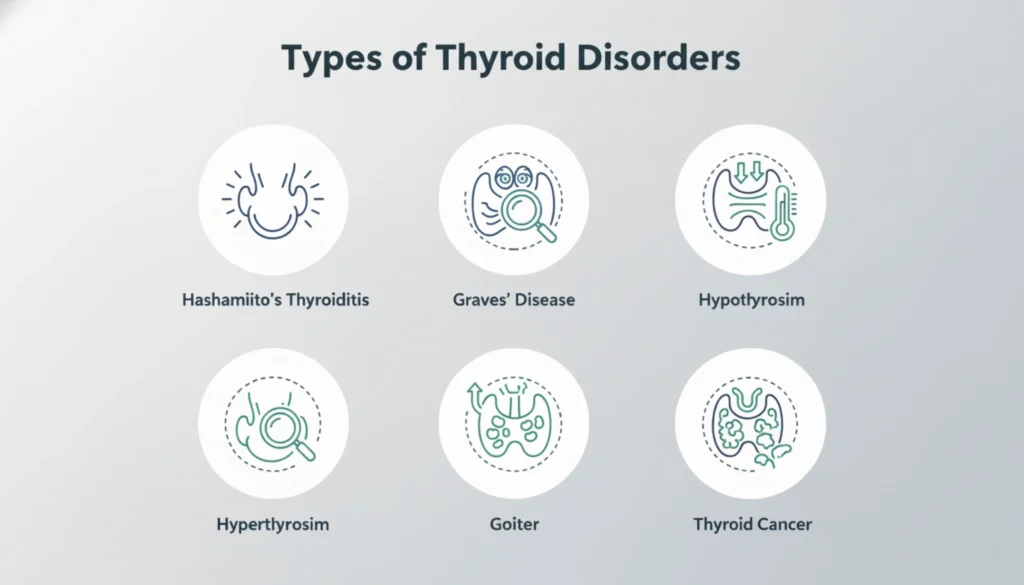
1. Hypothyroidism (Underactive Thyroid)
This condition affects the thyroid more frequently than any other. The thyroid gland is unable to produce an adequate amount of thyroid hormones (T3 and T4), which causes hypothyroidism.
Common Symptoms:
- Weight gain
- Hair fall
- Persistent fatigue
- Constipation
- Depression or low mood
- Dry skin
- Irregular or heavy periods
2. Hyperthyroidism (Overactive Thyroid)
The thyroid produces excess hormones, speeding up metabolism.
Common Symptoms:
- Sudden or unexplained weight loss
- Anxiety, restlessness, or irritability
- Excessive sweating
- Rapid or irregular heartbeat
- Difficulty sleeping
- Tremors or nervousness
3. Hashimoto’s Thyroiditis
Hashimoto’s is an autoimmune condition in which the immune system targets the thyroid gland by mistake. This damage over time makes it harder for the thyroid to make hormones, which can lead to hypothyroidism.
Common symptoms:
- Fatigue and weight gain
- Hair fall and dry skin
- Brain fog and low mood
- Joint or muscle pain
Key contributing factors include:
- Chronic inflammation
- Nutrient deficiencies (selenium, zinc, vitamin D)
- Genetic susceptibility
Best Thyroid-Friendly Foods
1. Iodine
Iodine is one of the most important nutrients for thyroid health because your thyroid gland needs iodine to make thyroid hormones (T3 and T4). Without enough iodine, the gland cannot function properly, leading to an underactive thyroid.
Best Sources:
- Iodised salt
- Milk & curd
- Eggs
- Fish and seafood
- Paneer
Tip: Avoid using pink salt, sendha namak, or rock salt too much in your diet, as they contain little or no iodine. Try to use iodised salt-not in excess, but at least in one of your daily meals.
2. Selenium
Selenium is a strong mineral that is very important for activating thyroid hormones. Your thyroid makes largely T4, which is an inactive hormone. Selenium helps turn T4 into T3, which is the active hormone that your body utilizes for energy, metabolism, and brain function.
Best food options:
- Brown rice
- Eggs
- Lentils (dal)
- Walnuts
- Sunflower seeds
3. Zinc
Zinc is one of the key minerals your thyroid depends on to make hormones smoothly. When your zinc levels drop, your thyroid struggles to produce enough T3 and T4, often causing tiredness, slow metabolism, and other symptoms that feel just like hypothyroidism.
Best Sources:
- Pumpkin seeds
- Cashews
- Chickpeas (chana)
- Rajma
- Moong dal
4. Vitamin D
Vitamin D is very important for maintaining your thyroid health since it helps your immune system work properly. Low levels of vitamin D can throw off the immune system, which raises the likelihood of thyroid problems, especially autoimmune diseases like Hashimoto’s.
Best Sources:
- Morning sunlight (10-20 minutes daily)
- Milk
- Paneer
- Ghee
- Egg yolks
Tip: If you are mostly spending your time indoors, make sure to have foods that are a rich source of vitamin D, in combination with sunshine.
5. Omega-3
Omega-3 fatty acids are good for your health in general and especially for persons with autoimmune thyroid illnesses like Hashimoto’s. They help lower inflammation and balance hormones. These healthy fats also help your metabolism, emotions, and brain perform better.
Best Sources:
- Walnuts
- Flaxseeds (alsi)
- Chia seeds
- Fatty fish (salmon, mackerel, rohu)
Tip: Include a small portion daily-add crushed flaxseeds to curd or oats, or eat a handful of walnuts.
6. Iron
Iron is a mineral that plays a very important role in thyroid health. Your thyroid cannot make hormones properly without enough iron. A study by the National Institute of Nutrition (NIN), India, found a strong link between anemia (low iron levels) and hypothyroidism, especially among Indian women.
Because iron helps convert T4 into active T3, even mild deficiency can worsen thyroid symptoms like fatigue, hair fall, and low energy.
Best Sources:
- Spinach (cooked)
- Beetroot
- Jaggery (gur)
- Dates (khajoor)
- Ragi (finger millet)
- Rajma (kidney beans)
Tip: Combine with vitamin C (lemon, amla) to enhance the body’s ability to absorb it.
7. Whole Grains
Whole grains are a key part of a healthy thyroid diet because they help keep energy levels stable, aid digestion, and manage metabolism.
Healthy grains provide you with energy all day because thyroid disorders can slow down your metabolism and mess with your blood sugar levels.
Best Options:
- Brown rice
- Oats
- Millets (ragi, jowar, bajra)
- Poha
- Whole wheat chapati
Tip: If you have Hashimoto’s or gluten sensitivity, prefer oats, brown rice, or millets over wheat.
8. Cooked Vegetables
People with thyroid problems should eat cooked veggies since they are easier on the stomach, lower inflammation, and give the body vital vitamins and minerals that help keep hormones in balance.
If you have hypothyroidism, eating raw cruciferous vegetables like cabbage, cauliflower, and broccoli may make it harder for your body to absorb iodine. Cooking them makes these chemicals less harmful, so they are safer to eat every day.
Best vegetables to include:
- Bottle gourd (lauki)
- Beans
- Pumpkin
- Carrot
- Capsicum
Tip: Steam, saute, or lightly cook vegetables to preserve nutrients.
9. Dairy Foods
Dairy products are good for your thyroid because they have a lot of iodine, protein, probiotics, and healthy fats, which are all important for making thyroid hormones.
In India, one of the main reasons for hypothyroidism is not getting enough iodine. Eating dairy (if you are lactose-tolerant) will help keep hormone levels healthy.
Best Options:
- Milk
- Curd (dahi)
- Buttermilk (chaas)
- Paneer
Tip: If you are lactose-intolerant, choose curd or buttermilk for easier digestion.
10. Eggs
Richly packed with protein, selenium, Vitamin D, and iodine, eggs are great for nutrition, supporting hormone function in your body as well as supporting a healthy metabolism, thus assisting in maintaining a healthy weight.
Ways you can include eggs in your meals:
- Boiled eggs (a great source of nutrition)
- Vegetable omelet
- Scrambled egg
- Egg bhurji
You should not discard the yolk, as it contains approximately 75% of the nutrients found in the entire egg.
11. Nuts & Seeds
Nuts and seeds also contain healthy fats, omega-3 fatty acids, zinc, selenium, and are a good source of the natural energy your body needs to continue functioning properly. Nuts and seeds help in the conversion of thyroid hormones by reducing inflammation.
The following are the best sources for omega-3 fatty acids, healthy fats, zinc, and selenium:
- Walnuts
- Almonds
- Flaxseed (Alsi)
- Sunflower Seeds
12. Lentils & Legumes
Legumes and lentils are high in protein, fiber, zinc & iron, and aid in producing thyroid hormones, maintaining metabolic health, and providing stability of your energy levels.
Best choices of legumes and lentils:
- Moong Dal (Green lentils)
- Toor Dal (Pigeon pea),
- Masoor Dal (Red lentils)
- Kidney Beans (Rajma)
- Chickpeas (Chole)
- Sprouts
Why these foods are important: They provide Protein, Zinc, and Iron, which support the production of thyroid hormones, metabolism, and energy levels.
Foods to Avoid or Limit for Thyroid Health
1. Excess Goitrogens (Raw Cruciferous Vegetables)
Cruciferous vegetables, e.g., broccoli, cabbage, cauliflower, kale (and many others) are also found in other foods.) These vegetables are known as a family of vegetables that all contain compounds that reduce iodine absorption (Iodine is necessary for proper thyroid hormone production).
Ways to include these vegetables in your diet:
- You can eat your cruciferous vegetables cooked, steamed, or sauteed.
- Avoid eating them raw and instead include them in soup or stew.
Importance of cooking your cruciferous vegetables:
The cooking process will provide a way to enjoy the benefits of these nutritious foods without missing out on the negative impact (due to low iodine absorption) on the thyroid.
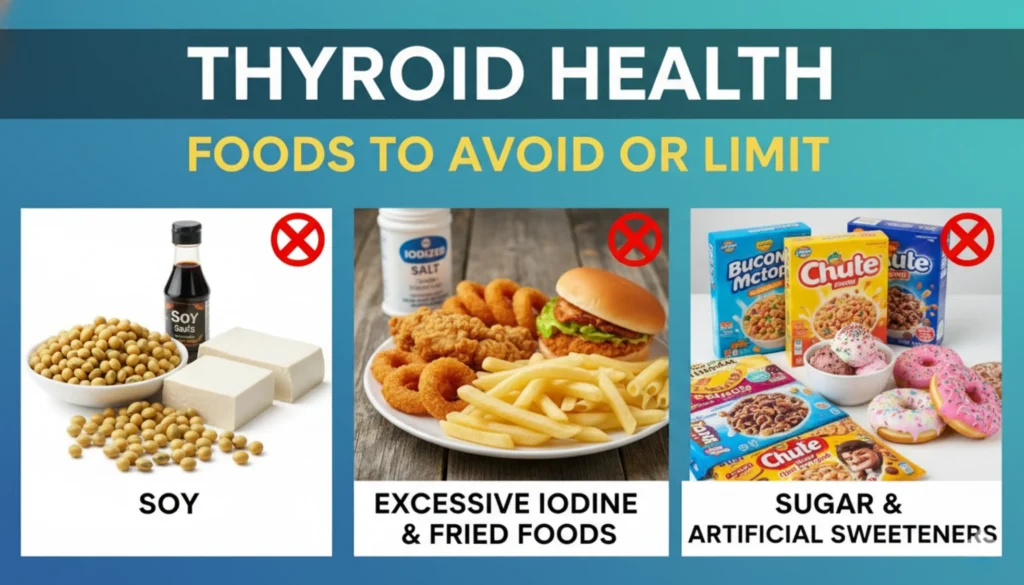
2. Too Much Soy
Soy consumption could decrease the efficacy of your thyroid medication and may cause hormonal changes in small amounts. Soybeans contain isoflavones; these are phytoestrogens and have been shown to interfere with thyroid function in people who do not have sufficient levels of iodine.
Sources of soy products are:
- Soy nuggets
- Soy milk
- Tofu
Tips for consuming soy: Moderate amounts occasionally are safe. Avoid consuming large portions daily, and try not to eat soy within 34 hours of taking your thyroid medication to ensure proper absorption.
3. Excessive Sugar & Processed Foods
Increased sugar and processed carb intake cause insulin resistance, systemic inflammation, and metabolic changes, leading to additional hypothyroid-related symptoms of weight gain, lethargy, or metabolic sluggishness.
The Journal of Clinical Endocrinology & Metabolism states that poor glycemic control negatively affects thyroid hormone activity and the overall metabolic system.
Sugary snacks/drinks and processed carbohydrates contribute to this increased glycemic index.
Recommendations:
- Use whole grains when you can.
- Eat fruits in moderation because they will be digested quickly.
- Use natural sweeteners instead of refined sugar when you cook or bake.
4. Gluten-Heavy Foods
For individuals, especially those with autoimmune thyroid diseases like Hashimoto’s disease, the presence of gluten can lead to an abnormal immune response that triggers inflammation.
Reducing gluten intake may help lessen these symptoms and support better thyroid function and overall well-being.
What foods to avoid: Gluten in your diet typically comes from white flour-based products such as bread, instant noodles, and a wide variety of baked goods from the store front.
Tip: Consider replacing gluten grains with whole wheat or gluten-free grains like oats, brown rice, millet, ragi, etc., as these types of food decrease your chance of inflammation while helping with thyroid function.
5. High-Fat, Deep-Fried Foods
Foods that are high-fat (oily) and deep-fried, such as samosas, pakoras, French fries, and puri, can disrupt normal digestion and add to metabolic sluggishness, potentially causing interference with the hormone functioning of the thyroid.
Research indicates that the prolonged consumption of excessive deep-fried foods or foods with high-fat content creates more inflammation throughout the body, affecting the absorption of necessary nutrients & vitamins required for normal hormone production.
6. Too Much Caffeine
Caffeine is found in both tea and coffee, and it can interfere with the way your body absorbs thyroid medications. The caffeine that enters your body after having a hot beverage will speed up the digestive process and decrease the amount of thyroid hormone that is absorbed into your body.
Drinking coffee or tea first thing in the morning might lessen the effect of your thyroid medication and change how your thyroid works to create hormones.
To ensure that your thyroid medication is effective, wait 45 to 60 minutes after taking it before having coffee or tea.
7-Day Thyroid-Friendly Diet Plan
| Day | Breakfast | Lunch | Snack | Dinner |
| 1 | Moong dal cheela + curd | Brown rice, dal, cooked spinach + paneer | Apple + pumpkin seeds | Veg khichdi + curd |
| 2 | Vegetable poha + herbal tea | Kadhi rice (no pakoda) + carrot sabzi | Papaya + soaked almonds | Besan cheela + mint chutney |
| 3 | Oats with nuts + lemon water | Masoor dal, roti, pumpkin | Guava + sabja water | Moong dal methi sabzi + rice |
| 4 | Sooji upma + curd | Chana dal, chapati, beans | Pomegranate | Vegetable soup + barley khichdi |
| 5 | Besan chilla + green tea | Ragi roti, palak paneer (cooked) | Roasted seeds | Dal makhani (low-cal) + salad |
| 6 | Barley porridge + walnuts | Quinoa pulao, fish curry (optional) | Orange | Lentil soup + roti |
| 7 | Idli with sambar (limited tamarind) + curd | Mixed veg dal, brown rice | Buttermilk + seeds | Light khichdi with methi |
Natural Ways to Support Thyroid Function
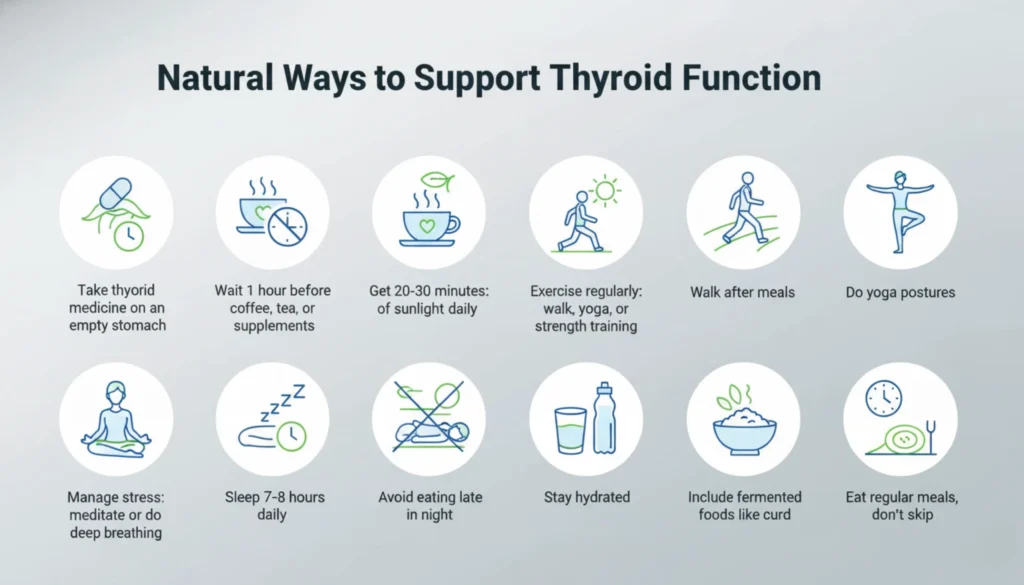
- Take thyroid medicine on an empty stomach
- Wait 1 hour before coffee, tea, or supplements
- Get 20-30 minutes of sunlight daily
- Exercise regularly: walk, yoga, or strength training
- Walk after meals
- Do yoga postures: Sarvangasana, Bhujangasana, Setu Bandhasana
- Manage stress: meditate or do deep breathing
- Sleep 7-8 hours daily
- Avoid eating late at night
- Stay hydrated
- Include fermented foods like curd
- Eat regular meals, don’t skip
FAQ’s
1. What are the good foods for the thyroid?
Foods that are rich in iodine, selenium, zinc, vitamin D, omega-3s, and protein are the best foods that can help elevate your thyroid health.
- Iodine: Iodised salt, eggs, milk, paneer
- Selenium: Sunflower seeds, eggs, lentils, walnuts
- Zinc: Pumpkin seeds, chickpeas, rajma, moong dal
- Vitamin D: Sunlight, fortified dairy, ghee
- Omega-3s: Walnuts, flaxseeds, fish
- Protein & fiber: Whole grains, lentils, cooked vegetables, eggs
2. Can thyroid patients eat bananas?
Patients with hypothyroidism can consume bananas, but need to limit their intake. Bananas are nutritious because they contain potassium, fiber, and provide energy levels, but they also contain excess sugar and, therefore, should be avoided if an individual is attempting to lose weight or control his/her blood sugar.
3. Can hypothyroidism cause weight gain?
Yes, hypothyroidism can slow metabolism and cause weight gain.
4. Which fruits are safe for thyroid patients?
Fruits that are safe for thyroid patients are:
- Apples
- Oranges
- Berries (strawberries, blueberries, raspberries)
- Papaya
- Pomegranate
- Guava
- Pears
- Kiwi
- Mango (in moderation)
- Watermelon
5. Is gluten harmful to the thyroid?
Most individuals aren’t impacted by gluten. However, for those with autoimmune thyroid diseases (such as Hashimoto’s), gluten can initiate inflammation and increase the severity of symptoms associated with these diseases.
To help maintain healthy thyroid function, it may be beneficial to limit or avoid the consumption of foods containing wheat flour (maida), white bread, instant noodles, and processed baked goods.
6. How can I control my thyroid normally?
There are many natural techniques to help with the active functioning of one’s thyroid gland, including making minor adjustments to your daily routine as follows;
- Taking your medication on time
- Eating a well-balanced and nutritionally enriched diet
- Exercising regularly
- Reducing stress
- Having 20-30 minutes of Sun during the day
- Getting 7-8 hours of sleep
- Hydrating regularly
- Limiting processed foods, refined sugars, and the intake of raw cruciferous vegetables.
Sources & References
- National Institute of Nutrition (India)
- Mayo Clinic – Thyroid Disorders
- NIH – Hypothyroidism Overview
- PubMed – Nutrition and Thyroid Function
- Endocrine Society Guidelines
Conclusion
Managing thyroid health is a long-term journey. With the right food choices, consistent lifestyle habits, and proper medical guidance, many people report improved energy levels, better hormone balance, and sustainable weight management.