
About the Author – Emily Carson
Emily Carson is a certified Nutrition & Wellness Writer from Austin, Texas, with over 7 years of experience researching global diets, weight-management strategies, and holistic nutrition. She specializes in creating evidence-based health content that blends science with practical, everyday guidance.
Maintaining a healthy weight today is becoming so hard with a busy lifestyle and so many temptations around, making it more challenging to stick to healthy eating.
India has a long history of cooking that includes various meals that can help you lose weight healthily without giving up taste or nutrition. You can lose weight in a pleasant and healthy way by eating Indian foods, from old favorites to new healthy snacks.
In this article, we’ll explore the best Indian foods for weight loss, a simple vegetarian meal plan, and high-protein options to help you stay on track with your weight loss journey.
Why Choose an Indian Diet for Weight Loss?
Indian foods is notable for its great taste and many positive attributes. Many Indian meals depend mainly on vegetable proteins, whole grains, lentils, and legumes, which are generally high in fibre and low in saturated/fatty oils; therefore, Indian foods is a great source of healthy weight loss for those wanting to eat this way.
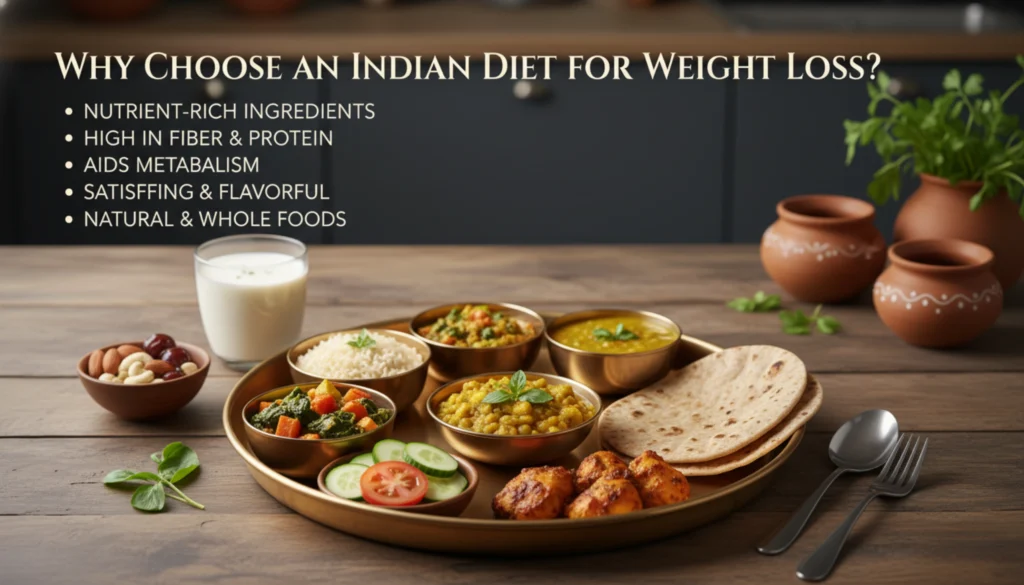
Whole grains, lentils, legumes, many types of fresh vegetable sources, as well as spices like turmeric, cumin, and ginger that stimulate and support healthy metabolism, enhance the flavours of the meals we prepare, as well as provide many of the health benefits associated with these ingredients.
You can still eat delicious food and also lose weight if you focus on portion control, nutrient-dense meal preparation, and healthy cooking methods, e.g., steaming, grilling, or frying rather than deep frying.
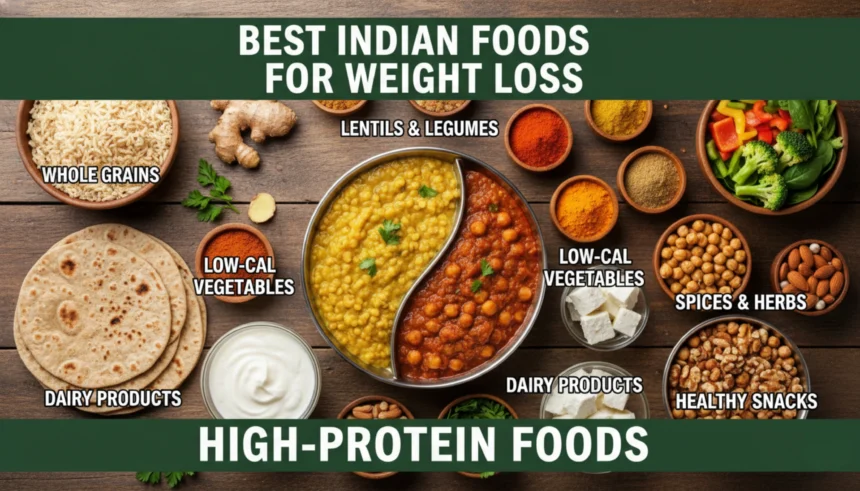
Best Indian Foods for Weight Loss
1. Whole Grains
Switching from processed grains to whole grains may help naturally reduce calorie intake, boost digestion, and support fullness longer due to their high-fiber content, which keeps you feeling fuller longer, preventing your craving for unhealthy foods.
Some healthy choices that you can try:
- Brown rice – It is a good choice for lunch or dinner because it has a lot of fiber.
- Oats and oatmeal – These are great options for breakfast; they are very light to eat, and you can make upma, porridge, or overnight soaked oats.
- Millets (ragi, bajra, jowar)– These are filled with nutrients and can be used in many ways, such as for rotis, khichdi, or porridge.
- Whole wheat chapati- It is a daily food that goes well with veggies, dal, or lean protein dishes.
- Barley (Jau) – It has a low glycemic index and keeps you full for a longer period of time. You can use it in soups or cereal.
- Buckwheat (Kuttu) – It is a great gluten-free and high-protein food, a good weight-loss food that may be used to make rotis or pancakes (cheelas).
2. Lentils and Legumes
Chickpeas (chana), lentils (dal), kidney beans (rajma), and black-eyed peas are sme of the best foods for losing weight. These are naturally enriched with high fiber and protein content that keeps you satiated for a longer period of time while suppressing your unnecessary cravings. These also help in keeping your blood sugar levels consistent and keep your muscles healthy, making it a good high-protein diet for weight loss.
How to add them to your meals every day:
- Moong Dal Soup Khichdi with Brown Rice is an easy, light, protein-packed meal option to eat for lunch or dinner.
- Chickpea Salad is another option to eat for a quick meal in the evening. It’s a healthy, tasty, and very filling option to eat.
- Rajma Curry made with minimal oil can be served with a small amount of Whole Wheat Roti or Brown Rice to provide balance and fibre to your diet.
Extra Tip: When lentils and chickpeas sprout, they get more protein and are easier to digest. This makes them a great addition to healthy snacks for weight loss or light meals throughout the day.
3. Vegetables: Low-Calorie, Nutrient-Rich Essentials
Eating vegetables is essential to being healthy and losing weight for everyone. Vegetables are low-calorie foods naturally high in dietary fiber; they’re also a good source of vitamins and minerals; they offer some supplemental protein, which can help keep you feeling full and satisfied while providing you with energy during the day.
- Leafy greens (Spinach/Palak, Fenugreek/Methi, Kale/Kale leaves): these are a high source of fiber, iron, and calcium, and can provide up to 2-3g of protein per cup. You can make saag, parathas, or salad with them.
- Cruciferous vegetables (Cabbage, Cauliflower/Gobi, Broccoli): Enriched with fiber, antioxidants, vitamin C, and around 3g of protein per cup; makes them perfect for sabzis, stir-fries, or soups.
- Bell peppers, Carrots, and Zucchini: High in vitamins A & C, fiber, and can give you up to 1-2g of protein per cup. These can be used in bhajis, stir-fries, or salads.
- Bottle Gourd (Lauki): A very light vegetable with very high water content. Good for making casseroles, soups, juices, and more.
- Bitter Gourd (Karela): This vegetable is very effective in controlling blood sugar and supports burning excess body fat. Best used in stir-fries, stuffed vegetables, and juices.
- Cucumber: This vegetable contains a lot of water and has very few calories. Best to eat raw in salads and raita.
- Tomatoes: These vegetables provide plenty of antioxidants and fiber. Good for cooking, making ketchup, soups, and curries.
- Drumsticks (Moringa or Sahjan): Very high in nutrition and fiber. Typically used in sambar, soups, and vegetable dishes.
- Amaranth Leaves (Chaulai) and Fenugreek Leaves (Methi): Both are excellent sources of fiber and micronutrients. Used to make parathas, sabzi, or soup.
Tip: Mixing different vegetables into one meal makes it taste better and gives you a wider variety of nutrients. It’s also low in calories and filling, which is great for weight loss.
4. Dairy Products: Protein and Calcium for Satiety
Dairy foods are part of the traditional diet of many Indians and are used for weight loss as well as to provide protein and calcium, keep the stomach full, support bone health, and regulate blood sugar levels. The use of dairy products in meals may also enhance digestion and control appetite.
Some healthy Indian dairy options include:
Low-fat yogurt (Dahi): A great accompaniment to meals and is often eaten with raita (a mixture of yogurt and spices). Dahi contains a large amount of protein and probiotics.
Paneer: Paneer is a type of cottage cheese that is high in protein and can be used in curries, stir-fries, and grilled dishes.
Skimmed milk (Doodh): Normally, you drink this as milk, but it can also be added to tea or used in smoothies. It is high in protein and very low in fat.
Buttermilk (Chaas): It is a low-calorie drink that is known to be refreshing and helps with digestion. It can be flavoured with cumin or fresh mint leaves.
5. Spices and Herbs: Aid Digestion and Boost Metabolism
Spices and herbs also help to digest food and are known to stimulate your metabolism. Indian spices have been used in medicine for thousands of years and are rich in antioxidants, which help to increase metabolism and facilitate the burning of fat while adding flavour without adding calories. Some of the popular spices used in Indian cooking to promote weight loss include:
- Turmeric (Haldi) – Turmeric is well known for its anti-inflammatory abilities, promoting the metabolism of fat as well as promoting better digestion; it is often used in dals, curries, and soups.
- Black Pepper (Kali Mirch) – Black pepper helps your body absorb nutrients and is a metabolism booster; use it to season your curries, soup, or vegetables.
- Cinnamon (Dalchini) – Cinnamon helps to regulate blood sugar and also enhances your fat-burning ability; you can add it to your tea, porridge, or desserts.
- Ginger (Adrak) – Ginger helps with digestion, helps to relieve bloating, and may even slightly increase your calorie expenditure. You can use it in tea, curries, or stir-fries.
- Green Chili (Hari Mirch) – Green chilies may also slightly increase your metabolism and help you burn calories; add them sparingly to curries or salads.
- Cumin Seeds (Jeera) – Cumin seeds very effectively improve your digestion and help in relieving bloating; use them to flavor your dals, sabzis, or rice.
- Fenugreek Seeds (Methi) – Fenugreek seeds can reduce appetite and help to maintain healthy blood sugar levels; soak them overnight and then add them to your dals, curries, or parathas
6. Healthy Snacks for Weight Loss
Snacking can be included in a healthy Indian diet that aids in weight loss when done correctly. Selecting the right kind of snacks that are nutritious in addition to having plenty of fibre and protein will help you remain satisfied until your next meal, and will help to maintain a steady amount of energy throughout the day.
Healthy Snacks to Consider:
- Roasted Chana (Chickpeas) – With their crunchy texture and protein and fibre content, they are a wonderful mid-morning or late afternoon snack.
- Sprouts Salad – Moong/Dal Sprouts or a combination of different sprouted beans with chopped cucumber, diced tomato, lemon juice, and a sprinkle of Chaat Masala. i.e., a nice, healthy, protein- and fibre-rich snack.
- Nuts/Seeds – (almonds, walnuts, flaxseeds, pumpkin seeds). (All nuts/seeds should be eaten in moderation. Nuts/seeds are sources of healthy fats and protein to help satiate your appetite.
- Vegetable sticks with yogurt dip or hummus – Carrot, cucumber, and capsicum sticks paired with low-fat yogurt or homemade hummus for a refreshing snack.
- Masala-Makhana (Fox nuts) – Crunchy, low-calorie, and protein-packed. Roast them with a little bit of olive oil and Spices (Chili, Turmeric, and Cumin).
- Idli or Dhokla – Both are low-fat snacks from South India (Idli) and Gujarat (Dhokla). They fill you up & are steamed; therefore, they do not add to your waistline!
7. High-Protein Foods for Weight Loss
Protein-packed foods play a key role in weight loss by reducing hunger, supporting lean muscle, and improving calorie burning throughout the day. These Indian-friendly high-protein options are simple to add to meals or snacks and help you stay fuller for longer.
Roasted chana (bhuna chana) – Supplies around 6-7g of protein per ¼ cup, is low in calories, and helps reduce unnecessary snacking.
Peanuts (moongfali) – Contains 7-9g protein per ¼ cup, along with good fats that promote fullness and prevent overeating.
Moong sprouts – Offers about 7g of protein per cup, plus fiber and vitamin C, making it great for digestion and steady energy.
Peanut or til chikki – Provides 4-6g protein per piece, giving a healthier, more satisfying alternative to regular sweets.
Paneer (lightly grilled or sauteed) – Delivers roughly 14g of protein per 100g, excellent for building satiety and supporting muscle tone.
Greek yogurt or low-fat curd – It provides up to 6-7g of protein per 100g, helps promote healthy digestion, and is perfect for weight-conscious meals.
Roasted soy chunks – Packed with protein, they provide you with around 16-18g of protein per 100g, making you feel satiated and boosting muscle maintenance.
Tips for Effective Weight Loss with Indian Foods

1. When you eat nutritious foods, don’t eat too much at once, so you don’t get too many calories.
2. Eat more veggies like spinach, romaine, broccoli, carrots, and other low-calorie foods that fill you up.
3. Drink a lot of water (or herbal tea) with your fruits and veggies to help your stomach and lower your hunger.
4. To lose weight, stay away from processed foods like sugary drinks and packaged snacks.
5. To lose weight and burn calories, walk or do light exercise for 30 minutes every day.
6. Don’t watch TV, use the computer, or talk on the phone while you eat. Enjoy your meal and take your time chewing.
Indian Vegetarian Diet Plan For Weight Loss
Day 1
- Breakfast: Moong dal chilla with mint chutney
- Lunch: Dal (moong/masoor/toor) + 1-2 phulkas + mixed salad
- Dinner: Paneer bhurji + sautéed vegetables + 1 phulka
Day 2
- Breakfast: Vegetable upma
- Lunch: Masoor dal + grilled tofu + 1–2 phulkas + salad
- Dinner: Tofu stir-fry + sautéed vegetables + 1 phulka
Day 3
- Breakfast: Vegetable poha
- Lunch: Toor dal + paneer cubes + 1-2 phulkas + salad
- Dinner: Paneer bhurji + sautéed vegetables + 1 phulka
Day 4
- Breakfast: Moong dal chilla with mint chutney
- Lunch: Moong dal khichdi + grilled paneer + salad
- Dinner: Tofu stir-fry + sautéed vegetables + 1 phulka
Day 5
- Breakfast: Oats upma with vegetables
- Lunch: Masoor dal + paneer cubes + 1–2 phulkas + salad
- Dinner: Tofu stir-fry + sautéed vegetables + 1 phulka
Day 6
- Breakfast: Moong dal chilla with mint chutney
- Lunch: Toor dal + grilled tofu + 1-2 phulkas + salad
- Dinner: Paneer bhurji + sautéed vegetables + 1 phulka
Day 7
- Breakfast: Vegetable upma
- Lunch: Moong dal + paneer cubes + 1-2 phulkas + salad
- Dinner: Tofu stir-fry + sauteed vegetables + 1 phulka
FAQs
1. Which Indian foods is best for weight loss?
There is a variety of Indian foods that are enriched with proteins and fiber, and help you in weight loss. Including these foods in your diet for weight loss can be very effective. There are so many healthy and delicious food ideas and options available to you, including:
- Sprouts
- Dal
- Idlis with sambhar
- Vegetable khichdi
- Moong dal chila
- Dalia
- Rotis made from Millet
Make sure you incorporate as many veggies into your meals as possible and use as little oil as possible when cooking to limit calories.
2. What are the best high-protein Indian foods for weight loss?
The best high-protein Indian foods for weight loss include paneer, tofu, lentils (dal), chickpeas, rajma, sprouts, Greek yogurt, quinoa, moong dal, curd, soybeans, tempeh, black chana, milk, eggs (if you include them), and amaranth (rajgira).
3. What is the fastest way to lose weight?
The quickest and most effective way to lose weight is through exercise and eating healthy. You should include sprouts, paneer (Indian cheese), vegetables, lentils, lean meats, and grains in your diet, but you should cut down on processed carbs ( white bread), sugar (candy), and foods that are fried. In addition to eating well, walking regularly, doing aerobics, and practicing yoga will boost your metabolism and help you burn fat. When combined with living a stress-free life, getting enough sleep, drinking enough water, and balancing your hormones naturally, you can achieve lasting weight loss.
4. How to lose 10kg in 3 months?
- Limit calories and balance food selections.
- Consume whole grains, legumes, vegetables, fruit, and lean proteins.
- Eat moderately and control portions.
- Exercise daily (cardio and strength training) –
- Hydrate well – Get 7-8 hours of sleep
- Reduce stress with yoga or meditation
- Track progress consistently
5. Can I include rice and chapati in my diet plan?
Most people think that rice and chapati can make you gain weight, but you can add them to your diet if you properly eat them. Choose whole grains like brown rice, millets (ragi, bajra, jowar), or chapati made with whole wheat. Enriched with fiber content, it keeps you feeling satiated and helps you lose weight
6. Can I eat rice and still lose weight?
Yes, you can eat white rice in your diet plan for weight loss if you eat it in small amounts and with protein-rich meals like dal, paneer, or lean meat, as well as a lot of vegetables. Naturally, rice has a low fat content, making it easy to digest.
Final Takeaway
There are many nutritious food choices in the Indian cuisine that can help support healthy (sustainable) weight loss. By focusing on eating a lot of whole grains, legumes such as lentils, vegetables, fruits, low-fat dairy products, and smart ways to snack with high protein, you will find it easy to create a healthy, balanced diet that supports fat loss while still enjoying delicious food.
At the end of the day, your food choices are important, but they are not the only thing you need to focus on to lose fat; portion control and consistency in exercising every day also play a vital role in your success.
Using the diversity of food options in the Indian cuisine, combined with mindful decisions every day, you can stay committed to achieving your weight loss goals. Your journey towards becoming a healthier and more fit version of yourself truly begins with the choices you make with food every day.