
It can be hard to figure out the best way for weight loss in today’s busy lifestyle. At home, people often eat comfort foods like buttery mashed potatoes, but on social media, people talk about green smoothies, weight-loss injections, and extreme diet trends. A lot of folks get stuck in the middle, getting a cappuccino in the morning and a protein bar afterward, but the scale doesn’t move.
The problem isn’t discipline; it’s that people don’t eat the way their bodies work.
The 2020-2025 Dietary Guidelines for Americans say that a bad diet is a big reason for obesity, type 2 diabetes, and heart disease. Many people still don’t get enough important nutrients like fiber and protein, even when they eat more calories. This makes it tougher to lose weight.
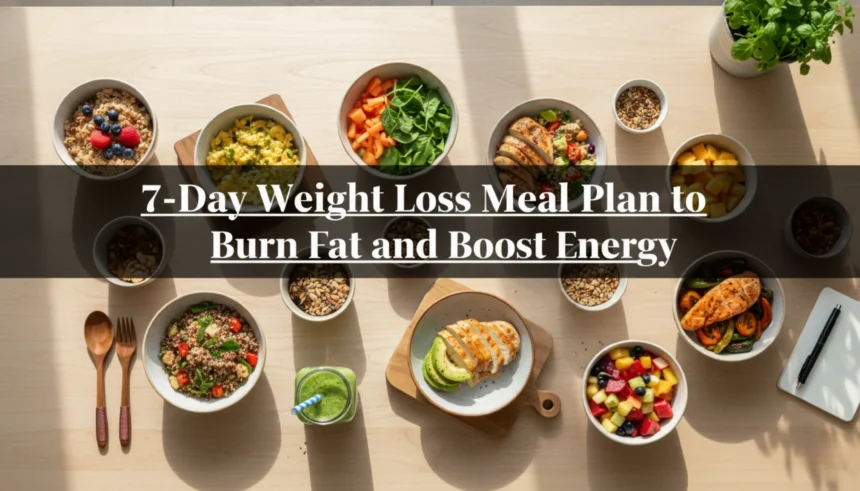
This 7-Day Weight Loss Meal Plan offers a simple, practical solution. It uses affordable, everyday foods-such as oats, eggs, chicken, vegetables, and whole grains-to support steady, natural weight loss that fits real life and is easy to maintain.
Why This 7-Day Weight Loss Meal Plan Works?
This 7-Day Weight Loss Meal Plan works because it is based on genuine, science-based ideas that help you lose weight healthily, remain full, and speed up your metabolism without having to follow strict diets or a lot of rules.
Creates a healthy calorie deficit
Research shows that cutting back on roughly 500 calories a day will help you lose 1-2 pounds a week in a safe way.
Includes protein at every meal
Protein keeps you full longer, preserves your muscles, and speeds up the process of burning calories during digestion.
High in fibre-rich foods
Beans, whole grains, fruits, and vegetables all slow down digestion, help manage hunger, and keep the gut healthy.
Controls blood sugar levels
Balanced meals prevent sudden sugar spikes and crashes, which reduces cravings and overeating.
Focuses on whole, real foods
Whole foods provide more nutrients and fewer empty calories than ultra-processed foods.
Supports metabolism, not starvation
Regular meals help keep metabolism active and prevent fatigue and rebound weight gain.
Easy to follow and sustainable
Simple foods and flexible meals make it easier to stay consistent long term.
Understanding the Modern American Body
The modern way of life (including processed food intake, odd meal timing, and high amounts of stress) has created a different manner in which our bodies metabolize energy and store fat. If you want to lose weight correctly, then it is important to understand what is really happening inside your body, particularly in your stomach area.
Why Is Belly Fat Hard to Lose?
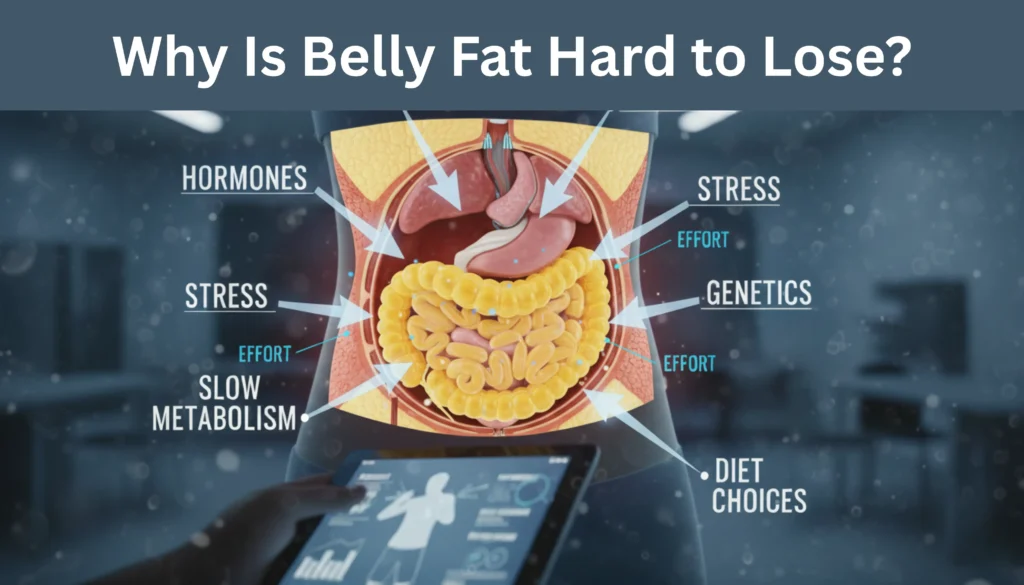
Many people in the United States struggle with their weight; however, when they step on the scale, most will likely see that they are considered “normal.” One of the major contributors to this struggle is visceral fat, which is the fat that lies deep within the abdomen and surrounds the organs.
Visceral fat is the type of fat that is closest to the organs and makes it difficult for an individual to lose belly fat. This type of fat can result in:
- Insulin resistance – Your body’s inability to utilize sugar for energy
- Chronic inflammation – The body’s inability to lose fat and maintain a healthy weight.
- Hormonal imbalance – Affecting hunger, metabolism, and fat storage.
Thus, a successful method for losing weight involves more than simply reducing calorie intake. The following principles should also apply when thinking about a weight loss program:
- Maintain stable blood sugar: Prevent excessive blood sugar level increases or drops that lead to increased hunger levels.
- Reduce inflammation: Prioritize anti-inflammatory foods such as vegetables, berries, and healthy fats in your diet.
- Preserve Muscle Mass: Ensure adequate protein intake in every meal to preserve muscle strength.
- Support the body’s metabolism: Eating at regular intervals, along with consuming nutrient-dense foods, allows your body to operate at optimal caloric consumption capacity.
What Healthy Weight Loss Looks Like?
The CDC and NIH say that losing 1-2 pounds (0.5-1 kg) every week is a safe and healthy way to do it. Studies published in the Journal of Obesity and Obesity Reviews say that losing weight faster than this can make you more likely to lose muscle, not get enough nutrients, get tired, get gallstones, and gain weight again.
To lose weight steadily, most adults need to eat about 500 fewer calories each day. This usually falls within these ranges:
- Women: 1,400 to 1,700 calories a day
- Men: 1,700 to 2,100 calories a day
But not all calories are the same. The American Journal of Clinical Nutrition says that 1,500 calories of highly processed food can make you crave more food, raise your blood sugar, and make you feel less full. On the other hand, 1,500 calories of whole, nutrient-dense foods like vegetables, lean protein, whole grains, and healthy fats keep you full longer, help you keep muscle, and boost your metabolism.
This is why it’s important to pay attention to both the quality of your food and how many calories you eat in order to lose weight in a healthy way.
How to Follow Your Meal Plan Correctly?
Think of these as non-negotiable habits that make weight loss easier and more sustainable.
1. Include Protein at Every Meal
The presence of protein in your meals provides the body with a sense of fullness (satiety), helps to preserve muscle tissue, and increases the amount of calories that are burned while your body digests protein. Protein sources include eggs, poultry, fish, tofu, legumes, or Greek yogurt, and each meal should contain about 20 to 30 grams of protein.
2. Fill One-Half of Your Plate with Vegetables
Non-starchy vegetables are an excellent source of fibre, nutrients, and volume, and they add very few calories to your overall caloric intake. Examples of non-starchy vegetables include spinach, broccoli, zucchini, bell peppers, and leafy greens.
3. Select Whole Grains
When comparing whole grains vs white grains, whole grains provide steady blood sugar levels and therefore steady energy levels, so it is best to eliminate white grains from your diet and replace them with whole grains. Some examples of whole grains are brown rice, quinoa, oats, and whole wheat bread.
4. Limit the Amount of Added Fats
It is important to eat healthy fats; however, it is equally important to limit the amount that you consume. One to two tablespoons of cooking oil is sufficient per meal.
5. Drink Plenty of Water
It is important to drink at least 8-12 cups (2-3 litres) of water every day if you are physically active.
6. Maintain Regular Meal Timings
It is beneficial to eat at the same time each day, and to finish dinner at least 2-3 hours prior to bedtime. This will improve the efficiency of your metabolism and digestion.
7. Move Your Body
Aim to participate in 150 minutes/week of moderate-level physical activity. You can incorporate moderate exercise from activities such as brisk walking, biking, swimming, or resistance training.
Your 7-Day Weight Loss Meal Plan
Day 1: Start Slowly
Breakfast:
- 1 cup of rolled oats with vegetables
- One cup of rolled oats cooked with vegetables and one boiled egg
- One orange or some berries
Mid-morning:
- 10 almonds or ½ cup of Greek yogurt
Lunch:
- Chicken breast on the grill
- ½ to 1 cup of brown rice
- Steamed veggies and a salad on the side
Snack:
- Roasted chickpeas and black coffee or tea
Dinner:
- Fish or tofu baked
- Vegetables that have been roasted
- A small amount of quinoa
Tip: Eating fiber and protein early in the day might help keep cravings down.
Day 2: Focus on Protein
Breakfast:
- 2 eggs in a veggie omelet and whole wheat bread
Mid-morning:
- An apple or a pear
Lunch:
- One bowl of lentil soup
- Salad with mixed greens, olive oil, and lemon
Snack:
- Smoothie with protein (no sugar)
Dinner:
- Turkey or tofu on the grill
- Broccoli and carrots steamed
Day 3: Light and Balanced
Breakfast:
- scrambled eggs and half an avocado on toast
Mid-morning:
- A little banana
Lunch:
- A whole wheat wrap with grilled vegetables and beans
- Buttermilk or kefir for a snack
Dinner:
- A modest serving of brown rice and vegetable stir-fry
Day 4: Green Day
Breakfast:
- A smoothie made with spinach, banana, flaxseed, and Greek yogurt
Mid-Morning:
- berries or watermelon
Lunch:
- A salad with grilled chicken and mixed greens
Snack:
- A handful of nuts and some green tea
Dinner:
- Paneer or tofu stir-fry with a small whole-grain tortilla
Day 5: Lightened Comfort Foods
Breakfast
- Two tiny whole-grain pancakes with peanut butter
Mid-Morning
- Eat grapes or a pear.
Lunch
- Chili with beans and vegetables for lunch
- Herbal tea with a roasted sweet potato is a snack.
Dinner:
- Tomato soup and grilled fish or tofu
Day 6: Fiber And Protein
Breakfast
- Chickpea pancakes or egg muffins for breakfast
Mid-Morning
- Walnuts or kefir
Lunch:
- A quinoa meal with black beans and vegetables
Snack:
- Hummus and veggie sticks
Dinner:
- Yogurt and a vegetable rice bowl
Day 7: Flexible Weekend
Breakfast:
- Bread and an omelet with vegetables
Mid-Morning:
- Seasonal fruit
Lunch:
- A small serving of homemade spaghetti or rice with salad
- Fruit chaat or trail mix (small) for a snack
Dinner:
- Whole-grain bread and clear soup
7-Day Diabetic-Friendly Meal Plan

Portion Guide:
- Protein: About the size of your palm (chicken, fish, eggs, tofu)
- Grains/Carbs: About the size of your fist (rice, oats, quinoa, whole wheat bread)
- Vegetables: Fill half your plate with them (spinach, broccoli, zucchini, bell peppers, etc.)
- Fats: Keep it small-1-2 teaspoons of oil, a small handful of nuts, or a slice of avocado
- Liquids: 1 cup is equal to 240 ml (water, tea, milk, soups)
Day 1: Balanced Start
- Breakfast: Veggie omelet (2 eggs, spinach, bell peppers) + 1 slice whole wheat toast
- Mid-morning Snack: 1 small apple + 10 almonds
- Lunch: Grilled chicken salad with mixed greens, cherry tomatoes, cucumber, 1 tsp olive oil
- Snack: Greek yogurt (½ cup) with chia seeds
- Dinner: Baked salmon, roasted broccoli, small portion of quinoa
Day 2: Protein-Focused
- Breakfast: Greek yogurt parfait with berries and 1 tsp flaxseeds
- Mid-morning Snack: ½ cup cottage cheese + sliced cucumber
- Lunch: Lentil soup + side salad with lemon dressing
- Snack: 1 boiled egg + carrot sticks
- Dinner: Grilled turkey breast, roasted zucchini and bell peppers, small sweet potato
Day 3: Light & Filling
- Breakfast: Avocado toast (½ avocado) + 1 boiled egg
- Mid-morning Snack: 1 small pear
- Lunch: Quinoa bowl with black beans, cherry tomatoes, spinach, and 1 tsp olive oil
- Snack: Buttermilk or unsweetened kefir (½ cup)
- Dinner: Stir-fried tofu with broccoli, bell peppers, and a small portion of brown rice
Day 4: Fibre & Greens
- Breakfast: Spinach & banana smoothie with Greek yogurt + 1 tsp flaxseed
- Mid-morning Snack: 1 small orange or ½ cup berries
- Lunch: Grilled chicken breast, mixed greens salad, cucumber, 1 tsp olive oil
- Snack: Handful of walnuts + herbal tea
- Dinner: Paneer or tofu stir-fry with zucchini and bell peppers, 1 small whole wheat tortilla
Day 5: Comfort Foods, Lightened
- Breakfast: Whole grain pancakes (2 small) + 1 tsp peanut butter
- Mid-morning Snack: ½ cup grapes or 1 small apple
- Lunch: Vegetable & bean chilli (low-salt)
- Snack: Roasted sweet potato cubes
- Dinner: Tomato soup + grilled fish or tofu
Day 6: Protein + Fibre
- Breakfast: Chickpea pancakes or egg muffins
- Mid-morning Snack: 1 small handful of almonds + cucumber slices
- Lunch: Quinoa & black bean salad with tomatoes, spinach, and lemon juice
- Snack: Carrot & celery sticks with hummus
- Dinner: Veggie rice bowl (brown rice) + Greek yogurt
Day 7: Flexible Weekend
- Breakfast: Vegetable omelet + 1 slice whole wheat toast
- Mid-morning Snack: Seasonal fruit (e.g., apple, berries, or pear)
- Lunch: Small portion of whole wheat pasta or rice dish + side salad
- Snack: A small bowl of fresh fruit salad or a handful of unsalted mixed nuts/trail mix.
- Dinner: Clear vegetable soup + whole grain bread
Easy Food Swaps and Cooking Tips
- Oatmeal Veggie Bowl: Cook your oats as usual, then stir in some frozen or fresh veggies, a pinch of turmeric, and your favorite herbs. Easy, filling, and full of nutrients!
- Sprout Salad: Rinse moong or chickpea sprouts, then mix with chopped onion, tomato, a squeeze of lemon, and a pinch of black pepper. A crunchy, protein-packed snack.
- Lentil Stew: Simmer lentils with garlic and chopped tomatoes. Add just 1 teaspoon of oil for flavor. Warm, comforting, and high in protein and fiber.
- Yogurt Dip (Raita): Mix Greek yogurt with grated cucumber, a little dill, and salt. Perfect with meals or as a snack.
Easy Swaps for Healthier Eating
- Swap white rice for brown rice or quinoa
- Replace chips with air-popped popcorn or roasted chickpeas
- Replace soda and sugary drinks with sparkling water or infused water
Best Foods for Weight Loss
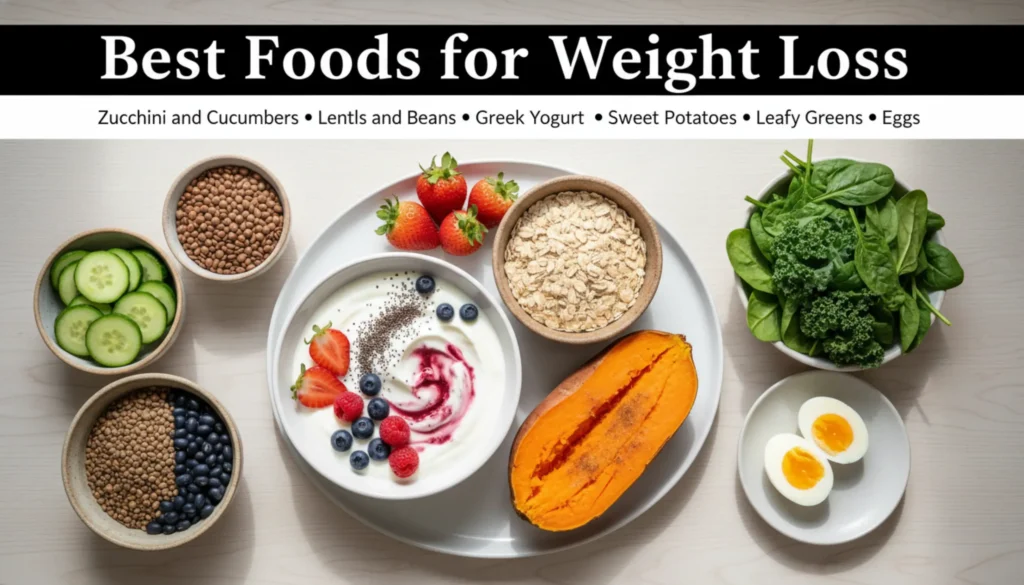
To lose weight more easily than previously thought, we would like you to stop thinking about cutting calories and instead start thinking about choosing the correct types of food that will work with rather than against your body.
1. Zucchini and Cucumbers
These are low in calories (approximately 17 calories per 100 grams) and high in water content; this means they will help fill you up without excess calories. They also contain a small amount of fibre, which aids with digestion.
2. Lentils and Beans
These are also good plant protein and fibre sources; both contain about nine grams of protein and almost eight grams of fibre for every 100 grams of cooked product. Because they are low on the glycemic index, they will help maintain stable blood sugar and control hunger.
3. Greek Yogurt
It is higher in protein than regular yogurt, meaning that it provides better satiety and nutrition for maintaining a healthy weight. Greek Yogurt also provides calcium, which is essential for bone strength.
4. Oats
These are a good source of slow-releasing carbohydrates that provide sustained energy throughout the day, and they are also a source of soluble fibre that aids with digestion and keeps you feeling full longer.
5. Sweet Potatoes
A great source of fiber, nutrients, beta-carotene (vitamin A), and potassium for your body. Because of how slowly sweet potatoes are digested, they may help by providing you with sustained energy and preventing sporadic hunger spikes from happening.
6. Berries
Naturally sweet with many nutrients, low in calories, and rich in both an abundance of antioxidants and fiber. Because of these two factors, the body will feel satisfied and healthier due to the large quantity of natural sugars and the additional high fibre content.
7. Leafy Greens
Very low in calories but extremely high in vitamins, minerals, and fibre, allowing you to add a large quantity to meals without adding a lot of calories.
8. Eggs
Excellent source of quality protein with an average of 6-7 g of protein found in every egg. Protein helps prevent muscle loss, keeps you satisfied, and builds muscle.
Daily Habits That Help You Lose Weight
- Plan and prep your meals in advance – Set aside some time on the weekends to cook and divide up your meals. This stops you from wanting fast meals or takeaway when you’re busy.
- Be mindful at restaurants – Restaurant portions are often much larger than needed. To keep your calorie consumption in check, share meals, order half quantities, or bag up leftovers.
- Drink Smart – Many drinks contain sugar – from soda to flavored coffee to juice – which can add calories to your diet without you realizing it. Stay hydrated by drinking plain water or unsweetened tea, and steer clear of anything containing sugar.
- Get Ample Sleep – Aim for at least 7-8 hours of sleep each night. Lack of adequate sleep elevates your hunger hormone, ghrelin, while lowering your satiety hormone, leptin; thus, you’ll end up eating more.
- Be Consistent – You don’t need to strive for perfection daily. Instead, emphasize incorporating consistent, healthy habits into your lifestyle. The smallest changes in your daily routine can produce tremendous results in your overall health.
FAQs
1. Can I lose 10 pounds in one week?
It’s neither safe nor realistic to shed 10 pounds (around 4.5 kg) in a week. You need to burn 3,500 calories more than you eat to lose one pound of fat. If you try to reduce this much weight quickly, you could lose muscle, not get enough nutrition, feel exhausted, and gain weight again. Instead of trying to lose a lot of weight quickly, try to drop 1-2 pounds (0.5-1 kg) every week by making small, lasting changes to your diet, activity, and daily habits.
2. What are the 7 steps of meal planning?
The seven steps of meal prep simply mean:
- Set your goals
- Check the calendar and make a list of pantry goods.
- Make a plan for the week’s meals
- Make a list of things to buy
- Get ready in advance
- Change and adapt for the next week.
3. What is the meaning of the 5-2-1-0 rule?
- 5 – Eat 5 servings of fruits and vegetables each day to be full, energised, and nourished.
- 2 – Limit screen time to 2 hours each day on TV, phones, and tablets. This keeps you moving and prevents overeating.
- 1 – Exercise for at least an hour a day, such as walking, running, or dancing.
- 0 – Avoid sugary drinks. Use plain water, always-carbonated water, or unflavoured beverages to avoid unnecessary calories and sugar.
4. How many types of meal plans are there?
Hotels and travel-related establishments generally offer four major categories of meal plans:
1. The American Plan (AP) covers breakfast, lunch, and supper in the price of your stay. You don’t have to pay more for these meals.
2. The Modified American Plan (MAP) provides two meals (breakfast and one additional main meal) as part of the price of your room; the second meal could either be lunch or dinner.
3. The Continental Plan (CP) only offers coffee, tea, bread, and fruit for breakfast.
4. The European Plan (EP) is the most basic; it only offers lodging, no meals are included, so guests pay only for their rooms.
5. What is the best meal plan for children?
A balanced daily meal plan is best for children. It should include:
- Breakfast
– Milk or curd
– Whole grains (roti, oats, poha, idli)
– Fruits - Mid-Morning Snack
– Fresh fruit
– Nuts or homemade snacks - Lunch
– Roti or rice
– Dal, eggs, or paneer
– Vegetables
– Curd - Evening Snack
– Sprouts, sandwich, boiled corn, or fruit - Dinner (light and early)
– Roti or rice
– Vegetables
– Protein (dal, paneer, chicken, or eggs)
Final Thoughts
This 7-Day Weight Loss Meal Plan for losing weight is not a crash diet; it’s a way to start eating better. You don’t need to follow strict regulations or buy pricey cuisine. You need to be patient, eat balanced meals, and stick to your plan.
Weight loss is more than just a number on a scale. Weight loss is about being able to do activities, enjoying life more, and feeling good about yourself. Focus on your progress and trust the process rather than trying to achieve perfection every day. The long-term benefits of environmental practices will ultimately prevail.
It is recommended that you consult your physician before making any significant dietary changes if you have a current medical condition.